
THE New Development Bank has invested nearly $1 billion in South Africa’s energy sector since 2016, significantly bolstering the country’s renewable capacity as it transitions away from fossil fuel dependency, according to an independent evaluation released Thursday.
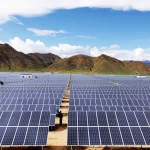
The multilateral lender has financed $972.8 million in energy projects that added approximately 1,600 megawatts of installed capacity and 7,500 gigawatt-hours of annual electricity supply to South Africa’s constrained grid, the bank’s Independent Evaluation Office reported.
The investments have reduced carbon dioxide emissions by roughly 7.2 million tonnes per year — nearly 12% of the reduction South Africa needs to meet its Nationally Determined Contributions under the Paris Agreement.
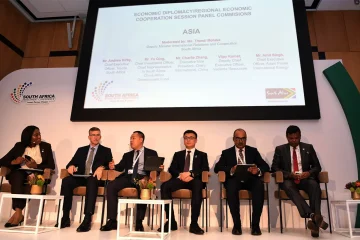
The findings were presented at a stakeholder workshop in Johannesburg attended by senior government officials, including Melanchton Makobe, acting director-general of the Department of Planning, Monitoring and Evaluation, along with development partners and evaluation experts.
The evaluation highlighted how the BRICS-established bank has supported South Africa’s shift toward a more diversified energy mix while identifying opportunities for expanded engagement, including enhanced technical assistance and participation in government credit guarantee initiatives.
BRICS Development Mandate
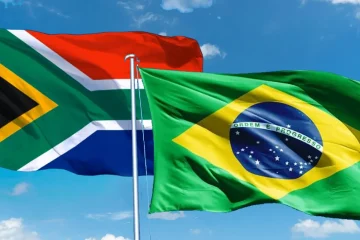
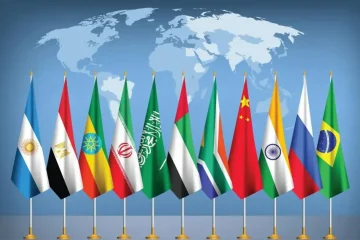
Established in 2015 by Brazil, Russia, India, China and South Africa, NDB serves as a multilateral development institution mobilising resources for infrastructure and sustainable development projects across BRICS nations and other emerging markets.
The bank prioritises climate-smart, disaster-resilient operations aligned with member countries’ development objectives and commitments under the Sustainable Development Goals and the Paris Agreement.
During the Johannesburg workshop, participants examined how multilateral financing mechanisms can accelerate developing economies’ transition from fossil fuel dependence toward low-carbon energy systems — a central challenge facing BRICS members as they balance economic growth with climate commitments.
The evaluation office and South Africa’s planning department also signed a memorandum of understanding this week, formalising cooperation on evaluation methods and knowledge exchange, including peer reviews, training programs and methodology sharing.
“South Africa has built one of the most dynamic evaluation ecosystems in the Global South,” said Ashwani K. Muthoo, director general of the Independent Evaluation Office. “This partnership will be fundamental as we embark on next year’s country portfolio evaluation of NDB’s activities in South Africa.”
The collaboration aims to strengthen results measurement and promote experience-sharing to support South Africa’s sustainable development agenda while providing a model for NDB’s operations across emerging markets.