
SHE had barely drawn breath for thirty days when her small life was extinguished by hands that claimed to follow tradition but violated the law of the land. In the shadows of secrecy, away from the watchful eyes of authorities who had banned such practices a decade ago, three women gathered around the tiny form of a one-month-old girl whose name would become a rallying cry for justice across The Gambia.
The blade that ended her life was wielded in defiance of the Women’s (Amendment) Act of 2015—a law written in the blood of too many daughters, a statute that declared what had been done in darkness for generations would no longer be tolerated in the light. Yet in some forgotten corner of this West African nation, tradition trumped law, culture overrode compassion, and a baby girl paid the ultimate price.
When the news broke, it crashed across Gambian society like thunder after lightning. Three women now stand in the dock of justice: one facing the possibility of spending the rest of her days behind bars, the alleged “surgeon” whose hands performed the mutilation that stole a life barely begun. The other two, charged as accomplices to this tragedy, walk free on bail while a nation grapples with the weight of what has been done in its name.
“That incident is more than just a case—it is a national wake-up call,” declared Emmanuel Joof, chair of the National Human Rights Commission, his words heavy with the burden of truth that no one wanted to speak aloud. The commission that had fought for years to protect the daughters of Gambia now faced the stark reality that their battle was far from won.
For this was not merely the death of one child—it was the shattering of illusions. Despite the ban that lawmakers had crafted with careful hands and hopeful hearts, despite the decade that had passed since FGM was declared a criminal offence, the practice persisted in the shadows like a stubborn cancer that refuses treatment.
Only last year, parliamentarians had rejected a bill that would have reversed the national ban, a proposal that would have made Gambia the first country to step backwards from protecting its daughters. The rejection had been celebrated as a victory, but this tiny coffin now revealed the hollowness of that triumph.
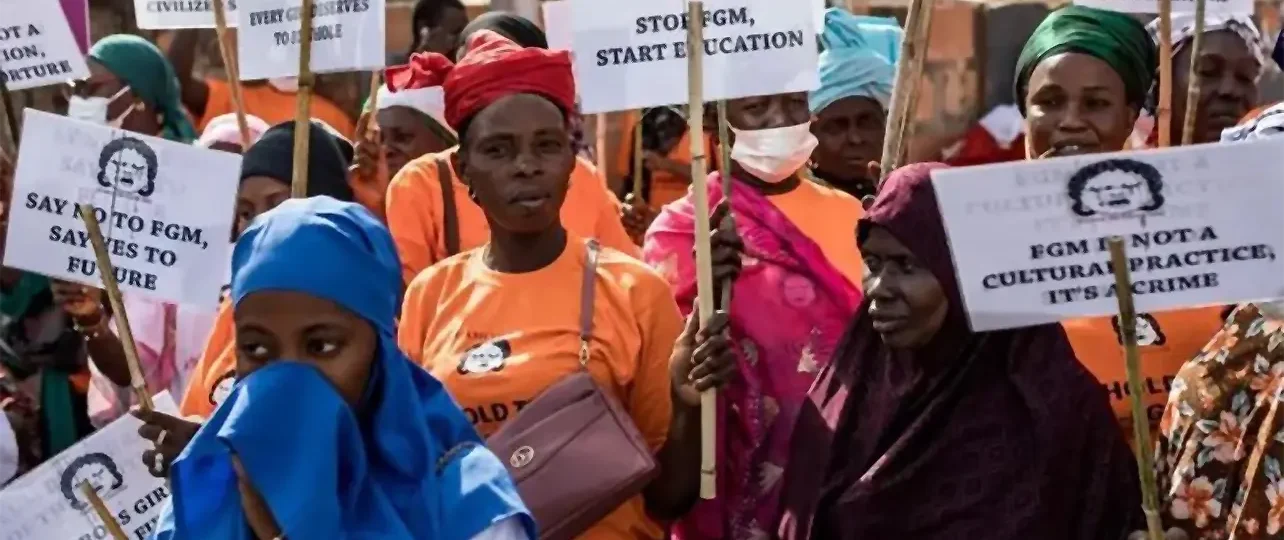
“It is a reminder that FGM is not simply a ‘cultural practice’—it is a criminal offence, a human rights violation, and in some cases, like this one, it is deadly,” Joof continued, each word a hammer blow against the walls of justification that had been built around this ancient cruelty.
In the aftermath, as three women await their fate in Gambia’s courts, a nation mourns not just one lost daughter but the painful recognition that laws written on paper mean nothing if they are not written also on the hearts of the people. The baby who lived for just one month had become, in her tragic death, a symbol of every girl child who deserved to live free from the blade, free from the cutting, free from traditions that masqueraded as culture while dealing in death.
“No cultural or traditional justification should override the obligation to protect children from harm,” the Human Rights Commission declared, their statement a defiant promise to a dead child and a living warning to those who would follow in her killers’ footsteps.
In the end, she was just thirty days old when her life ended. But in her death, she had awakened a sleeping nation to the truth that some traditions are not worth keeping, some cultures are not worth preserving, and some practices deserve not reverence but the full weight of justice’s wrath.
The three women who stand accused will face their judgment. But Gambia itself now faces a different kind of trial—the test of whether it will truly protect its daughters or merely pretend to do so while they die in secret, one small life at a time.