IN what has become a searing indictment of private healthcare standards in Nigeria’s commercial capital, internationally acclaimed author Chimamanda Ngozi Adichie has initiated legal proceedings against Euracare Multi-Specialist Hospital, alleging catastrophic medical negligence that led to the death of her 21-month-old son.
The case, which has prompted gubernatorial intervention and ignited nationwide debate about medical accountability, centres on a series of alleged protocol violations so egregious that the family’s legal team has characterised them as “criminally negligent.”
Master Nkanu Nnamdi Adichie-Esege died in the early hours of January 7, 2026, following what should have been straightforward diagnostic procedures. The child, born March 25, 2024, had been referred to Euracare from Atlantis Pediatric Hospital for pre-evacuation testing before a scheduled medical flight to Johns Hopkins Hospital in Baltimore, where a specialist team awaited his arrival.
Instead of boarding that flight, the toddler became the latest casualty in what medical professionals and legal experts are calling a preventable tragedy that exposes fundamental gaps in Nigeria’s healthcare safety infrastructure.
The 10-page legal notice, dated January 10 and bearing the signature of Professor Kemi Pinheiro, SAN, reads less like a standard malpractice claim and more like a prosecution brief. The allegations are specific, technical, and damning:
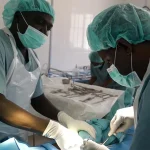
Sedation Without Safeguards: The hospital’s anesthesiologist allegedly administered propofol – a powerful sedative requiring continuous monitoring – to a critically ill child without ensuring adequate airway protection or physiological monitoring. According to the family’s account, the child was “casually carried on [the anesthesiologist’s] shoulder” between clinical areas while sedated, with no one able to determine when he became unresponsive.
Transport Protocol Violations: Following an MRI, the sedated child was allegedly transferred to a cardiac catheterisation laboratory without supplemental oxygen, without adequate monitoring equipment, and without sufficient accompanying medical personnel – violations that would be considered fundamental breaches in any accredited medical facility.
Informed Consent Failures: The legal notice alleges the hospital failed to adequately disclose the risks and side effects of propofol and other anaesthetic agents, undermining the parents’ ability to provide informed consent for their son’s treatment.
Pattern of Negligence: Perhaps most disturbing, the family claims to have learned of “two previous cases of this same anesthesiologist overdosing children,” raising questions about institutional oversight and why the physician remained in practice.
“We Brought In A Child Who Was Stable”
In a heartbreaking personal statement that has circulated widely on social media, Adichie described the rapid deterioration of her son’s condition following the propofol administration. “We brought in a child who was unwell but stable and scheduled to travel the next day,” she wrote. “We came to conduct basic procedures. And suddenly, our beautiful little boy was gone forever.”
The author, whose novels include Half of a Yellow Sun and Americanah have earned international acclaim and whose TED talk “We Should All Be Feminists” has been viewed millions of times, used unusually direct language in her assessment: “The anesthesiologist was CRIMINALLY negligent. He was fatally casual and careless with the precious life of a child.”
Dr Anthea Esege Nwandu, the child’s aunt and a dual board-certified internal medicine physician with three decades of experience across Nigeria and the United States, has publicly challenged what she characterised as inconsistencies in the hospital’s official statement, lending additional medical credibility to the family’s claims.
Government Intervention and Broader Implications
The case has already reached the highest levels of Lagos State government. Governor Babajide Sanwo-Olu has ordered a formal probe into the alleged negligence, a move that reflects both the public concern generated by the tragedy and the political sensitivity of healthcare standards in Nigeria’s economic hub.
The legal notice places Euracare on formal notice to preserve all evidence—from CCTV footage and electronic monitoring data to internal communications and morbidity reviews. The family’s solicitors have warned that any destruction or alteration of evidence “will be treated as suppression of evidence and obstruction of justice, with attendant legal consequences.”
The hospital has seven days from receipt of the notice to produce certified copies of all medical records related to the child’s treatment, including admission notes, consent forms, pre-anaesthetic assessments, anaesthetic charts, drug administration records, and the identities of all medical staff involved.
A Test Case for Nigerian Healthcare Accountability
Beyond the immediate tragedy, the Adichie case represents a potential watershed moment for medical accountability in Nigeria. Private hospitals have proliferated across Lagos and other major cities, often marketed as alternatives to underfunded public facilities. But this case raises fundamental questions about regulatory oversight, credentialing standards, and the mechanisms available to families when care falls catastrophically short.
The family’s ability to retain high-profile legal representation and to demand comprehensive documentation sets this case apart from the countless medical errors that go unchallenged in Nigeria’s healthcare system. Whether it leads to systemic reform or remains an isolated example of justice available only to the prominent and well-connected will depend on how institutions—from the courts to medical regulatory bodies—respond.
For Chimamanda Adichie, no legal outcome can restore what was lost. “It is like living your worst nightmare,” she wrote. “I will never survive the loss of my child.”
But her demand for accountability—backed by detailed allegations, expert medical analysis, and high-level legal firepower—ensures that the death of Nkanu Nnamdi Adichie-Esege will not be quietly forgotten. The question now is whether it will be the catalyst for change that prevents other families from experiencing the same nightmare.