JUST one month after a significant peace agreement between the Democratic Republic of Congo (DRC) and Rwanda was signed in Washington, DC, the fragile hopes for stability in the Great Lakes region have been brutally shattered. At least 21 people were killed on Sunday in an attack on a Catholic church in eastern Democratic Republic of Congo by Islamic State-backed rebels, marking a devastating blow to the nascent peace process.
The attack was carried out by members of the Allied Democratic Force (ADF) around 1 a.m. inside the premises of a Catholic church in Komanda town, Ituri province. Armed with machetes, the militants stormed the church premises while worshippers were participating in an overnight mass.
More than 21 people were shot dead inside and outside the church, with at least three charred bodies recorded and several houses burned. The scale of the carnage remains uncertain, as local media reports put the death toll at more than 40, while a U.N.-backed radio station said 43 people were killed, citing security sources.
Local civil society coordinator Dieudonne Duranthabo told The Associated Press that “the search is continuing” for additional victims, highlighting the ongoing uncertainty about the full extent of this tragedy.
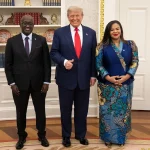
The timing of this attack could not be more devastating for regional stability efforts. The peace agreement between the DRC and Rwanda, signed on Friday in Washington, DC, was welcomed by UN Secretary-General António Guterres as “a significant step towards de-escalation, peace and stability in the eastern region. The US and Qatar-brokered peace agreement was hailed as a potential turning point after years of conflict.
The agreement, which was built on mutual commitment to respect the Declaration of Principles signed by the Parties on April 25, 2025, represented months of diplomatic efforts to bring stability to one of Africa’s most volatile regions. However, the ADF’s brutal assault demonstrates that peace remains elusive in eastern Congo, where armed groups continue to terrorise civilian populations.
The ADF has ties to the Islamic State and has targeted civilians in the past, representing a significant security challenge that transcends the bilateral conflict between the DRC and Rwanda. The attackers came from a stronghold around 12 kilometres (7 miles) from the centre of Komanda and fled before security forces could arrive, showcasing their ability to strike at will and retreat to safe havens.
This latest massacre underscores the complex nature of eastern Congo’s security challenges. While the DRC-Rwanda peace deal addresses state-to-state tensions and proxy conflicts, it does not directly tackle the threat posed by jihadist groups like the ADF, which operate independently and have declared allegiance to the Islamic State.
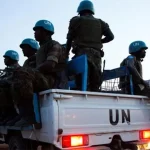
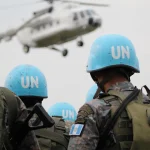
Local leaders are demanding immediate military action to restore safety, while the international community watches anxiously as the hard-won peace agreement faces its first major test. The United Nations Organisation Stabilisation Mission in the DR Congo (MONUSCO) has previously condemned similar attacks, but the persistence of such violence raises questions about the effectiveness of current security arrangements.
The attack also highlights the limitations of the recent peace deal, which, according to Amnesty International, fails to address serious crimes committed in eastern DRC. Human rights organisations have long called for accountability mechanisms and stronger protection for civilians in the region.
The situation in eastern Congo remains dire, with armed groups increasingly threatening civilian safety and stability in the region. The Komanda church attack serves as a stark reminder that achieving lasting peace in the Great Lakes region requires more than bilateral agreements between governments.
The challenge now facing regional leaders and the international community is how to address the multifaceted nature of eastern Congo’s conflicts. While the DRC-Rwanda peace deal represents crucial progress in resolving state-to-state tensions, the persistence of non-state actors like the ADF suggests that a comprehensive approach involving enhanced security cooperation, development initiatives, and community protection measures will be necessary.
As families in Komanda mourn their loved ones and communities grapple with fear and uncertainty, the broader question remains: Can the fragile peace process survive the continued threat of extremist violence? The answer will likely determine not only the fate of eastern Congo but the stability of the entire Great Lakes region in the years to come.
The international community’s response to this latest atrocity will be closely watched as a test of commitment to the peace process and the protection of vulnerable civilian populations caught in the crossfire of ongoing conflicts.