MORE than a month after a landmark peace agreement between Rwanda and the Democratic Republic of Congo was signed in Washington, key implementation milestones are falling behind schedule, raising concerns about the deal’s viability as violence continues to simmer in eastern Congo’s mineral-rich territory.
The most significant delay involves the security coordination mechanism—a joint body designed to supervise military operations and troop movements—which has failed to hold its inaugural meeting more than 30 days past the agreed timeline. Meanwhile, no Rwandan troops have begun withdrawing from eastern Congo, and coordinated military operations against the Democratic Forces for the Liberation of Rwanda (FDLR) have yet to commence.
The setbacks come despite the successful convening of a joint oversight committee on August 1, exactly 45 days after the June agreement as stipulated. However, the delays in security arrangements are particularly troubling given the deal’s 90-day deadline for complete Rwandan troop withdrawal—a timeline that appears increasingly unrealistic.
“The absence of movement on the security coordination mechanism is concerning,” said one diplomatic source familiar with the negotiations, speaking on condition of anonymity. “These aren’t just bureaucratic delays—they’re critical to preventing the conflict from reigniting.”
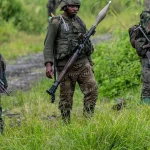
On the ground, armed groups, including the M23 rebels and local Wazalendo militias, have reportedly used the implementation period to consolidate their positions, according to sources monitoring the situation. This development threatens to complicate future military operations and could signal a return to active hostilities.
The Washington agreement, brokered through intensive U.S. diplomatic efforts with support from the African Union and Qatar, was hailed as a breakthrough in ending years of devastating conflict that has claimed thousands of lives and scared off Western investment in the region’s vast mineral wealth, including tantalum, cobalt, and lithium critical to global technology supply chains.
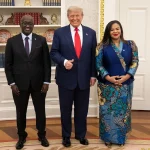
Senior U.S. officials maintain cautious optimism despite the delays. Massad Boulos, former senior Africa adviser to President Donald Trump’s administration, insisted the deal remains “on track” and that a security body meeting is “imminent.” Boulos attributed some delays to the complexity of coordinating between multiple parties and emphasised the extensive diplomatic groundwork conducted since April.
However, the lack of concrete action on the most critical elements—troop withdrawals and joint military operations against the FDLR, a group comprising remnants of Rwanda’s former army implicated in the 1994 genocide—has raised questions about political will on both sides.
The delays are particularly significant given the high-stakes nature of the agreement. The conflict in eastern Congo has persisted for decades, fueled by ethnic tensions, competition for mineral resources, and cross-border interference. Previous peace deals have collapsed amid implementation failures, leaving millions of civilians trapped in cycles of violence and displacement.
For the international community, which has invested significant diplomatic capital in the Washington agreement, the current delays represent a crucial test of whether formal peace processes can succeed where previous efforts have failed.
As external mediators from the African Union and Qatar continue monitoring efforts, the coming weeks will prove critical in determining whether the latest diplomatic initiative can overcome implementation hurdles and deliver the stability that has long eluded eastern Congo’s war-torn communities.