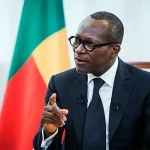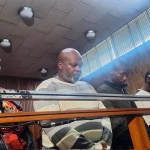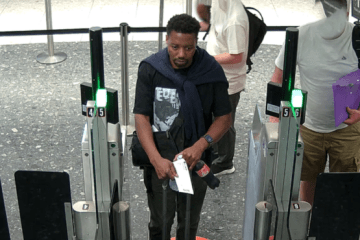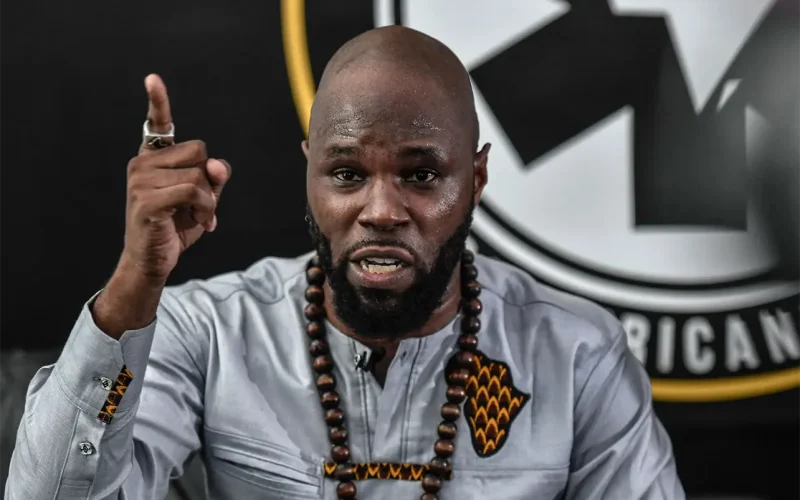
SOUTH Africa’s elite Hawks unit arrested the controversial pan-Africanist figure Kemi Seba – whose legal name is Stellio Gilles Robert Capo Chichi – together with his 18-year-old son Khonsou Seba Capo Chichi and a local facilitator on Sunday, 13 April 2026, in an intelligence-driven sting operation at a shopping centre in the Brooklyn suburb of Pretoria.
The Directorate for Priority Crime Investigation (DCPI), operating through its Crimes Against the State unit (CATS) with support from the Hawks’ Tactical Operations Management Section and Crime Intelligence’s Counter Terrorism division, confirmed the arrests in a statement on Tuesday. The three accused made a brief appearance in the Brooklyn Magistrates Court on 15 April 2026 and were remanded in custody pending their next court date on 20 April. Extradition processes are already underway.
The Hawks confirmed, through Interpol, that Capo Chichi is a wanted fugitive in Benin on charges relating to crimes against the state, and that preliminary investigations indicate he is also wanted in France for similar offences.
“The Hawks through the assistance of Interpol can confirm that Stellio Gilles Robert Capo Chichi is indeed a wanted fugitive in Benin in relation to crimes against the state.”
DPCI Statement, 15 April 2026
The Sting: R318 000 and a River Crossing
According to the Hawks, the intelligence picture that prompted the operation pointed to a plan by the father-and-son duo to pay approximately R250 000 to a facilitator — identified as François van der Merwe — to smuggle them across the Limpopo River into Zimbabwe, from where they intended to travel onward to Europe. The suspects were intercepted before that crossing could take place.
At the time of arrest, investigating officers confiscated several cellphones and approximately R318 000 in cash. The sum is notable: it exceeds the alleged payment to the facilitator, suggesting the family was carrying additional funds for the intended onward journey.
Van der Merwe faces charges of conspiracy to commit a crime and contravention of the Immigration Act. The Capo Chichi father and son duo face the same domestic charges, with extradition requests now formally in motion.
Who Is Kemi Seba — And Why Is He Wanted?
The arrest lifts the curtain on one of pan-Africanism’s most polarising and peripatetic figures. Born on 9 December 1981 in Strasbourg to parents from Benin, Capo Chichi constructed the persona of Kemi Seba — an Egyptian-derived nom de guerre meaning “black star” — over more than two decades of agitprop, organisation and repeated legal entanglement across three continents.
He rose to notoriety in France as the founder of Tribu Ka, a Black supremacist group dissolved by the French Interior Ministry in 2006 for incitement to racial hatred and antisemitism. French courts convicted him multiple times on related charges; he was released from a one-year suspended sentence in 2008, after which he announced his conversion to Islam and pivoted toward a broader anti-imperialist posture.
By 2011, he had relocated to Senegal, and by 2013, he had reinvented himself as a pan-Africanist geopolitical commentator with a continent-wide television presence. In 2017, his public incineration of a 5,000 CFA franc note — a symbolic attack on the French-backed currency — made him briefly a household name across Francophone Africa, and Africanews elected him its African Political Personality of the Year. He has since built a social media following of more than 1.5 million people.
His politics grew increasingly intertwined with the pro-Russia, anti-France narrative that has accompanied the wave of military coups across the Sahel. The United States State Department has identified him as one of two key influencers co-opted to promote Kremlin interests across the continent. He has openly praised Russian President Vladimir Putin and has served as an adviser to Abdourahamane Tchiani, the military leader of Niger’s ruling junta, since August 2024. He now travels on a Nigerien passport, having been stripped of his French nationality in July 2024 following his arrest in France on suspicion of “foreign interference”— charges that were subsequently dropped without trial.
Stripped of French nationality, barred from the Beninese presidential ballot and accused of helping to orchestrate a coup
Kemi Seba’s flight south ended in a Pretoria shopping centre
The December Coup That Changed Everything
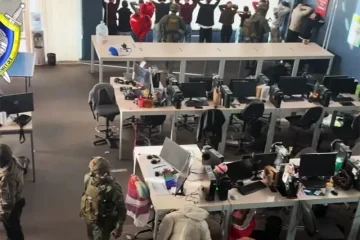
The charges underpinning the extradition request trace directly to the events of 7 December 2025, when a group of soldiers led by Lieutenant Colonel Pascal Tigri seized Benin’s state broadcaster and announced the overthrow of President Patrice Talon. The attempt failed within hours: loyalist forces, backed by Nigerian airstrikes and French intelligence and logistics support, repulsed the mutineers.
As the coup unfolded, Capo Chichi posted a video hailing it as Benin’s “day of liberation” and calling the participating soldiers “patriotic”. Benin’s Court for the Repression of Economic Crimes and Terrorism (CRIET) responded swiftly: on 12 December 2025, it issued an international arrest warrant for Capo Chichi on charges of “apology for crimes against state security, incitement to hatred, violence, and rebellion.”
Beninese investigators further alleged that Capo Chichi — described as being in “regular communication” with Niger’s General Tchiani — had activated networks of cyber-activists to prime public opinion before the assault, operating as part of what intelligence officials characterised as a coordinated Alliance of Sahel States (AES) destabilisation effort. Capo Chichi has denied wrongdoing. In a defiant video posted days after the warrant was issued, he declared: “Patrice, you’ve issued an arrest warrant against us, but you’ve picked the wrong Black man. You will never stop us.”
He had also sought to contest the 2026 Beninese presidential election, announcing his candidacy in January 2025, but was barred from the ballot. By the time of his arrest in Pretoria, more than 100 people were in Beninese custody in connection with the coup attempt, and a reward of more than €30 000 had been posted for information leading to the capture of those still at large — including coup leader Tigri, who is believed to have sought refuge in Togo.
An Extradition With Continental Stakes
The arrest raises immediate questions about which of Capo Chichi’s alleged warrants — Benin’s or France’s — will take procedural precedence in any extradition proceeding. His loss of French nationality complicates the picture, potentially reducing France’s legal standing to seek his return while strengthening Benin’s claim as the country of his documented citizenship.
The case will be watched closely across West Africa, where Capo Chichi’s brand of anti-Françafrique populism commands significant support among young audiences, and where his detention is likely to be cast by his supporters as further evidence of the France-backed establishment silencing dissent. His opponents, including the Talon government in Cotonou, will regard the Pretoria sting as vindication of their account of the December coup attempt.
South Africa’s own role in the affair — as the territory on which this international fugitive was apprehended — underscores Pretoria’s continued significance as a node in pan-African political networks, for better and for worse.
KEY FACTS AT A GLANCE
Accused: Stellio Gilles Robert Capo Chichi (45), aka Kemi Seba | Khonsou Seba Capo Chichi (18) | François van der Merwe
Arrested: 13 April 2026, Brooklyn, Pretoria
Appeared: Brooklyn Magistrates Court, 15 April 2026
Next hearing: 20 April 2026 | Remanded in custody
Cash seized: approximately R318 000 | Alleged facilitator fee: approximately R250 000
Warrants: Benin (crimes against state, incitement to rebellion) | France (crimes against state)