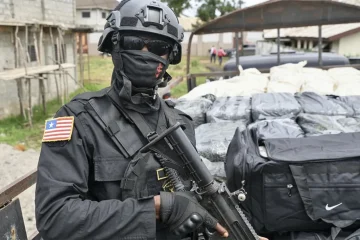
THREE military-ruled Sahel nations officially inaugurated a 5,000-strong unified military force on Saturday, cementing their alliance in a region where jihadist violence has claimed thousands of lives and driven a dramatic geopolitical realignment away from Western powers.
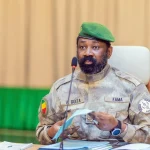
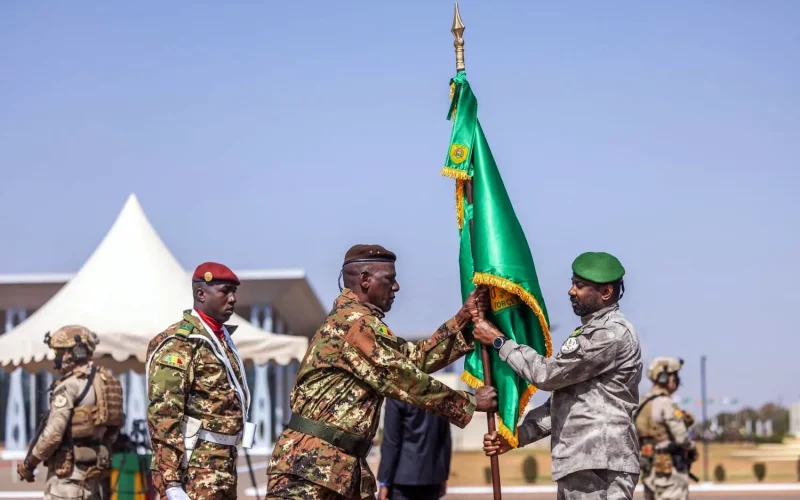
At an airbase in Mali’s capital, transitional President General Assimi Goita handed over the force’s flag, weaponry, and equipment, including combat vehicles and ambulances, formalising what officials described as a strategic multinational force to combat terrorism across Burkina Faso, Mali and Niger.
The ceremony marks the most concrete military integration yet for the Alliance of Sahel States, formed in September 2023 after the three junta-led nations withdrew from the Economic Community of West African States. Burkinabe General Daouda Traoré was appointed to lead the force, which will maintain its command base in Niamey, Niger’s capital.
Defence ministers from all three nations attended the ceremony, along with ambassadors and representatives from international organisations, underscoring the regional significance of the development.
The force’s activation comes as the Sahel confronts an unprecedented security crisis. The region accounted for over half of all terrorism deaths globally in 2024, with nearly 20,000 deaths since 2019, according to the Global Terrorism Index 2025. An estimated 10,400 deaths were linked to militant Islamist violence in the Sahel in 2024, with Burkina Faso bearing the heaviest toll at more than 6,000 fatalities.
“It is now up to the new commander not only to anticipate the new operating methods of armed terrorist groups, but above all to continue to take over and pursue this fight to secure the Sahel region,” Goita said during the flag-presentation ceremony.
The Malian leader emphasised that since July 2024, joint operations by the three nations’ forces had led to the neutralisation of several terrorist leaders. He described the confederation as facing multifaceted threats from what he termed “state sponsors,” including terrorist, economic, and informational challenges.
The unified force represents the latest step in accelerating integration among the three landlocked nations, all led by military juntas that seized power through coups between 2020 and 2023. The alliance has positioned itself as a bulwark against both jihadist insurgencies and what its leaders characterise as external interference in the region’s affairs.
When announcing their withdrawal from ECOWAS in January 2024, the three nations cited what they called “illegal, illegitimate, inhumane, and irresponsible sanctions” imposed following their military takeovers. They accused the regional bloc of falling under foreign influence and abandoning its founding principles.
The withdrawal became official on January 29, 2025, ending nearly five decades of membership in ECOWAS for the three states. The rupture has raised concerns about disrupted trade flows, weakened intelligence-sharing mechanisms, and the breakdown of regional security cooperation that previously included international partnerships.
The three nations have increasingly pivoted toward Russia for military support. In 2024, the alliance cut military relations with Western powers and replaced Western forces with Russian mercenaries, specifically the Wagner Group, now known as Africa Corps. Russia has provided training, weapons, and operational support to the alliance’s security forces.
The security situation remains dire despite the new force. Conflict fatalities from political violence across the central Sahel increased by 38% in 2023, with civilian deaths rising by over 18%. The al-Qaeda-affiliated Jama’at Nusrat al-Islam wal-Muslimin and the Islamic State Sahel Province continue to launch devastating attacks on military installations, civilians, and infrastructure.
Burkina Faso has lost control of significant territory, with militants now influencing nearly half the country. Mass atrocities have become increasingly common, including an August 2024 massacre outside Barsalogho, where approximately 400 civilians were killed.
The alliance’s confederation treaty, signed in July 2024, establishes ambitious goals beyond military cooperation, including a common market, monetary union, free movement of persons, and eventual federation into a single sovereign state.
Mali’s Defence Minister General Sadio Camara said the unified force will be guided by “Sahelian values of solidarity, mutual help, and dignity, framing the military integration as rooted in regional identity rather than external partnerships.
The force’s operational readiness faces significant challenges. Critics point to continuing deterioration in security conditions despite increased military spending and aggressive counterterrorism campaigns by the junta. Human rights organisations have documented extensive abuses by security forces, with more civilians killed by Sahelian and Russian forces than by militant Islamist groups in 2024.
The alliance’s formation and ECOWAS withdrawal have broader implications for African regional integration and the continent’s evolving geopolitical landscape. The developments reflect growing anti-Western sentiment in parts of francophone Africa and resistance to what alliance leaders characterise as neo-colonial interference.
As the unified force begins operations, the coming months will test whether the alliance’s military integration can reverse the security decline that provided justification for the coups that brought the current leaders to power. The region’s stability—or further deterioration—will have ramifications far beyond the Sahel, affecting migration patterns, resource access, and security dynamics across West Africa and beyond.