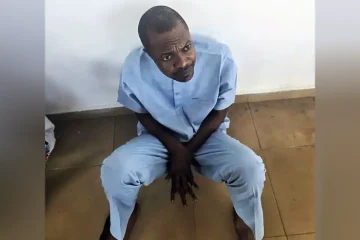
UNDER the merciless East African sun, Tundu Lissu sits in a spartan cell, the latest chapter in a political career defined by survival. The 57-year-old opposition leader, who already carries the scars of 16 bullet wounds from a 2017 assassination attempt, now faces his gravest challenge yet: a charge of treason – a capital offence in Tanzania – for simply demanding electoral reform.
“They can imprison my body, but not my conviction that Tanzania deserves true democracy,” Lissu reportedly told his lawyer during a brief, monitored visit at the high-security facility where he awaits trial.
As leader of CHADEMA, Tanzania’s main opposition party, Lissu has been campaigning under the uncompromising slogan “No Reforms, No Election” ahead of national polls scheduled for later this year. This stance has now placed him at the centre of a political crisis that threatens to unravel Tanzania’s carefully cultivated image as a stable democracy in a volatile region.
“He is passionate about politics. He likes it and he genuinely wants change,” political scientist Aikande Kwayu told Reuters. “But his approach is rigid – in that he sees one way to bring change and any other way that is different from his is not right.”
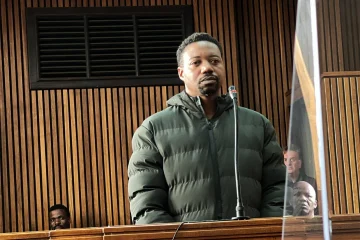
That rigidity has become both Lissu’s greatest strength and potentially his undoing. Prosecutors allege he is “stoking a rebellion” and “intends to disrupt the election” – charges his legal team dismisses as politically motivated. He has been remanded in custody and has yet to enter a plea.
On the bustling streets of Dar es Salaam, where vibrant markets pulse with commerce beneath the city’s growing skyline, opinions about Lissu’s predicament reflect Tanzania’s political divisions.
“This man survived bullets only to face the gallows for speaking the truth,” says Ibrahim Mwanza, a 34-year-old taxi driver, keeping his voice low despite his evident anger. “What kind of democracy punishes calls for fair elections with death?”
Others see Lissu as unnecessarily provocative. “Tanzania needs stability above all,” argues Maria Komba, a government employee. “His boycott threats would only bring chaos.”
Trained as a lawyer in Tanzania and Britain, Lissu’s political journey began in 1995 when the East African nation held its first multi-party elections after decades of single-party rule. Though his initial bid for parliament failed, he built his reputation investigating human rights abuses while working at a non-profit organization before finally winning a parliamentary seat under CHADEMA’s banner in 2010.
His outspoken criticism of then-President John Magufuli’s government led to multiple arrests – eight in 2017 alone – before unknown gunmen ambushed him outside his residence in Tanzania’s administrative capital, Dodoma, leaving him with 16 bullet wounds and forcing him into exile.
“The assassination attempt in 2017 really radicalized him. It made him fearless,” says Nicodemus Minde, a researcher at the Institute for Security Studies in Nairobi. “It’s difficult for him to find the middle ground. That can be a disadvantage for a politician but it’s who he is.”
After seeking medical treatment in Kenya and Belgium, Lissu returned briefly in 2020 to challenge Magufuli in an election but fled again after receiving death threats. Following Magufuli’s death in March 2021, Lissu made his intentions clear in an interview with the Council on Foreign Relations: “My most important goal is the restoration of democracy in Tanzania.”
The appointment of Samia Suluhu Hassan as president after Magufuli’s death initially raised hopes for democratic reform. Early in her tenure, Hassan lifted a ban on political rallies and opened talks with opposition leaders, prompting Lissu to return home in 2023 to a jubilant welcome from supporters.
But the democratic spring proved short-lived. Rights campaigners have since accused Hassan’s government of cracking down on opposition, citing unexplained abductions and killings of political opponents. While Hassan maintains her government is committed to respecting human rights and ordered an investigation into reported abductions last year, critics point to Lissu’s case as evidence of continuing repression.
Although Parliament passed legislation last year to make the election commission more independent, opposition parties insist more reforms are needed to level a playing field they say heavily favours the ruling Chama Cha Mapinduzi (CCM) party, which has dominated Tanzanian politics since independence.
The European Union has expressed “grave concern” over Lissu’s detention and the treason charges, while the United States has called for his immediate release. African nations, however, have largely remained silent, unwilling to criticize a regional power.
“Tanzania sits at a critical juncture,” says former UN Special Rapporteur on Freedom of Assembly, Clement Voule. “How it handles this case will signal whether it truly aspires to be a democratic beacon in East Africa or is sliding back toward authoritarian rule.”
The charges against Lissu have thrown CHADEMA’s election prospects into further turmoil, with the party already divided over his strategy to force the government to make concessions through the threat of an election boycott.
The party’s internal divisions reflect broader questions about opposition strategy in semi-authoritarian systems, where participation risks legitimizing flawed processes but boycotts can lead to political marginalization.
As Tanzania moves closer to election season, the international community watches anxiously. For a country that has long positioned itself as a stable, peaceful alternative to more turbulent neighbours, the coming months may determine whether Tanzania reinforces its democratic credentials or joins the ranks of nations where opposition leadership comes with the risk of imprisonment – or worse.