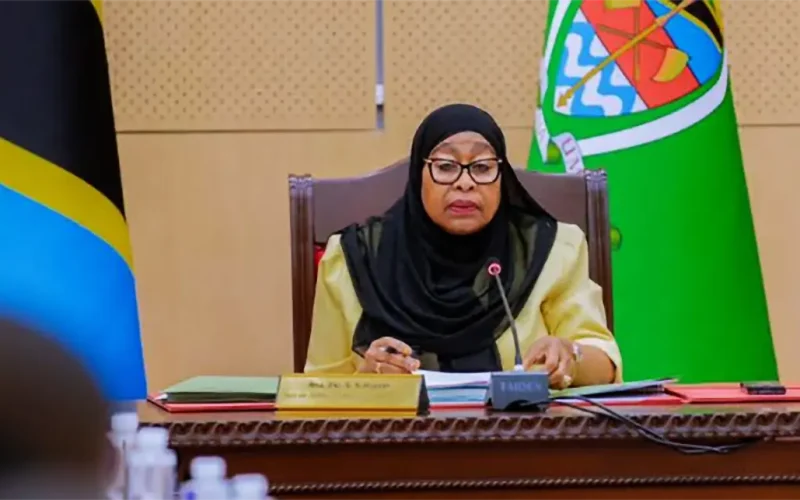
TANZANIA has taken a decisive step toward economic nationalism by implementing one of Africa’s most comprehensive bans on foreign participation in small and medium-sized businesses. The government has banned non-citizens from engaging in 15 types of business activities, following rising concerns over the growing presence of foreign traders in local markets.
The new directive, officially published on July 28, 2025, under Government Notice No. 487A by Industry and Trade Minister Dr. Selemani Jafo, represents a significant shift in Tanzania’s economic policy under President Samia Suluhu Hassan. The new directive targets activities like running salons, mobile money services, small retail operations, and tour guiding businesses.
The Complete List of Banned Activities
The restrictions encompass a wide range of sectors that have traditionally attracted foreign entrepreneurs, particularly from neighbouring East African countries:
- Wholesale and retail trade (excluding supermarkets and specialised outlets)
- Mobile money transfer services – a crucial sector in East Africa’s digital economy
- Hair salons and beauty services
- Small-scale restaurants and eateries
- Mobile phone repair businesses
- Real estate brokerage services
- Tour guiding operations
- Small-scale mining activities
- Environmental and office cleaning services
- Postal and local parcel delivery services
- Domestic service provision
- Street vending operations
- Radio station establishment
- Agricultural produce trading
- Transport services (specific categories)
Severe Penalties and Enforcement
The Tanzanian government has backed these restrictions with substantial penalties designed to ensure compliance. Violators face fines of up to 10 million Tanzanian shillings (approximately $3,900), imprisonment for up to six months, and potential loss of residence permits and visas. Significantly, Tanzanian citizens who assist foreigners in circumventing these restrictions also face legal consequences, including fines and potential jail time.
Regional Tensions and Economic Impact
The policy has created significant strain within the East African Community (EAC), particularly affecting an estimated 40,000 Kenyans who work in Tanzania’s informal sector. The ban has rattled the EAC as it potentially violates the Common Market Protocol, which guarantees free movement of labour and the right of establishment for partner states.
Kenya has condemned the move as a breach of regional agreements, with officials threatening retaliatory restrictions on Tanzanian businesses and workers. Other EAC member states, including Rwanda, Uganda, and Burundi, are closely monitoring the situation as thousands of their nationals are also affected.
The timing of the directive, coming ahead of Tanzania’s October 2025 elections, has led critics to view it as economic nationalism designed to appeal to local voters concerned about foreign competition in small business sectors.
Global Trend: Countries Restricting Foreign Business Participation
Tanzania’s policy reflects a broader international trend where nations are implementing restrictions on foreign participation in specific economic sectors to protect local employment and business opportunities.
African Nations Leading the Charge
Several African countries have implemented similar measures targeting small business sectors:
South Africa has been developing policies to restrict foreign participation in certain small business sectors. The South African government is set to introduce new employment quotas on foreign workers, as well as ban foreigners from starting small businesses in some sectors. The National Labour Migration Policy aims to prioritise South African citizens in specific economic activities.
Botswana reserves businesses like hair salons, small retail shops, and motor vehicle dealerships exclusively for citizens, creating a model that Tanzania has partially emulated.
Nigeria has implemented regulations requiring foreign pharmacy owners to meet strict residency and reciprocal registration requirements, effectively limiting foreign participation in the pharmaceutical retail sector.
Ghana, Zimbabwe, Eswatini, and Zambia have all enacted laws restricting foreign participation in various small business sectors, particularly in retail trade, local transport services, and small-scale mining operations.
Middle Eastern Models
Saudi Arabia has implemented one of the most comprehensive “Saudization” policies, banning foreigners from 12 specific job categories in the retail and service sectors. Implemented in phases starting from 2018, these restrictions cover roles in apparel sales, electronics retail, medical equipment sales, and various service positions.
Oman enforces “Omanization” by reserving 207 professions exclusively for citizens, affecting the service, retail, transport, and security sectors. Foreign expatriates are prohibited from working as bus drivers, human resource managers, street vendors, and in numerous other occupations.
European and Asian Restrictions
Hungary introduced restrictions on employment for third-country nationals from January 2025, limiting work permits and specifically targeting blue-collar positions due to concerns about labour market conditions.
Thailand prohibits foreigners from working in approximately 40 occupations, including handicrafts, street vending, tour guiding, and certain manufacturing roles, either through outright bans or strict conditional requirements.
The United Kingdom introduced a 2025 ban on recruiting overseas care workers on skilled worker visas, prioritising domestic workers in adult social care settings.
Economic Nationalism vs. Regional Integration
These policies reflect the tension between protecting domestic economic interests and maintaining international cooperation and trade relationships. While proponents argue these measures create jobs for local citizens and preserve economic opportunities for nationals, critics point to several potential negative consequences:
Benefits for Local Economies
- Protection of domestic employment in vulnerable sectors
- Increased opportunities for local entrepreneurs
- Enhanced economic sovereignty and reduced dependency on foreign workers
- Potential increase in local skills development and capacity building
Risks and Challenges
- Trade retaliation from affected neighbouring countries
- Disruption of regional integration efforts, particularly in economic communities like the EAC
- Reduced competition potentially leading to higher prices and lower service quality
- Brain drain as skilled foreign workers relocate to more welcoming markets
- Investment deterrence as foreign investors may view restrictions as signs of economic isolationism
The Future of Economic Protectionism
Tanzania’s comprehensive business ban represents one of the most extensive recent implementations of economic protectionism in Africa. As countries grapple with unemployment, economic inequality, and the challenges of globalisation, similar policies may become more common across developing nations.
However, the success of such measures remains to be proven. While they may provide short-term political benefits and address immediate concerns about foreign competition, their long-term economic impact on growth, innovation, and regional cooperation could be significant.
The international community will be closely watching Tanzania’s experience as a test case for whether aggressive economic nationalism can coexist with regional integration goals and international trade relationships. The response from the East African Community and the potential for retaliatory measures will likely influence how other countries approach similar policies in the future.
As this trend continues to evolve, the balance between protecting domestic economic interests and maintaining open, competitive markets will remain a critical challenge for policymakers worldwide. Tanzania’s bold experiment in economic protectionism may well become a model for other nations facing similar pressures or serve as a cautionary tale about the costs of restricting international economic participation.