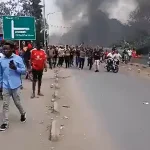
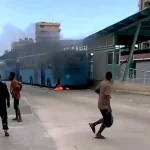
THE bitter irony was lost on no one. On December 9, the day Tanzania commemorates breaking free from colonial chains, its citizens found themselves imprisoned in their own homes – not by foreign powers, but by their own government. The streets of Dar es Salaam, usually alive with independence festivities, lay eerily silent. “We’re locked inside like rats,” one resident’s voice echoed through a video capturing the haunting emptiness, a phrase that captured the suffocating reality of a nation gasping for democratic air.
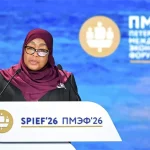
The roots of this crisis stretch back to October’s presidential election, a democratic exercise that became a bloodbath. After leading opposition candidates were barred from running, President Samia Suluhu Hassan claimed victory with a North Korean-esque 98 percent of the vote – a figure so absurd it would be laughable if the consequences weren’t so deadly. What followed was carnage: hundreds reportedly killed, over 2,000 detained, and a nation’s hopes crushed beneath military boots.
The government’s response to legitimate grievances has been textbook authoritarianism: deny, deflect, and deploy overwhelming force. While Hassan established a commission to investigate the violence, she simultaneously denied that security forces acted improperly and accused protesters of attempting to overthrow the government – a narrative that conveniently justifies any level of repression.
Independence Day: From Celebration to Coup Accusation
When Tanzanians, emboldened by desperation and diminishing patience, mobilised to transform Independence Day into a mass protest, Hassan’s government reached for its preferred weapon: the sledgehammer of state power. Home Affairs Minister George Simbachawene’s declaration was chilling in its audacity: “Those protests are not permitted and are unlawful… that is not a protest, that is a coup.”
With a single sentence, the regime criminalised dissent and set the stage for treason charges against citizens exercising fundamental rights. The message was clear: take to the streets, and you’re not protesters – you’re insurgents deserving of whatever the military deems appropriate.
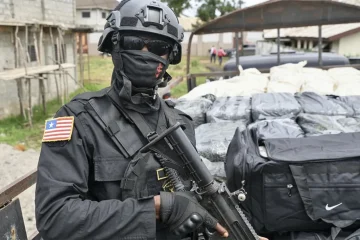
Prime Minister Mwigulu Nchemba’s “advice” for citizens to stay home “for rest” carried the subtle menace of a protection racket. Police confirmed arrests of at least ten activists for mere online posts about the protests. Witnesses reported heavy deployments of police and army along major roads in Dar es Salaam and Arusha, a show of force designed to terrify. Authorities even threatened to shut down the internet, the digital equivalent of pulling down the curtains before committing violence in the dark.
Defiance in the Face of Tanks
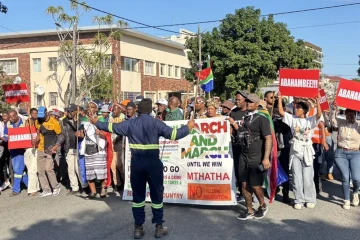
Yet something remarkable happened. Despite the threats, the troop deployments, and the spectre of treason charges, Tanzanians came out. Not in the overwhelming numbers they might have without intimidation, but they came. They looked soldiers in the eye. They refused to be cowed completely. Their courage shone through even as the regime’s propaganda machine worked overtime to paint them as violent coup-plotters rather than citizens demanding accountability.
This defiance matters because it reveals the fundamental weakness of Hassan’s position. A leader confident in her legitimacy doesn’t need to declare a 98 percent victory. A president secure in public support doesn’t need to ban Independence Day protests and deploy the military against her own people. A government with nothing to hide doesn’t arrest academics, civil society leaders, and local politicians in pre-dawn raids by unidentified armed personnel—a tactic ripped straight from the authoritarian playbook of making dissidents simply disappear.
International Pressure and the Regime’s Isolation
The international community’s response has been unusually direct. The United Nations Human Rights Office issued pointed warnings, with spokesperson Seif Magango reminding authorities of their obligations under international law. The statement was comprehensive and damning: respect fundamental rights, lift the disproportionate protest ban, release those arbitrarily detained, and ensure any use of force meets strict legal standards.
Magango’s comments cut to the heart of the regime’s credibility crisis: “Five weeks after the election, the authorities have still not disclosed information on the number of people killed and the circumstances of their deaths, and on reports of enforced disappearances.” This deliberate opacity isn’t incompetence—it’s strategy. Transparency invites accountability, and accountability threatens power.
UN Human Rights Chief Volker Türk’s reminder that any investigation must meet international standards of independence and impartiality reads like a diplomatic way of saying: we don’t trust you to investigate yourselves. And why should anyone? The same security forces accused of killing hundreds are now deployed to prevent people from demanding answers about those killings.
The Pressure Cooker Strategy
Hassan’s approach—intensifying repression, restricting fuel sales, expanding surveillance, arresting critics, threatening internet blackouts—isn’t a sign of strength. It’s the panicked flailing of a regime that knows it lacks legitimacy and fears its own people. As activists note, these might be the last days of Hassan’s rule, not because of foreign intervention, but because pressure cookers eventually explode.
The government has systematically undermined every avenue for peaceful dissent. Opposition candidates blocked from ballots. Protests are banned and labelled as coups. Online speech criminalised. Civil society is intimidated. Media monitored. Even commemorating independence has become an act of rebellion. When peaceful channels for change are systematically closed, regimes shouldn’t be surprised when citizens lose faith in peaceful methods.
The Cage Tightens
The metaphor of being “caged like rats” resonates because it captures not just physical confinement but psychological suffocation. Tanzania’s citizens are expected to celebrate independence while experiencing its opposite, to remain silent while their neighbours disappear, to accept a 98 percent election result that insults their intelligence, and to mourn hundreds dead without knowing who killed them or why.
But cages, even gilded ones, generate resistance. Hassan can deploy more troops, make more arrests, and issue more threats. She can shut down the internet and declare martial law. She can label every dissenter a coup-plotter and every protest an insurrection. What she cannot do is wish away the fundamental illegitimacy of her position or the growing anger of a population that remembers what independence was supposed to mean.
The Reckoning Ahead
The question facing Tanzania isn’t whether this repression is sustainable—it isn’t. No amount of military hardware can substitute for popular legitimacy indefinitely. The question is what comes next and at what cost. Will Hassan recognise that doubling down on authoritarianism only postpones an inevitable reckoning while increasing its violence? Will the international community move beyond statements to meaningful pressure? Will Tanzania’s security forces continue following orders to shoot their fellow citizens, or will some remember their oath is to the nation, not the president?
History offers lessons Hassan seems determined to ignore. Across Africa and beyond, leaders who governed through fear rather than consent ultimately fell. Some left quietly; others were dragged from power. All discovered too late that tanks and treason charges cannot forever suppress a determined population’s hunger for dignity and democracy.
Tanzania stood up to colonial oppression once before. Its people proved they could win their independence. Now they’re discovering they must win it again—this time from one of their own. The soldiers on Independence Day may have kept many off the streets, but they couldn’t keep the spirit of resistance indoors. And that’s what should terrify Hassan’s regime most: not the protests they managed to suppress, but the defiance they couldn’t.