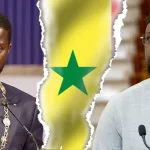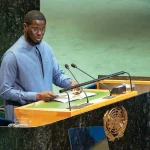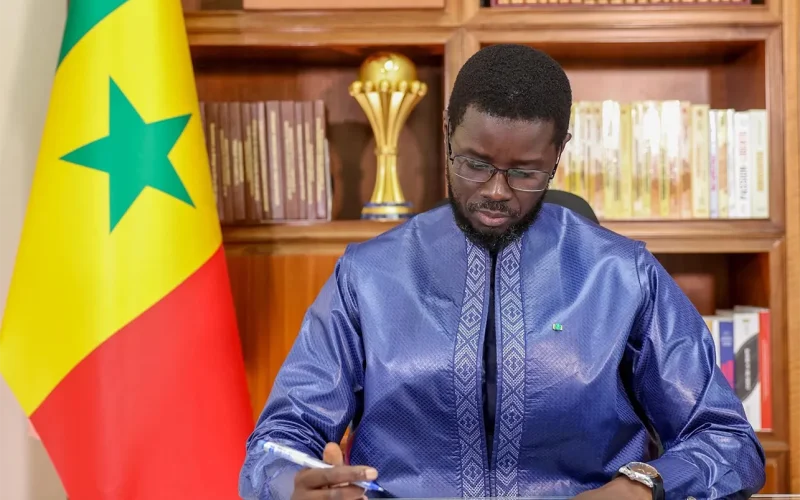
SENEGAL is now a country where a person can be imprisoned for a decade for who they love. President Bassirou Diomaye Faye signed into law on Monday legislation that doubles the maximum prison sentence for same-sex relations from five to ten years — a stroke of the pen that human rights advocates say marks a dark turning point for one of West Africa’s most celebrated democracies.
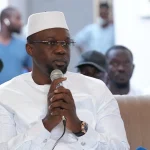
The law, which appeared in the official journal on Tuesday and takes immediate effect, passed the National Assembly on 11 March with an overwhelming majority: 135 lawmakers voted in favour; none voted against; only three abstained. It was introduced by Prime Minister Ousmane Sonko, who had campaigned for years on a promise to tighten Senegal’s already punitive statutes on same-sex relations.
Beyond the extended prison terms — ranging from five to ten years, up from the previous maximum of five — the legislation imposes sentences of between three and seven years on anyone found guilty of “promoting” or “financing” homosexuality. Fines have been elevated sharply, from a previous ceiling of 1.5 million CFA francs to a new maximum of 10 million CFA francs, equivalent to approximately $17,600.
If the act involved a minor, the law mandates that the maximum sentence be imposed.
“It flies in the face of the sacrosanct human rights we all enjoy: the rights to respect, dignity, privacy, equality and freedoms of expression, association and peaceful assembly.”
Volker Türk, UN High Commissioner for Human Rights
The United Nations High Commissioner for Human Rights, Volker Türk, had warned as the bill cleared parliament that it stood in direct contradiction to the most fundamental principles of international human rights law. He urged President Faye not to sign it and called on Dakar to repeal the existing anti-homosexuality statutes. His appeal went unanswered.
The international rights organisation ILGA World similarly pleaded with Faye to exercise restraint, calling on him to protect individual liberty and the dignity of every person under Senegalese law. That too was ignored.
A Crackdown Already Underway
The signing of the law is not the beginning of the crackdown — it is the legalisation of one already in progress. Since February, police have arrested at least a dozen individuals on charges related to same-sex relations. The arrests have included prominent public figures: Pape Cheikh Diallo, a well-known television presenter, and Djiby Dramé, a musician, are among those detained.
Social media in Senegal has been flooded with homophobic content, including calls to publicly identify individuals accused of same-sex activity. Headlines in some local tabloids have celebrated the arrests with language that would elsewhere be prosecuted as incitement. Authorities have further compounded the crisis by conflating some of the arrests with a separate, unrelated case in which 14 people were charged with sexual violence against minors — a dangerous and deliberate blurring of two entirely distinct matters.
In several instances, those arrested have additionally faced accusations of deliberately transmitting HIV — a charge that has dramatically escalated public hostility and generated the kind of hysteria that rights advocates warn can quickly turn lethal.
Sonko’s Long-Promised Victory
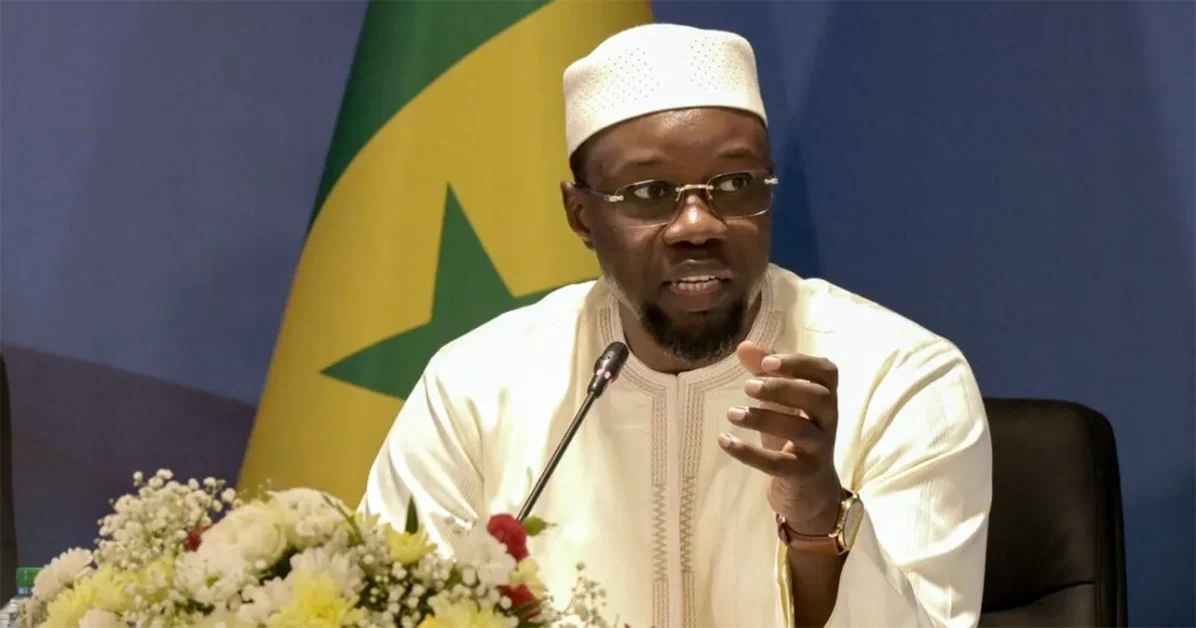
For Prime Minister Sonko, the signing represents the fulfilment of a political pledge he has pursued for years. Before entering government, he had promised to reclassify same-sex relations from a misdemeanour to a full criminal offence — a step the new law ultimately stops short of, retaining the misdemeanour classification even as it dramatically stiffens the penalties. Sonko personally tabled the legislation in parliament.
The political calculus in Senegal’s Muslim-majority society is not difficult to read. Religious associations have staged demonstrations demanding tougher measures, and the law was greeted with rallies of support organised by groups promoting Islamic values ahead of the parliamentary vote. Repression of LGBTQ+ people has become a marker of sovereign authenticity in a political culture where gay-rights advocacy is routinely framed as a Western imposition — a form of cultural neocolonialism that African states must resist.
That framing, rights groups argue, is both cynical and dangerous. The Washington-based anti-LGBTQ+ organisation MassResistance was reported to have worked alongside Senegalese groups backing the bill — a fact that sits awkwardly alongside the narrative that the law is a defence against Western influence.
Senegal Joins a Hardening Continent
Senegal’s law does not exist in a vacuum. At least 32 of Africa’s 54 nations criminalise same-sex relations. In Uganda, Mauritania and Somalia, the offence can carry the death penalty. Kenya, Sierra Leone and Tanzania already impose sentences of ten years or more. Senegal has now joined them.
The trajectory — from colonial-era statutes that were never repealed to a contemporary legislative campaign that actively doubles down on criminalisation — reflects a continent-wide pattern in which LGBTQ+ rights have become a site of political mobilisation, national identity and, increasingly, state violence.
Senegal had long positioned itself as a model of democratic stability and relative tolerance by West African standards. That distinction is now significantly harder to defend. A country that has championed electoral integrity and anti-corruption reform has chosen, in the same breath, to write discrimination deeper into its legal code.
The Question of Dignity
At its core, the law answers a question that should not require answering in any constitutional democracy: whether the state has the authority to imprison a human being for ten years because of who they are. The Senegalese government’s answer, ratified by its president and passed almost unanimously by its legislature, is yes.
The international community has registered its alarm. The UN has spoken. Rights organisations have spoken. None of it moved President Faye. The men and women now living under this law — those already arrested, those in hiding, those who have gone silent — had no voice in the National Assembly that voted against them.
Senegal has a rich tradition of democratic deliberation and intellectual openness. That tradition now carries a shadow. The question for the country’s leadership is whether the applause of the crowd today is worth the judgment of history tomorrow — and whether a decade in prison for who a person loves can ever be reconciled with the republic’s founding promise of dignity for all.