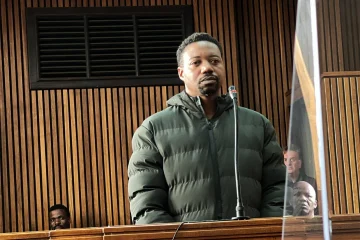
THE virtual courtroom buzzed with tension as lawyer Oliver Barker-Vormawor prepared to address the judge. But the defendants he was meant to represent – eleven West African nationals fighting for their very lives – were nowhere to be found. Not because they had chosen to skip court, but because they had vanished into the night, swept away in a weekend deportation that would render his entire lawsuit meaningless.
“We have to inform the court that the persons whose human rights we are seeking to enforce were all deported over the weekend,” Barker-Vormawor told the stunned courtroom, his words heavy with the weight of defeat and desperation.
“This is precisely the injury we were trying to prevent.”
What had begun as Ghana’s supposed act of regional solidarity had transformed into something far more sinister – a betrayal that would haunt the corridors of West African diplomacy for years to come. Eleven souls, already torn from their lives in America under Donald Trump’s immigration crackdown, found themselves caught in a web of international politics that would ultimately abandon them to fates they had fought desperately to escape.
The numbers tell a stark story: four Nigerians, three Togolese, two Malians, one Liberian, and one Gambian – each carrying the invisible scars of persecution, each granted protection by U.S. immigration judges who recognised the very real dangers they faced if returned to their homelands. Yet Ghana, the supposed beacon of pan-African unity, would become the final stop before their journey into the unknown.
President John Dramani Mahama had stood before reporters with conviction, painting Ghana’s decision in noble hues. His government would accept West African nationals deported from the United States – not as an endorsement of Trump’s harsh policies, he insisted, but as an act of regional brotherhood. Ghana wanted nothing in return, no financial incentives, no political favours. It was, he claimed, about principle.
But principles, as the eleven deportees would learn, are fragile things in the face of diplomatic pressure and bureaucratic convenience.
Vanishing Into the Night
Six of the deportees found themselves in Togo, their lawyer confirmed, while the remaining five simply disappeared into the shadows of uncertainty. No one knew where they had gone, whether they were safe, or if they were already facing the very persecution that U.S. immigration judges had sought to protect them from.
The weekend deportation was swift, surgical, and devastating in its efficiency. While lawyers prepared legal arguments and human rights advocates rallied support, Ghana quietly moved these vulnerable individuals across borders, away from the protection of its courts and the reach of international scrutiny.
The Legal Labyrinth
What Ghana had done was more than administrative – it was a violation of the most fundamental principle of international human rights law: non-refoulement, the prohibition against returning people to countries where they face torture, persecution, or inhumane treatment. At least eight of the deportees had been explicitly granted protection by U.S. immigration judges for precisely these reasons.
Yet now, scattered across West Africa, these individuals face a legal nightmare. Once deported to their countries of origin, they lose access to the very courts that might have protected them. U.S. and Ghanaian courts have no jurisdiction over another sovereign nation’s treatment of deportees, leaving them with few options beyond the slow, often ineffective machinery of international human rights bodies.
Ghana’s actions have sent shockwaves throughout West Africa and beyond. Opposition parliamentarians and civil society groups are demanding transparency, calling for the suspension and legal ratification of any U.S.-Ghana deportation agreements. The lack of due process, the military detention facilities, and the absence of legal representation – all point to a system that prioritised diplomatic convenience over human dignity.
Other African nations – Rwanda, Eswatini, South Sudan – have entered similar agreements with the United States, creating a patchwork of deportation destinations that serve America’s political needs while potentially exposing vulnerable individuals to grave harm.
Questions Without Answers
The central question haunts every conversation about this case: Why did Ghana accept these deportees in the first place, rather than insisting that the United States deport them directly to their countries of origin? The answer reveals uncomfortable truths about power, desperation, and the willingness of nations to compromise human rights for diplomatic relationships.
Ghana’s government maintains its humanitarian facade, speaking of regional cooperation and West African unity. But the deportees’ lawyers paint a different picture—one of unlawful detention, military facilities, and a systematic denial of due process that culminated in that fateful weekend when eleven lives were shuffled across borders like unwanted cargo.
The Human Cost
Behind every statistic lies a human story – individuals who fled persecution, who found temporary refuge in America’s immigration system, who trusted in the protection of courts and international law. Their weekend deportation from Ghana represents not just a legal failure, but a moral one that exposes the vulnerability of those caught between nations and politics.
As more deportees are expected to arrive in Ghana in the coming weeks, the controversy shows no signs of abating. Each new arrival carries the same question: Will Ghana honour its stated commitment to humanitarian principles, or will more weekends pass with more lives vanishing into uncertainty?
The Verdict of History
The eleven deportees may have disappeared from Ghana’s shores, but their case has illuminated something far more troubling – the ease with which human rights can be sacrificed on the altar of international relations. In a world where the powerful make deals and the vulnerable pay the price, Ghana’s weekend deportations serve as a stark reminder that solidarity, like justice, is often only as strong as the political will to uphold it.
Their empty seats in that Tuesday courtroom tell a story that transcends law and politics—a story of how quickly protection can turn to betrayal, how swiftly sanctuary can become a trap, and how the most vulnerable among us often find themselves with nowhere left to run.