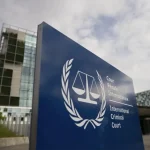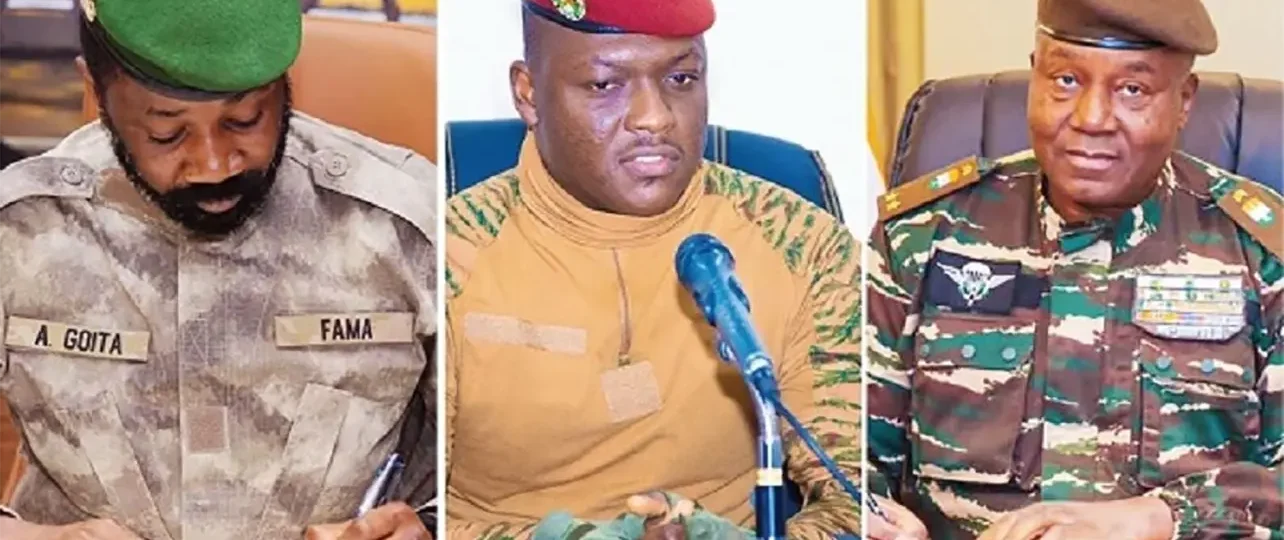

IN a watershed moment for international justice, three West African nations have delivered a stinging rebuke to the International Criminal Court, announcing their collective withdrawal from the tribunal they once embraced as a beacon of accountability.
Burkina Faso, Mali and Niger have announced they will immediately withdraw from the International Criminal Court (ICC), labelling it an ‘instrument of neo-colonialist repression’. The decision by the Confederation of Sahel States (AES) represents the most significant coordinated challenge to the ICC’s legitimacy since its establishment, echoing longstanding African grievances about institutional bias.
The three military-led governments, which collectively joined the Rome Statute between 2000 and 2004, delivered a scathing assessment of the court’s record, accusing it of pursuing “selective justice” while shielding perpetrators from powerful Western nations. Their withdrawal follows a pattern of resistance to international institutions perceived as instruments of foreign dominance—earlier this year, the same countries abandoned the West African regional bloc ECOWAS, citing similar concerns about sovereignty.
A Court Under Fire
With nine of the first ten ICC investigations located in Africa, some African leaders have claimed that the ICC is unfairly targeting the continent and is a tool of “Western neo-colonialism.” The Sahel states’ critique strikes at the heart of this controversy, arguing that despite decades of cooperation, the ICC has failed to deliver meaningful justice in their region while maintaining a troubling double standard.
The frustration is particularly acute given the security crisis engulfing the Sahel. Despite Mali referring its jihadist insurgency crisis to the ICC in 2012, only two prosecutions have materialised in over a decade—a record that the governments say demonstrates the court’s ineffectiveness when African lives are at stake.
“The ICC has remained silent on certain crimes while relentlessly targeting individuals outside a closed circle of beneficiaries of institutionalised international impunity,” the AES joint statement declared, capturing a sentiment that resonates across much of the Global South.
Joining a Club of Resisters
The Sahel withdrawal places these nations alongside a notable roster of countries that have rejected or distanced themselves from the ICC’s jurisdiction. The ICC has no jurisdiction over the United States or Israel, as neither country is party to the Rome Statute or a member of the ICC. However, in 1998, the US was one of only seven countries – along with China, Iraq, Israel, Libya, Qatar, and Yemen – that voted against the Rome Statute.
The American stance has been particularly hostile under recent administrations. In 2002, under the administration of President George W Bush, the US withdrew its signature. On February 6, 2025, US President Donald Trump imposed sanctions on the ICC, accusing the court of targeting both Israel and the US. Rome Statute that founded the Court and having expressed “deep sympathy” for · the Court’s goals, the State of Israel withdrew its signature in 2002, in accordance · with Article 127 of the Statute.
This creates a striking paradox: while the ICC pursues cases primarily in Africa and Asia, the world’s most powerful military forces operate with effective impunity from its reach. Some forty countries never signed the treaty, including China, Ethiopia, India, Indonesia, Iraq, North Korea, Saudi Arabia, and Turkey.
The African Exodus Continues
Sometime last year, three African countries—Burundi, the Gambia and South Africa—signalled their intention to leave the International Criminal Court (ICC). Some political leaders have threatened to withdraw from the court: Burundi – the first and so far only to officially start the process of withdrawing – accused the court of being “a political instrument and weapon used by the West to enslave other states”.
The Sahel states’ decision amplifies these earlier protests and signals a broader African awakening to what critics see as institutionalised bias. The court has also been accused of bias and of disproportionately targeting leaders in Africa, which prompted several African nations to threaten or initiate withdrawal from the statute in the 2010s.
A Quest for Indigenous Justice
Rather than simply abandoning accountability, the Sahel states are signalling their intention to develop what they call “indigenous mechanisms for peace and justice” tailored to their region’s specific challenges. This represents a broader decolonisation movement sweeping across Africa, as nations seek to reclaim agency over their legal and political institutions.
The withdrawal will take effect one year after official notification to the UN Secretary-General, giving the international community time to reflect on the ICC’s future. For supporters of international justice, these departures represent dangerous setbacks to global accountability efforts. For critics, they mark long-overdue recognition that true justice cannot emerge from institutions that embody the very power imbalances they claim to address.
The Road Ahead
The Sahel states’ historic decision poses fundamental questions about the future of international criminal justice. Can the ICC reform itself to address legitimate concerns about bias and selectivity? Or will it remain a court primarily for prosecuting the powerless while the powerful enjoy impunity?
As Burkina Faso, Mali, and Niger prepare to chart their own course toward justice and accountability, their withdrawal serves as both indictment and challenge—demanding that international institutions live up to their universal aspirations or risk irrelevance in a multipolar world where former colonies no longer accept Western-dominated justice as legitimate.
The three nations’ bold step may well inspire other African countries to follow suit, potentially triggering the most serious crisis in the ICC’s 23-year history. Whether this crisis leads to meaningful reform or further fragmentation of international justice remains to be seen, but one thing is certain: the age of unquestioned Western leadership in global institutions is drawing to a close.