THEY might be small and largely inconspicuous, but ants are becoming big business for a growing market of enthusiasts. In April, Kenyan authorities intercepted two Belgian teenagers, a Vietnamese national, and a local accomplice as they attempted to smuggle 5,400 live queen ants out of the country.
Their illicit cargo, consisting mainly of the Messor cephalotes species, was carefully packed into over 2,200 modified test tubes and syringes, all designed to keep the ants alive during their journey to European terrariums. The Kenya Wildlife Service (KWS) estimated the collection’s local value at approximately 1.2 million Kenyan shillings, though European collectors might have paid as much as one million US dollars for the entire haul – a clear indication that the ant trade is becoming a lucrative target for smugglers.

This marks another troubling shift in the world of wildlife crime. According to Prof. Henk Bouwman from the Unit for Environmental Sciences and Management at North-West University (NWU) in South Africa, such trafficking poses a significant threat to local ecosystems unprepared for the arrival of foreign species.
“Smuggling ants is a serious issue. Moving any animal to a region where it does not naturally occur is risky. Ants are a fascinating group – there are between 12,000 and 15,000 known species, with estimates suggesting the real number could be more than double that. They thrive in almost every habitat, from deep underground to the top of rainforest canopies,” he explains.
“Rainforest ants, for instance, have evolved such precise adaptations that if they fall from a tree, they can steer themselves back to the trunk, avoiding a long and potentially deadly descent. This level of specialisation makes them incredibly successful in their native environments, but it can also make them devastating invaders. When introduced to regions without natural predators or competing species, they can wreak havoc on local ecosystems and even economies,” Bouwman adds.
Global Patterns of Ant Trafficking
The Kenyan case is not isolated. In 2022, German customs officials at Frankfurt Airport seized over 3,000 queen ants being smuggled from Tanzania, hidden in packages labelled as “research samples.” The specimens, primarily harvested from protected areas, were destined for private collectors in Europe who prize rare African species for their distinctive behaviours and colony structures.
Similarly, in 2023, authorities in Thailand intercepted a Japanese national attempting to smuggle over 1,000 Oecophylla smaragdina (Asian weaver ants) queens in specially designed containers within his luggage. These ants, valued for their impressive nest-building capabilities and potential medicinal properties, can fetch up to $100 per queen on specialised online marketplaces.
Ecological Impact
Dr. Maria Fernandez, an entomologist at the Global Invasive Species Initiative, warns that the consequences of ant trafficking extend far beyond conservation concerns. “Invasive ant species have caused billions of dollars in agricultural damage worldwide. The red imported fire ant alone costs the United States approximately $6.7 billion annually in control efforts, medical treatments, and agricultural losses,” she notes.
Ants play crucial ecological roles as soil engineers, seed dispersers, and regulators of other insect populations. When non-native species establish themselves, they can disrupt these delicate balances that have evolved over millions of years.
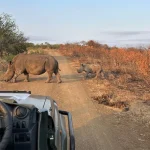
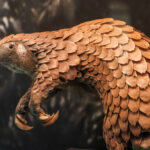
As traditional smuggling targets like elephants and rhinos come under increased protection, traffickers are turning their attention to smaller, less conspicuous species. For conservationists, this is a stark reminder that preserving Africa’s natural heritage must include not only its largest residents but also its smallest.