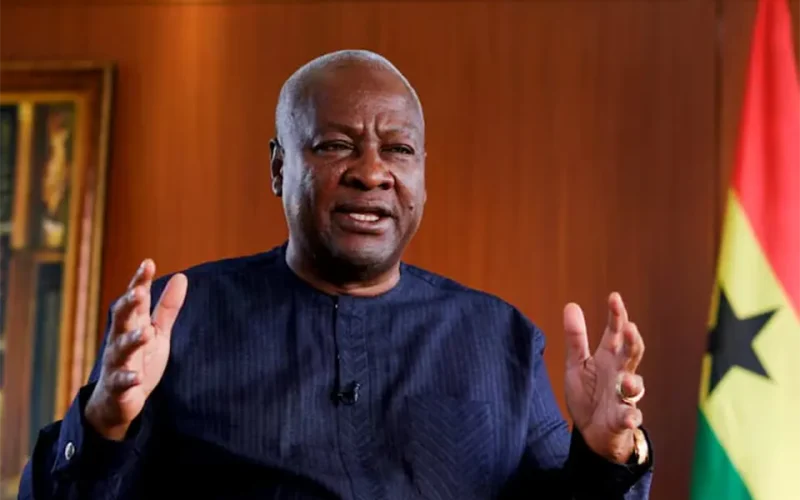
PRESIDENT John Dramani Mahama has launched a sweeping investigation into Ghana’s National Service Authority after the discovery of 81 885 ghost names on its payroll, marking one of his administration’s first major anti-corruption initiatives since returning to office in January.
The ghost workers were uncovered during a mandatory headcount of service personnel, conducted at the Finance Minister’s direction to address outstanding allowance payments. The audit revealed that while the previous management had submitted payment requests for 180,030 personnel in 2024, only 98,145 legitimate service workers could be verified.
Following the verification process, the Finance Ministry released GHS 226,019,224 (approximately $14.6 million) to cover arrears for the confirmed service personnel. The scale of the discrepancy has raised serious questions about potential fraudulent payments under the previous administration.
According to a statement from his office, President Mahama has directed the National Investigations Bureau (NIB) to conduct an immediate investigation into the Authority’s operations under the previous government. Additionally, he has mandated the Authority’s new management to implement urgent reforms and establish stricter controls to prevent future payroll fraud.
The investigation aligns with Mahama’s campaign promises to combat entrenched corruption in Ghana, which has struggled with its worst economic crisis in a generation despite its position as a significant oil and gold producer in West Africa.
Government spokesperson Felix Kwakye Ofosu, MP, confirmed these developments as part of the administration’s broader efforts to ensure financial accountability in public institutions.