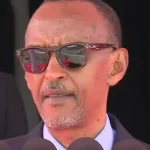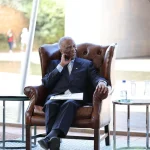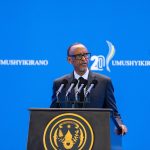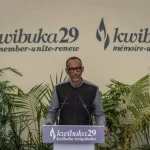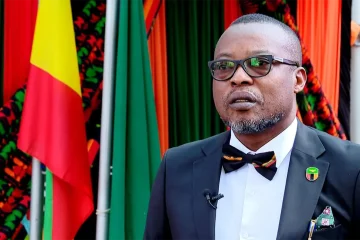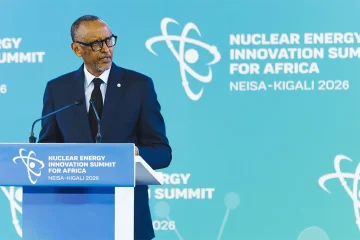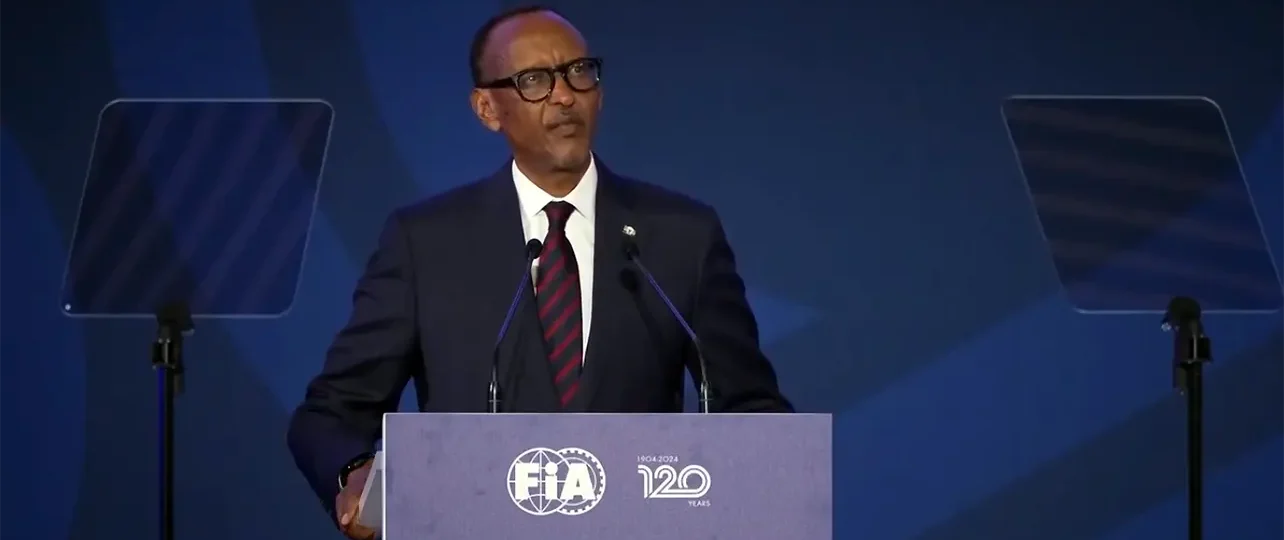

IN the heart of Africa, where verdant hills meet turbulent histories, President Paul Kagame of Rwanda stands resolute, his words cutting through the fog of decades-long conflict in the eastern Democratic Republic of Congo (DRC). “We will stand up for ourselves,” he declares, a powerful assertion of Rwanda’s sovereignty and its refusal to bear blame for a war that has scarred generations. His voice carries the weight of history and the urgency of a nation determined to defend its people and its truth.
The war in eastern DRC is not merely a contemporary crisis; it is rooted in colonial legacies and post-independence struggles that have left borders blurred and identities fractured. The arbitrary lines drawn by colonial powers grouped diverse ethnicities into nations with little regard for their histories or relationships. Among these were Rwandans – people who found themselves on the “wrong” side of borders, in places like Kisoro in Uganda or Masisi and Rutshuru in Congo. Kagame emphasizes this point: “Rwanda did not move Rwandans there. Rwanda did not take them there.” These displaced communities are now caught in a web of violence and rejection, as governments attempt to push them out without recognizing their rights or their humanity.
The eastern DRC has been a cauldron of unrest since the 1990s, fueled by ethnic tensions, competition for natural resources, and political manipulation. Over 100 armed groups operate in the region, their loyalties shifting as they vie for control over land and wealth. The resurgence of the M23 rebel group has intensified the crisis, forcing millions into displacement camps where disease and hunger are rampant. This chaos is often blamed on Rwanda, but Kagame refutes this narrative: “This war in Congo, people have tried to make it Rwanda’s war, but it is not Rwanda’s war.”
Kagame’s words reflect a deeper struggle – a fight against historical injustice and contemporary scapegoating. He points to the rights of Rwandans who live beyond Rwanda’s borders, asserting that if other nations demand their expulsion, they should also relinquish the land these communities have cultivated for generations. “If you claim to act in truth or seek peace… you must respect people’s rights,” he insists. Denying these rights ignites rebellion – a fire born from desperation and dignity.
Rwanda’s involvement in past DRC conflicts is complex. During the First Congo War (1996-1997), Rwanda intervened to dismantle refugee camps harbouring génocidaires from the 1994 Rwandan genocide. While this action was aimed at securing Rwanda’s borders, it also drew criticism for atrocities committed during the conflict. The Second Congo War (1998-2002) saw Rwanda backing rebels against Laurent Kabila’s government, further entangling Kigali in Congo’s volatile politics. These historical interventions are often cited to implicate Rwanda in the current unrest, but Kagame argues that today’s conflict stems from unresolved issues within Congo itself.
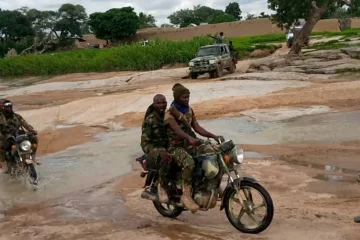
The resurgence of M23 rebels since 2022 has plunged eastern DRC into deeper turmoil. Fighting between Congolese forces and M23 has devastated provinces like North Kivu and Ituri. Local militias have joined government forces, creating a patchwork of alliances that complicates peace efforts. Meanwhile, accusations against Rwanda persist, with claims that Kigali supports M23 – a charge Kagame vehemently denies.
For Kagame, this is not just about geopolitics; it is about protecting Rwandans from being used as pawns in a larger game. “When you drag Rwandans into this situation… What do you expect us to do? We will stand up for ourselves.” His defiance underscores Rwanda’s determination to shield its people from external blame while advocating for justice and peace.
As eastern DRC burns with conflict over land, resources, and identity, Kagame’s words serve as both a defence and a challenge – to acknowledge history, respect rights, and seek genuine solutions. The fire he speaks of – the rebellion against injustice – is not unique to Rwanda or Congo; it is universal. In standing up for his nation, Kagame calls on others to confront their roles in perpetuating violence.
In this tapestry of war and resilience, one truth emerges: peace cannot be achieved without addressing the roots of conflict – the colonial scars, the displaced communities, and the exploitation that fuels unrest. For Kagame and Rwanda, standing up is not just an act of defiance; it is a demand for dignity amidst chaos.
“This war in Congo, people have tried to make it Rwanda’s war, but it is not Rwanda’s war. Rwanda did not start this war; rather, what those who started it wanted, is what we are fighting against. And that is what I am going to explain to you.
— Presidency | Rwanda (@UrugwiroVillage) March 16, 2025
This war has its origins in the… pic.twitter.com/yOmZta5Qua