HEAVY fighting continues to intensify across Sudan as weapons pour into the war-torn nation, prolonging a conflict that has killed tens of thousands and left millions starving, according to independent human rights investigators.
The Independent International Fact-Finding Mission for Sudan has reported that the continued flow of arms into the northeast African country is directly fueling the escalation of violence between warring factions, now in its third year.
“There is a direct link between the flow of arms in Sudan, armed hostilities and the resulting violence,” said Mohamed Chande Othman, chair of the fact-finding mission established by the UN Human Rights Council. “We know the kind of arms that are being used: heavy artillery, modern warfare, drones and in fact, they have escalated.”
The conflict between the Sudanese Armed Forces (SAF) and the Rapid Support Forces (RSF) erupted in April 2023 following the breakdown of Sudan’s transition to civilian rule. Both sides continue to commit war crimes, investigators found, with civilian populations bearing the brunt of the violence.
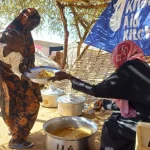
More than 13 million Sudanese have been displaced by the fighting, while “many Sudanese are dying from hunger,” particularly those in detention, said Joy Ngozi Ezeilo, an expert member of the mission.
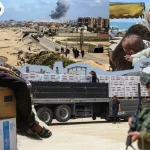
The investigators documented how both warring parties have weaponised humanitarian aid. The SAF has imposed bureaucratic restrictions on relief efforts, while the RSF has looted aid convoys and blocked assistance entirely, driving famine conditions particularly severe in the Darfur region.
Medical facilities have come under sustained attack. The RSF shelled the Saudi Hospital in El Fasher a dozen times and conducted a drone strike on Obeid International Hospital in North Kordofan that killed six civilians and shuttered one of the region’s last functioning clinics.
A UN aid convoy bombing in Al Koma on June 2 killed five staff members en route to El Fasher, further hampering relief efforts in a region where civilians face acute food shortages.
War Crimes on Both Sides
Around El Fasher, RSF forces have “assaulted, detained and killed” civilians while attacking, burning and looting villages, the mission found. One RSF attack from April 10-13 reportedly killed more than 100 civilians, while a SAF bombing in Al Koma killed at least 15 civilians.
In areas recaptured by government forces, including Khartoum, Gezira, and Sennar, investigators documented widespread retaliation between late 2024 and mid-2025. Individuals perceived as RSF supporters, including human rights defenders, medical workers and aid personnel, faced arbitrary arrest, torture and execution.
The RSF has also carried out reprisals, killing 30 civilians in Omdurman’s Al-Salha neighborhood on April 27.
The mission documented a sharp rise in sexual and gender-based violence, with women and girls subjected to rape, gang rape, abduction, sexual slavery and forced marriage, predominantly in RSF-controlled displacement camps.
Crimes against humanity continue “particularly in the context of persecution of certain ethnic groups,” said investigator Mona Rishmawi.
International Action Urged
The investigators called on all states to respect and enforce the UN Security Council arms embargo established under Resolution 1556, citing the direct connection between weapons flows and escalating violence.
“The scale of human suffering continues to deepen,” Othman said. “The fragmentation of governance, the militarisation of society, and the involvement of foreign actors are fuelling an ever-deadlier crisis.”
The conflict has destroyed homes, health facilities, markets and critical infrastructure across Sudan, with no end to the violence in sight as both sides continue to receive arms and military support.