
JOVIAL RANTAO
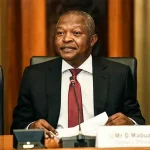
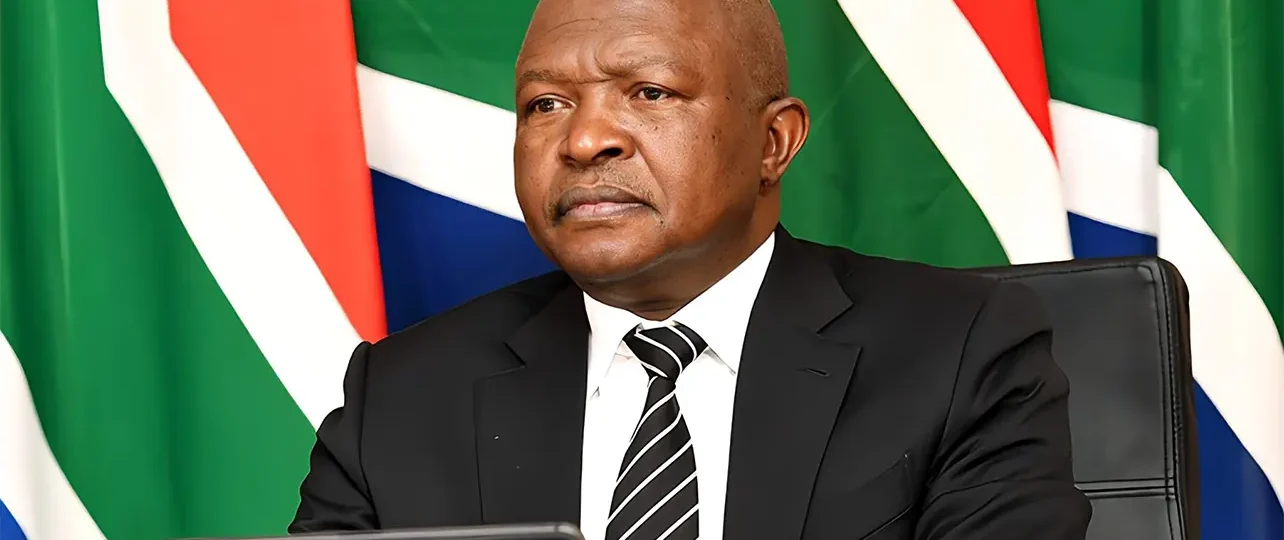
THE corridors of power in South Africa fell silent as news spread of the passing of David Dabede Mabuza, the former Deputy President, whose political journey embodied both the complexities and contradictions of modern South African leadership. At 64 years old, Mabuza’s death marks the end of a career that spanned decades of service, leaving behind a legacy as intricate as the man who crafted it.
Mabuza’s final years were marked by mysterious health battles that took him repeatedly to Russia for medical treatment, with speculation linking these trips to an alleged poisoning incident in 2015. The poisoning incident three years prior had led to his treatment at the “Kremlin Hospital” via a Gupta-owned jet, a detail that would become emblematic of the intrigue surrounding his later years in office.
The man they called “DD” – though perhaps more fittingly known as “The Cat” – had always been a figure who operated in the shadows of South African politics, his influence often more felt than seen. The feline moniker was earned through decades of political survival, a testament to his uncanny ability to land on his feet no matter how many times his career seemed destined for destruction.
Perhaps the cruel irony of Mabuza’s death is that “The Cat”, who had survived so many political assassinations, ultimately could not escape the more literal threat to his life. The poisoning that sent him repeatedly to Russia for treatment represented a different kind of battle – one where his legendary survival instincts, honed over decades of political warfare, proved insufficient against the silent enemy coursing through his veins.
His health struggles, shrouded in secrecy and speculation, seemed to mirror the enigmatic nature of his political career, but they also marked the first time that The Cat’s famous nine lives seemed genuinely under threat. Multiple trips to Russia for medical consultation became a recurring theme in his later political life, each journey adding another layer to the mystery that would follow him to his final days. For a man who had made a career of emerging from the shadows unscathed, the visible toll of his illness was perhaps the most vulnerable he had ever appeared in public.
Mabuza’s ascent through South African politics was nothing if not methodical. Born in Phola Trust, Mpumalanga, on August 25, 1960, he began his public service career in education—a foundation that would serve him well in understanding the complexities of governance. His appointment as Member of the Executive Council (MEC) for Education in Mpumalanga was the first step in a carefully orchestrated rise to power.
It was in Mpumalanga where Mabuza truly found his political footing. As Premier of the province, he wielded influence that extended far beyond its borders. His leadership style was characterised by a quiet authority that commanded respect across party lines. He understood that in South African politics, relationships were currency, and he invested wisely in building a network that would eventually propel him to national prominence.
Nine Lives in Politics
If politics were a predator’s domain, David Mabuza was its most skilled survivor. “The Cat” they called him, and the nickname captured something essential about his political DNA—that inexplicable ability to emerge unscathed from situations that would have ended lesser careers. Time and again, opponents circled, sensing weakness, ready to deliver what they believed would be the fatal blow to his political aspirations. Yet each time, Mabuza would slip away, regroup, and return stronger than before.
His survival instincts were legendary within ANC circles. When corruption allegations swirled around his administration in Mpumalanga, many predicted his political demise. The Cat merely adjusted his stance, weathered the storm, and emerged with his influence intact. When factional battles threatened to tear the ANC apart, observers expected casualties—but Mabuza navigated the chaos with feline grace, always seeming to know which way to leap before the ground beneath him crumbled.
Even his rise to the deputy presidency seemed to defy political gravity. Critics had written him off multiple times, yet there he was in 2017, playing kingmaker in the ANC leadership race, his support proving decisive in Cyril Ramaphosa’s victory. It was vintage Cat—patient, calculating, and ultimately triumphant when it mattered most.
Mabuza’s defining moment came in 2017 when he helped swing the ANC leadership race in Cyril Ramaphosa’s favour, defeating Nkosazana Dlamini-Zuma. This political manoeuvring earned him the deputy presidency, making him the second most powerful politician in the country. The move was vintage Mabuza—calculated, decisive, and ultimately successful.
His tenure as Deputy President from 2018 to 2023 was marked by both significant contributions and persistent controversies. While he brought his trademark pragmatism to the role, questions about his health and his frequent absences for medical treatment in Russia kept him in the public eye for reasons beyond his political achievements.
A Complex Legacy
Mabuza’s legacy is one that defies simple categorisation, much like the man himself—always landing on his feet, always finding a way forward when others saw only dead ends. He was simultaneously a unifier and a divisive figure, a skilled negotiator who could broker deals in smoke-filled rooms while maintaining an air of mystery that frustrated both allies and opponents. His ability to navigate the treacherous waters of ANC politics while maintaining his power base in Mpumalanga demonstrated a political acumen that few could match—a survival instinct that earned him the grudging respect even of his enemies.
The Cat’s reputation was built on this very quality: the ability to sense danger before it struck, to position himself advantageously before others realised the game had changed. His contributions to education policy, infrastructure development in Mpumalanga, and his role in stabilising the ANC during turbulent times cannot be overlooked. Yet these achievements will forever be intertwined with the legend of his political immortality—until the day it finally ran out.
The ANC has paid tribute to Mabuza’s passing, with party officials acknowledging the loss of a significant figure in South African politics. The ANC, despite its internal divisions and the controversies that sometimes surrounded Mabuza, recognises his contribution to the party’s survival during some of its most challenging periods.
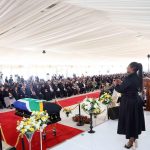
The announcement of an official funeral speaks to the respect he commanded, even among those who questioned his methods. It will be a ceremony that reflects not just his achievements, but the complexity of leadership in a democracy still finding its footing decades after liberation.
Reflections on Power and Mortality
As South Africa prepares to bid farewell to Mabuza, the nation is forced to confront the reality of political mortality. Here was a man who wielded significant power, who influenced the direction of the country’s largest political party, and who served in the second-highest office in the land. Yet he was also a man whose health battles and mysterious circumstances reminded everyone that power, however great, cannot shield one from human frailty.
His story is ultimately one of service shadowed by intrigue, of achievement tempered by controversy, and of a political career that reflected both the possibilities and the pitfalls of leadership in modern South Africa. The man who helped shape the current political landscape leaves behind a legacy that will continue to influence South African politics long after his passing.
In the end, David Mabuza’s life serves as a reminder that political legacies are rarely simple narratives of triumph or failure, but rather complex stories of human ambition, dedication, and the inevitable toll that public service takes on those who choose to serve. His passing closes a chapter in South African political history, but the questions about leadership, power, and service that his career raised will continue to resonate in the years ahead.
As the flags fly at half-mast and the nation prepares for his official funeral, South Africa mourns not just a politician, but a figure who embodied the complexities of democratic leadership in a nation still writing its own story. David Mabuza’s final chapter has been written, but his influence on South African politics will endure long after the last tributes are paid and the last speeches are given.