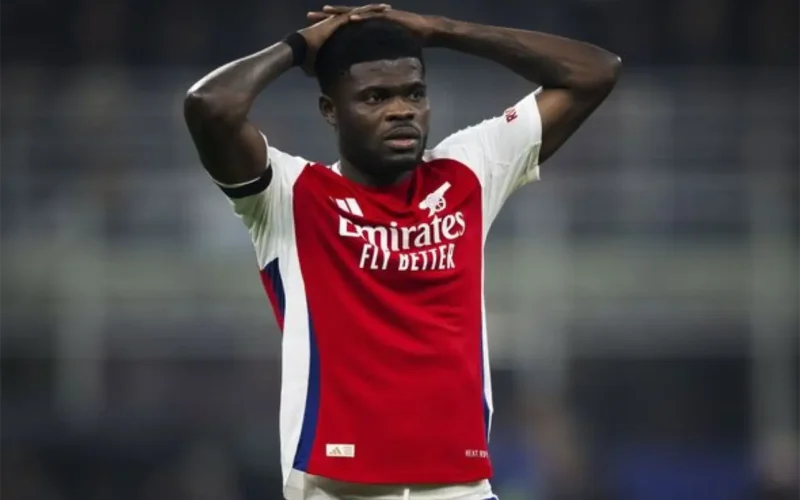
FOR the first time since his world collapsed, Thomas Partey spoke – not directly, but through the measured words of his lawyer, Jenny Wiltshire. “Thomas Partey denies all the charges against him,” she declared, her statement cutting through three years of silence like a blade through thick fog. “He now welcomes the opportunity to finally clear his name.”
It was a defiant stance from one of Ghana’s most celebrated football exports, a man who had risen from the dusty pitches of Accra to the pristine lawns of the Emirates Stadium, only to find himself facing the most serious charges that can destroy both career and life.
The charges are devastating in their scope: five counts of rape and one count of sexual assault, allegations spanning 2021 to 2022 that paint a picture of systematic predatory behaviour. Three women have come forward, their identities protected by law, their courage in speaking out now vindicated by the Crown Prosecution Service’s decision to proceed after what they called a “careful review of comprehensive evidence.”
As the football world reeled from the revelations, Arsenal manager Mikel Arteta faced the inevitable questions about how his club had handled one of Africa’s brightest talents, turned alleged predator. The Spanish coach, known for his tactical precision, chose his words with surgical care.
When pressed on whether Arsenal had followed the correct procedures throughout the investigation, Arteta’s response was unequivocal: “100 percent.” Yet behind that confidence lay a more complex truth—a story of institutional knowledge, careful legal navigation, and the delicate balance between sporting ambition and moral responsibility.
The timeline reveals the extraordinary nature of this case. While Partey continued to pull on the Arsenal shirt, making over 50 appearances while on police bail, the club had been aware of concerns about their midfielder since September 2021 – nearly a year before his first arrest in July 2022. The Telegraph’s investigation exposed this uncomfortable reality, raising questions about how football’s governing bodies handle such sensitive matters.
The Football Association’s response – or lack thereof – highlights the sport’s structural blind spots. No formal investigation was launched despite early warnings, with officials citing that the concerns fell outside their safeguarding responsibilities for adults and minors “at risk.” It was a technicality that allowed the game to continue while serious allegations festered in the shadows.
For Arsenal, Partey represented a £45 million investment and a crucial cog in their midfield machinery. The Ghana international had been a key figure in their recent resurgence, his powerful presence and tactical intelligence making him indispensable to Arteta’s vision. Yet as his contract approached its June 30 expiration, negotiations stalled—the unspoken weight of the investigation perhaps finally proving too heavy to ignore.
The Ghanaian Hero’s Downfall
In Ghana, where football is a religion and Premier League players are treated as demigods, Partey’s story represents something more profound than individual disgrace. He was the boy who made it, the success story that inspired countless young Africans to believe in their dreams. His journey from Atletico Madrid to Arsenal had been celebrated as African football’s continuing evolution on the global stage.
Now, as he sits without a club, his reputation in tatters, Partey faces the prospect of becoming a cautionary tale instead of an inspiration. The Metropolitan Police’s investigation, led by Detective Superintendent Andy Furphy, began in February 2022 after the first rape report was filed. What followed was a painstaking three-year process that would ultimately lead to his appearance at Westminster Magistrates’ Court on August 5.
Wiltshire’s statement emphasised her client’s cooperation throughout the investigation, painting him as a man eager to clear his name rather than evade justice. “He has fully cooperated with the police and CPS throughout their three-year investigation,” she insisted, suggesting that Partey’s silence had been strategic rather than evasive.
But cooperation and innocence are different currencies in the court of public opinion. The football world, already grappling with its own reckoning over player conduct and institutional responsibility, now faces another test of its values. Can the beautiful game truly claim moral authority when such serious allegations emerge against its stars?
Detective Superintendent Furphy’s message was clear and compassionate: “Our priority remains providing support to the women who have come forward.” In a system often criticised for protecting powerful men at the expense of vulnerable victims, his words carried particular weight.
As Partey prepares for his day in court, the ripple effects of his case continue to spread. Arsenal, having allowed his contract to expire just days before charges were filed, appears to have made a calculated decision to distance itself from potential reputational damage. Whether this timing was coincidental or strategic remains unclear, but the optics suggest a club that had prepared for this moment.
For African football, Partey’s case represents a painful reminder that talent and success provide no immunity from accountability. The continent’s footballing ambassadors carry the hopes and dreams of millions, but they also bear the responsibility that comes with such influence.
The story of Partey -from celebrated midfielder to accused predator – is ultimately a story about power, privilege, and the institutions that govern both football and justice. As the legal process unfolds, three women await their day in court, seeking justice for alleged crimes that no amount of footballing brilliance can excuse.
In speaking through his lawyer, Partey has finally broken his silence. Now, he must face the consequences of what that voice might reveal in the months ahead. For a man who once controlled the midfield with authority and precision, his greatest challenge now lies in proving his innocence in a courtroom where the rules are very different from those he mastered on the pitch.