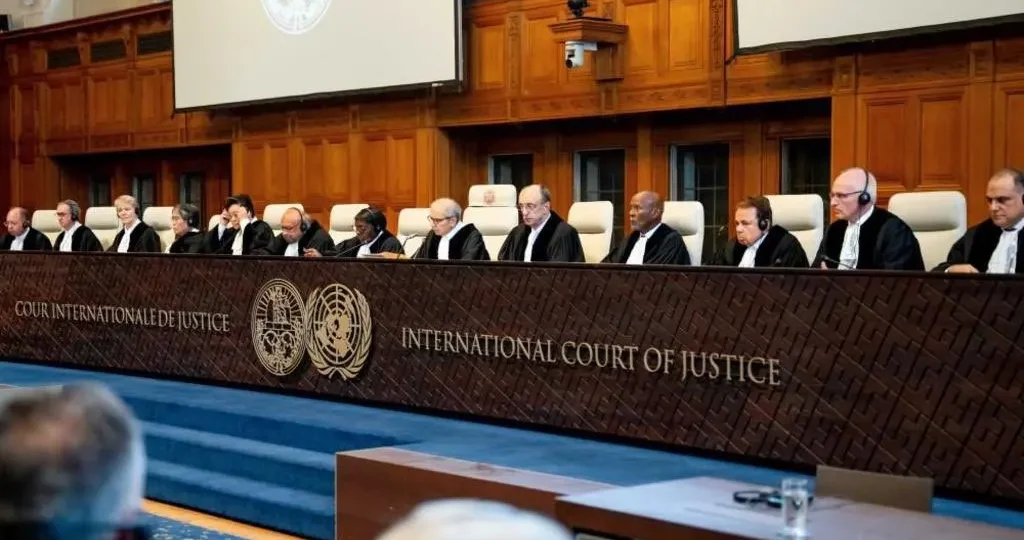

AFRICAN nations have secured a landmark victory at the International Court of Justice (ICJ), with the world’s highest court ruling that climate change “imperils all forms of life” and establishing binding legal obligations for all states to prevent further global warming.
The groundbreaking advisory opinion, delivered on July 23, 2025, followed a case brought by Vanuatu and supported by 131 countries – the largest case the court had ever heard. For African nations, the ruling represents a watershed moment in their fight for climate justice.
“This is one of the most consequential matters ever brought before the court,” said Judge Dire Tladi, the first South African judge to serve on the International Court of Justice, describing climate change as “an existential crisis that potentially threatens the future of humanity.”
African Arguments Accepted
Nine African countries – Kenya, Ghana, Madagascar, South Africa, Cameroon, Sierra Leone, Mauritius, Burkina Faso, and Egypt – made submissions highlighting the continent’s disproportionate burden in the climate crisis.
“The Court accepted their arguments that developing countries have contributed minimally to greenhouse gas emissions globally, yet suffer the effects of climate change more than developed nations,” writes Zunaida Moosa Wadiwala, a PhD candidate in international climate law at the University of the Witwatersrand, in The Conversation.
The court specifically endorsed African nations’ rights-based approach, affirming that “a clean, healthy and sustainable environment is necessary if people are to enjoy their rights to access to water, food and housing” – key issues raised by African states.
Significantly, the court ruled that developed countries must support developing states in adapting to climate change, including providing financial support, making new adaptation technologies available, and assisting vulnerable nations to build capacity to cope with global warming.
Path to Reparations Opens
The advisory opinion creates new legal pathways for African countries to pursue reparations for climate damage they didn’t cause.
“African countries now have tools to pursue reparations for climate-related harm,” Wadiwala explains. However, she notes a key challenge: “To claim reparations, African states would need to initiate contentious proceedings in the court against high-emitting countries.”
The ruling provides “strong backing for arguments based on the law of delict (tort)” and supports claims that greenhouse gas emissions constitute a legal nuisance or unjust enrichment, according to Wadiwala.
An alternative route lies in domestic or transnational climate litigation, where “countries affected by climate-caused disasters could sue fossil fuel companies in foreign courts.”
Fossil Fuel Challenge for Africa
The ruling places significant pressure on the 48 African countries still involved in fossil fuel exploration and production. The court was explicit that continued fossil fuel extraction without appropriate climate action may violate international law.
“The advisory opinion has placed these countries at a crossroads,” Wadiwala writes. “They cannot advocate for climate justice abroad whilst expanding fossil fuels at home.”
The ruling means that continuing to produce and consume fossil fuels, issuing licenses to mining companies for exploration, and subsidising the fossil fuel industry may all violate international law.
For South Africa, this aligns with the recently passed Climate Change Act of 2024, which phases down greenhouse gas emissions and sets out the country’s transition to a low-carbon, climate-resilient economy.
Legal Precedent Set
The unanimous court opinion establishes that states have binding legal obligations grounded in climate treaties, international human rights law, and customary international law. Breaching these obligations constitutes “an internationally wrongful act” requiring states to stop harmful conduct, guarantee non-repetition, and make full reparation to affected parties.
“The advisory opinion is poised to reshape international climate litigation and domestic policy,” Wadiwala notes, marking a significant shift from previous climate cases that relied primarily on procedural or constitutional arguments.
The ruling represents validation of African nations’ “longstanding calls for climate justice, legal clarity and recognition of the unequal burden they bear” in the global climate crisis.
While the advisory opinion is not directly binding, it establishes powerful legal precedent that African nations can leverage in future climate litigation and policy advocacy, potentially reshaping the global response to climate change.