THE sun rose on August 1, 2025, casting its golden light across the sprawling townships of Johannesburg, the bustling garment factories of Maseru, and the citrus groves of the Western Cape. But for millions of Africans, this dawn brought with it an economic storm that would shake the very foundations of their livelihoods. President Donald Trump had unleashed a devastating barrage of tariffs against African nations, fundamentally reshaping decades of carefully cultivated trade relationships in the space of a single executive order.
The Tariff Tsunami: Which Nations Felt the Blow
Like a carefully orchestrated economic warfare campaign, Trump’s tariffs struck with surgical precision across the African continent, targeting countries that had dared to maintain what Washington perceived as unfavourable trade balances.
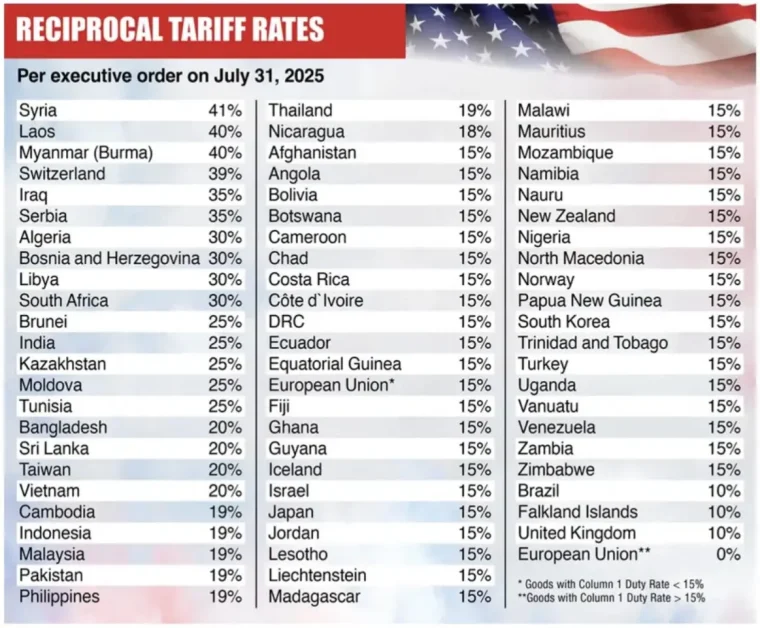
South Africa bore the heaviest burden, facing a crushing 30% tariff on all exports to the United States—a dramatic escalation from the previous 10% rate. This wasn’t just a number on a trade document; it was an economic death sentence for industries that had spent decades building relationships with American consumers and businesses.
Lesotho, the small mountainous kingdom landlocked within South Africa, initially faced the threat of a devastating 50% levy – the highest tariff imposed on any single nation. The small African country Lesotho received a modified tariff rate of 15% Thursday from U.S. President Donald Trump as the nation continued to reel from high tariffs the administration had threatened, but even this “mercy” came too late for many businesses already reeling from the initial shock.
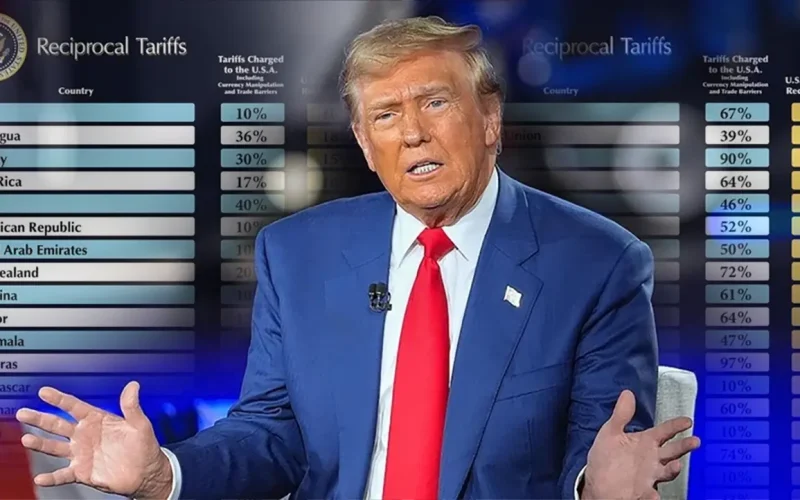
The ripple effects spread like wildfire across the Southern African Development Community (SADC). The higher tariffs that will apply on African products range from 11 percent levied on imports from Cameroon and the Democratic Republic of the Congo to 50 percent on goods from Lesotho. Zimbabwe found itself slapped with a 15% tariff, while other nations across the continent faced varying degrees of economic punishment.
The President of the United States, Donald Trump, has officially imposed a 15 per cent tariff on imports from Nigeria and several other African countries in a sweeping Executive Order targeting global trade partners, extending the pain to West Africa’s most populous nation.
The list of affected countries read like a roll call of Africa’s most vulnerable economies: Madagascar facing tariffs justified by claims of 93% duties on US goods, Mauritius hit for allegedly charging 80% tariffs, and a constellation of other nations suddenly finding their carefully built export industries under siege.
Industries Under Fire: The Economic Battlegrounds
South Africa: An Automotive Apocalypse
In the industrial heartland of Gauteng, where the hum of automotive assembly lines had provided steady employment for generations, the silence was becoming deafening. South Africa’s automotive industry, which had exported over 25,000 vehicles to the United States in 2024, now faced an existential crisis.
The mathematics was brutal and unforgiving. With American importers forced to absorb a 30% price increase, South African vehicles were suddenly priced out of competitive markets. BMW’s Rosslyn plant, Ford’s Silverton facility, and numerous component suppliers watched helplessly as orders evaporated like morning mist in the Karoo.
Up to 100,000 jobs hung in the balance—not just on the assembly lines, but throughout the entire ecosystem of suppliers, logistics companies, and support services that had grown around South Africa’s automotive success story. These weren’t just statistics; they were breadwinners, families, and communities whose entire way of life was built around the steady rhythm of industrial production.
Agriculture: When Citrus Dreams Turn Sour
In the sun-drenched valleys of the Western Cape, where endless rows of citrus trees had promised prosperity for rural communities, farmers stared at their ripening fruit with growing desperation. The United States had been their golden market—a reliable destination for South African oranges, lemons, and grapefruit that commanded premium prices.
Now, with the 30% tariff making their produce prohibitively expensive for American consumers, 35,000 jobs in citrus farming and packing faced immediate jeopardy. These weren’t corporate executives who could pivot to other opportunities; these were seasonal workers, smallholder farmers, and rural communities for whom the citrus harvest represented the difference between survival and destitution.
The wine estates of Stellenbosch and Franschhoek, which had spent decades building loyal followings among American connoisseurs, watched their carefully cultivated market relationships crumble. Premium South African wines that had graced American tables would now carry price tags that made them luxury items only the wealthy could afford.
Macadamia nut farmers, who had invested years in developing export-quality crops, suddenly found their premium products competing against cheaper alternatives from countries not burdened by punitive tariffs.
Lesotho: The Textile Tragedy
Perhaps nowhere was the human cost more immediately visible than in the small Kingdom of Lesotho, where the textile industry wasn’t just a business—it was the economic lifeline for the entire nation. The sector, which accounted for 10% of Lesotho’s gross national income and employed thousands of workers, faced catastrophic disruption.
Factory floors that had buzzed with activity producing jeans for brands like Levi’s fell eerily quiet as orders were cancelled overnight. The 15% tariff (reduced from the initially threatened 50%) still made Lesotho’s garments uncompetitive against suppliers from countries not facing such penalties.
Women who had walked miles from their villages to work in these factories, sending precious earnings back to support extended families, found themselves joining unemployment queues that seemed to stretch forever. Infrastructure projects dependent on textile industry revenues were suspended, leaving communities without promised roads, schools, and clinics.
The Metals Meltdown
South Africa’s steel and aluminium industries, which had built competitive advantages through decades of investment and innovation, suddenly found their market positions under assault. The 30% tariff didn’t just affect profit margins – it threatened to make these industries entirely unviable for export.
Steelworkers in Newcastle and Vanderbijlpark, aluminium smelter employees in Richards Bay, and thousands of others in the metals value chain faced an uncertain future as companies were forced to contemplate scaling down operations or abandoning the American market entirely.
The Broader Continental Impact
Trump’s new tariffs hit nearly all African countries, affecting the African Growth and Opportunity Act, fundamentally undermining a cornerstone of US-Africa trade relations that had been decades in the making.
The African Growth and Opportunity Act (AGOA), which had provided duty-free access to American markets for qualifying African products, was effectively nullified by the new tariff regime. This wasn’t just an economic setback – it was a psychological blow to African leaders and businesses who had invested heavily in building export-oriented industries based on the promise of preferential access to American consumers.
The China Factor
As American markets became increasingly inaccessible, African countries found themselves with little choice but to accelerate their pivot toward alternative partners. China, which had already been expanding its footprint across the continent through the Belt and Road Initiative, suddenly found itself in an even stronger position.
The irony was palpable: Trump’s tariffs, ostensibly designed to protect American interests, were pushing African countries directly into the economic embrace of America’s primary strategic rival.
Regional Integration Acceleration
Africa can respond by advancing the Continental Free Trade Area, diversifying exports to BRICS and the European Union. The crisis forced African leaders to redouble their efforts toward regional integration and the African Continental Free Trade Area (AfCFTA).
What had previously been seen as a long-term aspiration suddenly became an urgent necessity. Countries that had been hesitant to fully embrace continental integration now found themselves with no choice but to look toward their neighbours for economic salvation.
The Long-Term Earthquake: Reshaping Africa’s Future
The tariffs represented more than just a trade dispute—they marked a fundamental shift in the global economic order and Africa’s place within it.
Industrial Restructuring
Companies that had spent decades building export-oriented business models were forced to completely reimagine their strategies. Some began exploring other markets—the European Union, Asia, and even other African countries. Others started focusing more heavily on domestic and regional markets.
This wasn’t just about finding new customers; it required retooling production lines, developing new relationships, understanding different regulatory environments, and often accepting lower profit margins during the transition period.
Investment Flight and Uncertainty
Foreign investors who had been attracted to African countries partly because of their access to American markets began reassessing their positions. Why invest in South African automotive manufacturing if the primary export market was no longer viable? Why support Lesotho’s textile industry if American buyers were looking elsewhere?
This investment uncertainty threatened to undo years of progress in building manufacturing capacity across the continent.
The End of an Era
For many Africans, particularly those who had lived through the transition from colonial dependency to independence and then to increasing global integration, the tariffs represented the end of an era. The promise that Africa could build its way to prosperity through export-oriented manufacturing was being challenged by the same country that had supposedly championed free trade and global economic integration.
Political and Diplomatic Fallout
The tariffs didn’t just affect economic relationships—they fundamentally altered the political dynamics between the United States and Africa.
African leaders, who had often bent over backwards to maintain good relationships with Washington, found themselves questioning the value of such partnerships. If decades of cooperation, diplomatic engagement, and economic development could be undone by a single executive order, what was the point of trying to build stable relationships with American administrations?
The tariffs also exposed the vulnerability of being too dependent on any single market, no matter how large or seemingly reliable. This lesson wouldn’t be forgotten quickly.