THE morning mist hung low over Accra like a shroud, as if the very air knew what was coming. In Independence Square, a sea of red and black rippled in the humid breeze – thirty thousand souls gathering for a farewell no nation should have to give.
It should have been routine. A military helicopter lifting off from Accra’s tarmac, bound for Obuasi in the heart of Ashanti Region. Defence Minister Edward Omane Boamah settled into his seat, reviewing briefing papers. Environment Minister Ibrahim Murtala Muhammed checked his watch – they’d be there by noon. Four other officials exchanged quiet conversation. The crew ran their final checks.
Then the fog rolled in.
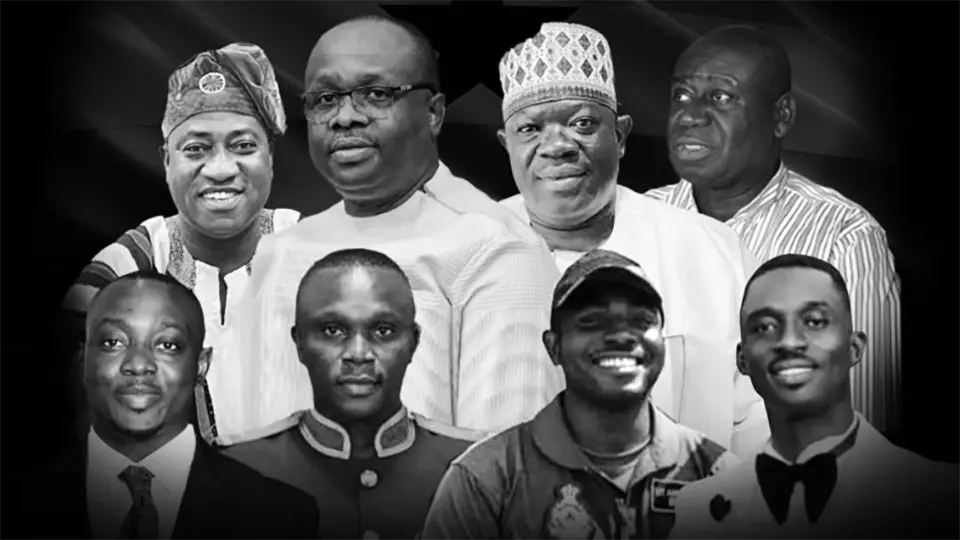
Within minutes, the helicopter had vanished – not just from sight, but from radar, from radio contact, from hope itself. Search teams would later find the wreckage scattered across a remote hillside, taking with it eight of Ghana’s finest: two ministers who had dedicated their lives to service, four officials whose families would never see them come home, and two crew members who had given everything to their final mission.
Independence Square had witnessed many moments in Ghana’s history – celebrations of freedom, rallies for change, and ceremonies of state. But never had it felt so heavy with collective grief. The red earth seemed to absorb the weight of thirty thousand hearts breaking in unison.
Kente cloth blazed in the African sun – gold threads catching light like tears, indigo patterns weaving stories of lives cut short. Children clutched photographs of fathers who would never again help with homework. Wives held folded uniforms that would never again be worn. The very air seemed to pulse with loss.
From every corner of the nation, they had come: cocoa farmers from the Western Region, fishermen from the coast, traders from Kumasi, students from Legon. Ghana had called, and Ghana had answered.
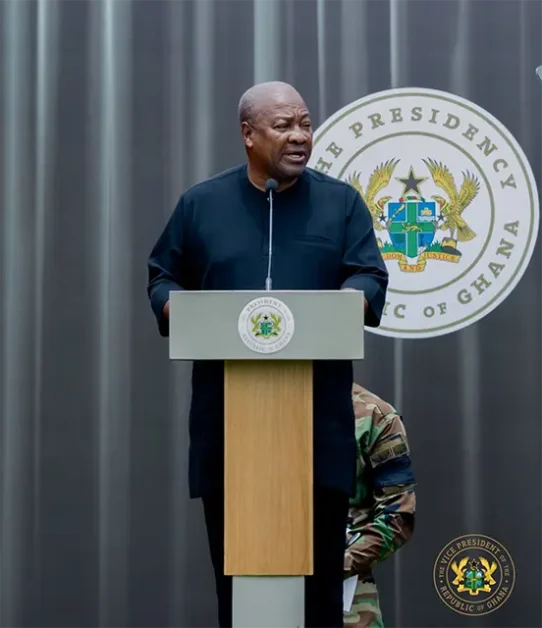
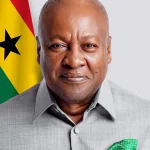
When President John Dramani Mahama approached the podium, the silence that fell was absolute. Not even the wind stirred. Thirty thousand people held their breath, waiting for words that might make sense of the senseless.
His voice, when it came, carried the weight of a nation’s pain.
“We gather today not as politicians or citizens of different regions, but as one people wounded,” he began, his words carrying across the square like a prayer. “Eight heroes boarded that helicopter carrying Ghana’s hopes. They carried our dreams for a cleaner environment, our aspirations for stronger defence, our vision of a better tomorrow.”
He paused, letting the magnitude settle.
“Today, Ghana stands diminished in number but not in spirit. These eight – they were our finest. Defence Minister Boamah, who served his country from battlefield to boardroom. Environment Minister Muhammed, who fought every day for the air our children breathe and the water they drink. Their colleagues who laboured in service. The crew who flew not for glory, but for duty.”
In that moment, with grief hanging in the air like incense, President Mahama made promises that would define his legacy:
“To the children who will grow up without their fathers – Ghana will be your father. To the wives who must now walk alone – Ghana will walk beside you. To the parents who gave their sons to service – Ghana honours that gift with eternal gratitude.”
The crowd stirred, hope kindling in hearts heavy with sorrow.
“Let me be clear,” his voice strengthened. “These families will want for nothing. Education for every child, security for every widow, honour for every sacrifice. This is not charity—this is Ghana keeping faith with those who kept faith with us.”
Even as Ghana mourned, questions burned in the morning mist. The black boxes had been recovered, their secrets being unlocked by investigators. But fog – that cruel, impenetrable fog – had swallowed the helicopter as surely as it now shrouded the truth.
Weather reports would be scrutinised. Flight paths analysed. Mechanical systems are examined piece by piece. Ghana would have answers, even if they came too late for comfort.
As the ceremony drew to its close, eight portraits gazed down from massive screens above the square. Not the formal photos of official portraits, but images of life: Boamah laughing at a village celebration, Muhammed teaching children about conservation, crew members with their families.
The drums began their ancient rhythm—not of celebration, but of remembrance. The sound rolled across Accra like thunder, carrying with it the promise that these names would be carved not just in stone, but in Ghana’s living memory.
Thirty thousand people rose as one. Thirty thousand voices joined in the national anthem, but the words felt different now, weighted with new meaning:
“God bless our homeland Ghana, and make our nation great and strong…”
The Eternal Flight
The helicopter is gone. The eight are gone. But in Independence Square that day, something else took flight – a renewed commitment to the values they died serving. In every promise made to their families, in every vow to improve aviation safety, in every moment of silence held in their honour, Ghana chose not just to mourn, but to remember, to honour, to continue.
The fog that took them has lifted. The clarity of purpose they leave behind will endure forever.
In the end, Ghana learned this truth: heroes don’t fall from the sky. They rise from the earth, from the love of country, from the willingness to serve something greater than themselves. And when they’re called home too soon, they leave behind not emptiness, but light – burning bright enough to guide a nation through its darkest hours toward dawn.