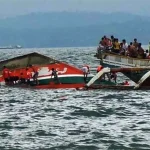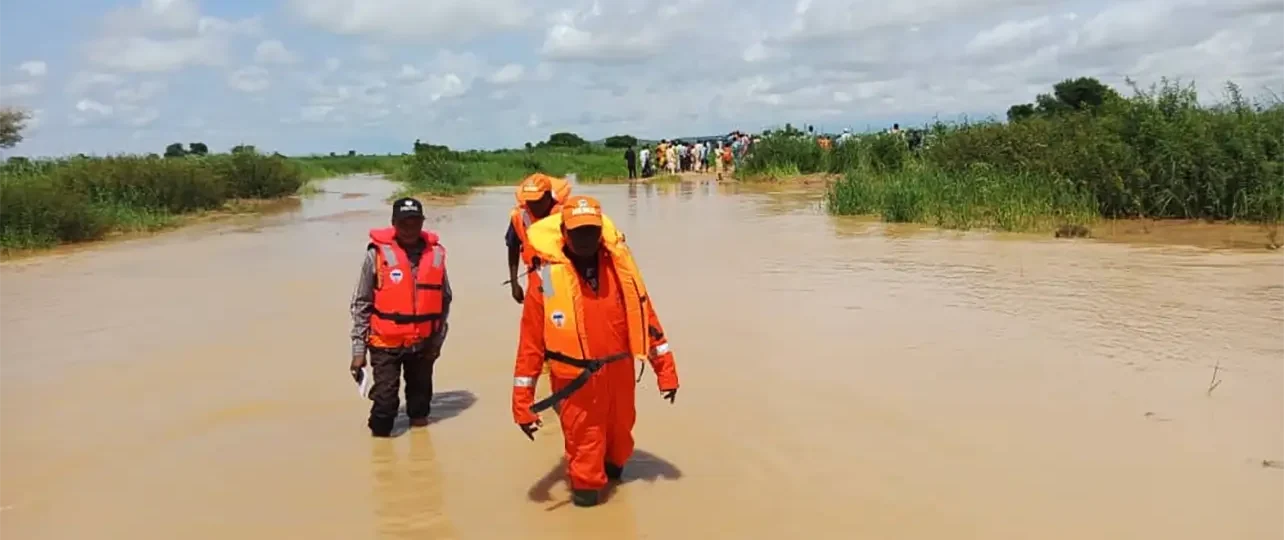

EMERGENCY crews have pressed on with recovery operations as 25 people remained missing two days after a passenger boat capsized in northwestern Nigeria’s Sokoto State, the latest in a devastating series of maritime accidents that have claimed hundreds of lives across the country.
The National Emergency Management Agency (NEMA) confirmed that 25 survivors had been pulled from the water following Sunday’s disaster, but said the same number were still unaccounted for and presumed dead. No bodies had been recovered as of Tuesday morning.
The vessel, loaded with women, children, and motorcycles bound for Goronyo market — a regional food distribution hub — overturned amid strong currents from a nearby dam, according to local officials. Zubairu Yari, chairman of Goronyo local government, said the powerful water flow had severely hampered rescue efforts.
Authorities blamed the tragedy on chronic overloading of vessels and Nigeria’s crumbling road infrastructure, which forces rural communities to rely heavily on often-dangerous water transport during the rainy season.
Pattern of Preventable Deaths
The Sokoto accident extends Nigeria’s grim tally of waterway fatalities, with maritime disasters claiming lives with alarming regularity across the country’s rivers and coastal regions. A series of deadly boat accidents across Nigeria in 2024 have claimed at least 231 lives, highlighting systemic failures in water transport safety.
Just two months ago, at least 60 people were killed after a boat carrying mostly women and children returning from a religious festival in Nigeria’s northern Niger state capsized. In November, another boat accident claimed 27 lives with 100 people missing.
The deadliest recent maritime disaster struck in June 2023, when more than 100 people died when a riverboat carrying about 250 passengers capsized in the north-central state of Kwara. In September, an overloaded boat sank while carrying more than 50 farmers across the Gummi River in Zamfara State, killing more than 40.
Industry experts paint an even starker picture. The Chartered Institute of Logistics and Transport Nigeria investigated the incessant boat mishaps and discovered that over 300 lives were lost on the waterways in 2023.
Infrastructure Crisis Drives Risk-Taking
The recurring tragedies underscore Nigeria’s transportation infrastructure crisis, particularly in rural areas where deteriorating roads and bridges leave water transport as the only viable option for moving people and goods. During seasonal floods, entire communities become dependent on overcrowded vessels that often lack basic safety equipment.
Poor regulatory oversight compounds the dangers, with operators routinely exceeding passenger limits and using ageing, unseaworthy craft. The combination of overloading, inadequate safety measures, and treacherous seasonal conditions has created a deadly pattern that continues to devastate Nigerian communities.
As search operations continue in Sokoto State, families anxiously await word on their missing loved ones while authorities face mounting pressure to address the systemic issues that have made Nigeria’s waterways among the world’s most dangerous.