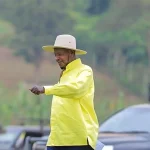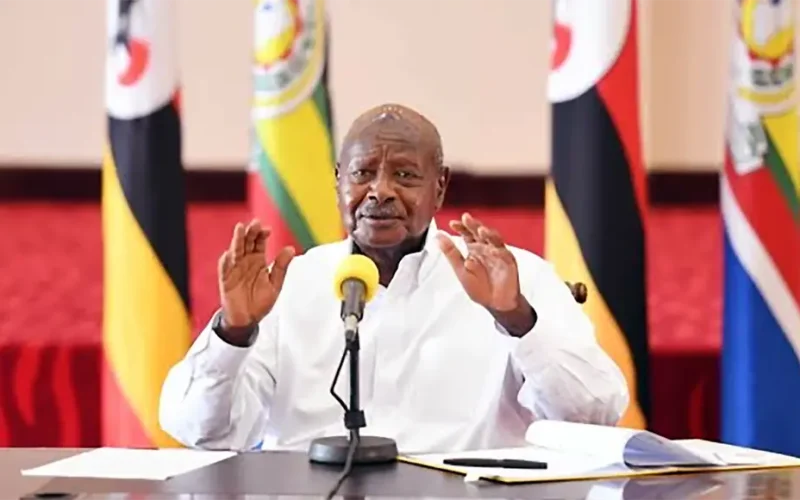
IN a moment that will reverberate across the African continent and beyond, Uganda’s indomitable strongman, Yoweri Museveni, has declared his intention to contest what he claims will be his final presidential election in 2026. At 80, the man who has wielded power for nearly four decades – longer than many of his citizens have been alive – stands at the precipice of history, simultaneously clinging to power while promising to relinquish it.
Museveni’s announcement carries the weight of an era ending. Since seizing power in 1986 through a guerrilla war that promised democratic transformation, he has become one of Africa’s most enduring political figures – the fourth longest-serving leader on a continent where power rarely changes hands peacefully. His declaration that 2026 will mark his swan song has sent shockwaves through Uganda’s political landscape, igniting both hope among opposition forces and scepticism from those who have watched him systematically dismantle term limits and age restrictions to perpetuate his rule.
“This is the last time I am vying for president of Uganda. I will never vie again after 2026. So I urge all Ugandans to come out in large numbers and vote for me for the very last time. I have a few projects that I want to finish,” Museveni declared with characteristic understatement, as if four more decades might be a mere footnote to his legacy. His audacious pledge to catapult Uganda’s economy from $66 billion to $500 billion within five years reads like the promises of a man racing against time – or perhaps mortality itself.
The announcement has unleashed a political earthquake that threatens to reshape not just Uganda, but the broader East African region. Within his own National Resistance Movement (NRM), whispers of succession planning have transformed into urgent conversations as party stalwarts position themselves for a post-Museveni era that once seemed impossibly distant.
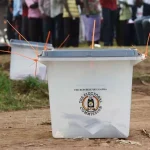
Opposition circles are electric with a mixture of cautious optimism and battle-hardened cynicism. Bobi Wine, the charismatic musician-turned-revolutionary whose star has risen in direct opposition to Museveni’s setting sun, faces the tantalising prospect of finally toppling the regime that has dominated his homeland since before his birth. Yet the opposition’s euphoria is tempered by memories of previous elections marred by allegations of fraud, intimidation, and the systematic deployment of state machinery against challengers.
The Iron Fist in Democracy’s Glove
Museveni’s Uganda presents one of modern Africa’s most complex political paradoxes. Under his leadership, the nation has experienced relative stability and economic growth, transforming from a war-torn state into a regional powerhouse. Yet this progress has come at a steep democratic cost. Recent legislative changes allowing military courts to try civilians have sent chills through civil society, while opposition activists speak in hushed tones of abductions and disappearances that punctuate the political calendar.
The veteran leader’s mastery of political survival – including the constitutional amendments that eliminated the very barriers designed to prevent his perpetual rule – has made him both admired and reviled across Africa. To supporters, he represents continuity and experienced leadership in an uncertain world. To critics, he embodies the autocratic tendencies that have plagued post-independence Africa.
A Continental Crossroads
Museveni’s final campaign arrives at a critical juncture for African democracy. Across the continent, ageing liberation leaders are grappling with questions of legacy and succession, while younger generations demand political renewal and genuine democratic competition. Uganda’s 2026 election will serve as a bellwether for whether peaceful transitions of power can take root in nations long dominated by revolutionary-era strongmen.
The regional implications are profound. As East Africa’s political dynamics shift, neighbouring countries are watching closely to see whether Uganda can navigate a peaceful transfer of power or whether Museveni’s departure – willing or otherwise – will trigger the kind of instability that has marked other leadership transitions across the continent.
Perhaps most intriguingly, Museveni’s announcement raises the spectre of his own political mortality while simultaneously extending his reign. If taken at face value, his promise means Uganda will endure five more years under his leadership – a period during which he will turn 85 and potentially cement his place as one of Africa’s longest-ruling leaders ever.
Yet sceptics wonder whether this “final” campaign is merely another tactical manoeuvre by a master political strategist who has consistently confounded predictions of his demise. The man who once promised to step down after two terms has now manoeuvred himself into a position where he could theoretically rule for 45 years.
The Battle for Uganda’s Soul
As 2026 approaches, Uganda stands at an unprecedented crossroads. The election will determine not just who leads the country, but whether the democratic aspirations that once drove Museveni’s own rise to power can finally find full expression. For opposition forces, it represents perhaps their best chance in decades to achieve the political renewal that has remained tantalizingly out of reach.
The stakes could not be higher. In the balance hangs not just Uganda’s political future, but a broader question about whether Africa’s liberation generation can gracefully pass the torch to new leadership, or whether the continent remains trapped in cycles of ageing autocrats reluctant to relinquish the power they fought so hard to achieve.
As Museveni prepares for what he claims will be his final campaign, Uganda—and indeed all of Africa—waits to see whether this will truly mark the end of an era, or merely another chapter in one of the continent’s most enduring political sagas. The twilight of this particular titan may be approaching, but in African politics, final acts have a way of extending far longer than anyone anticipates.