THE Democratic Republic of Congo and Rwanda have agreed to begin implementing a concrete military operation on October 1 to end one of Africa’s longest-running conflicts, following high-level negotiations in Washington that could determine the fate of millions of civilians trapped in eastern Congo’s war zone.
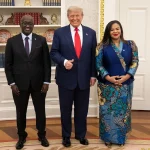
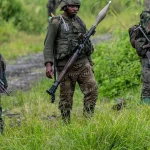
The breakthrough came during a two-day meeting of the Joint Security Coordination Mechanism, where diplomats from both nations — alongside mediators from the United States, Qatar, and the African Union — hammered out an “Operational Order” designed to neutralise the Democratic Forces for the Liberation of Rwanda (FDLR) and end Rwanda’s military presence in Congolese territory.
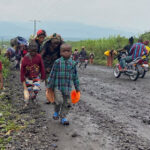
For the estimated 7 million displaced people in eastern DRC — many living in sprawling refugee camps or hiding in forests — the October deadline represents either the beginning of peace or another false promise in a conflict that has claimed over 6 million lives since the late 1990s.
A Conflict Rooted in Genocide’s Aftermath
The FDLR, composed largely of ethnic Hutu fighters who fled Rwanda after the 1994 genocide, has terrorised eastern Congo for three decades. The group’s presence has provided Rwanda with justification for repeated military interventions, creating a cycle of violence that has devastated the mineral-rich provinces of North Kivu, South Kivu, and Ituri.
“Every day the FDLR remains active, innocent Congolese families pay the price,” said a Western diplomat familiar with the negotiations who spoke on condition of anonymity. “Women are raped, children are recruited as soldiers, and entire communities are forced to flee their homes.”
The human cost is staggering. In camps around Goma, North Kivu’s capital, families survive on single meals per day while children die from preventable diseases. Many have been displaced multiple times, carrying only what they can hold as armed groups battle for control of cobalt and gold mines that power the global economy.
High-Stakes Diplomacy
The Washington meeting, facilitated by the Biden administration as part of its Africa strategy, built on a peace agreement signed in June that many observers initially dismissed as another paper promise. This time, however, the involvement of operational military planners and specific timelines suggests a more serious commitment.
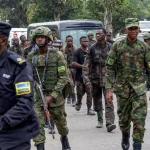
Under the agreed plan, known as the Concept of Operations (CONOPS), the DRC and international forces will move to “eradicate” the FDLR threat while Rwanda withdraws its defensive measures — a diplomatic term for its military presence in eastern Congo. The phased approach aims to restore Congolese government authority over territory that has been effectively ungoverned for years.
Qatar’s involvement reflects the Gulf nation’s growing influence in African conflict resolution, while Togo’s role as African Union facilitator underscores continental efforts to solve African problems through African institutions.
Scepticism from the Ground
For civilians who have endured countless failed peace processes, scepticism runs deep. Previous agreements have collapsed when armed groups simply melted back into the forest or when political will evaporated in Kinshasa and Kigali.
“We’ve heard these promises before,” said one aid worker in Goma who requested anonymity due to security concerns. “The real test will be whether the armies actually move and whether the international community maintains pressure after the cameras leave.”
The FDLR has proven remarkably resilient, adapting to military pressure by fragmenting into smaller units and aligning with local armed groups. Even if the main organisation is weakened, dozens of other militias continue operating in the region, suggesting that neutralising the FDLR alone may not bring peace.
Economic Stakes
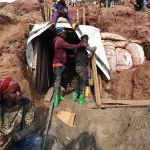
Beyond the humanitarian crisis lies a geopolitical competition for eastern Congo’s vast mineral wealth. The region produces much of the world’s cobalt, essential for electric vehicle batteries, along with gold, coltan, and other minerals. Both Rwanda and Uganda have been accused of benefiting from this trade, creating economic incentives that complicate peace efforts.
The October implementation will test whether the parties can overcome these entrenched interests in favour of stability that could benefit both nations’ long-term development.
A Moment of Truth
As October 1 approaches, the international community faces a critical test of its commitment to African stability. The operational order negotiated in Washington represents the most detailed military plan yet to address the DRC’s eastern crisis, but success will require sustained political pressure and potentially significant military resources.
For the millions of Congolese who have known only conflict, the next few months will determine whether this latest diplomatic effort can finally break the cycle of violence that has defined their lives for a generation.
The African Union Commission and regional leaders have pledged continued support, but history suggests that lasting peace will require not just military action against armed groups, but also addressing the underlying governance failures, ethnic tensions, and economic grievances that have fueled three decades of war.
As one Congolese civil society leader put it: “October 1 is just a date on paper. The real work begins when the guns fall silent and we must rebuild trust between communities that have been killing each other for thirty years.”