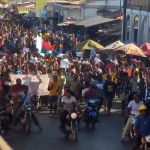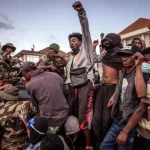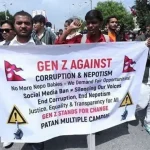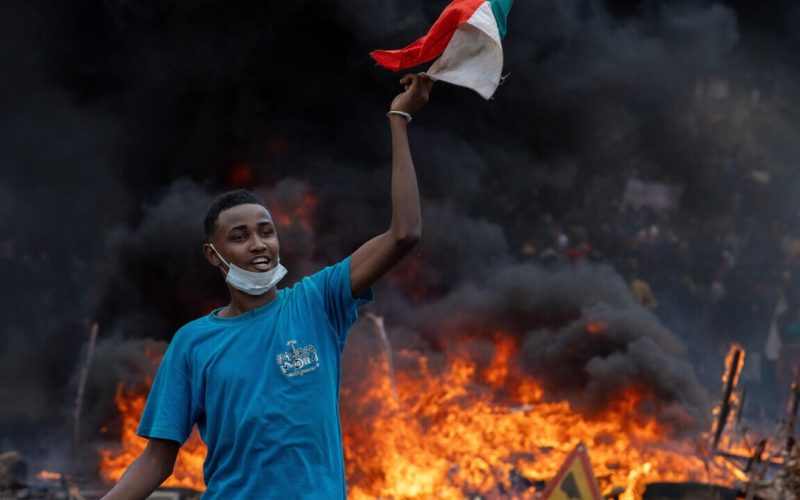
The streets of Madagascar’s capital have become a battleground where the fury of a generation collides with the last gasp of political authority. For more than a week, waves of young protesters have surged through Antananarivo and eight other cities in the largest demonstrations the island nation has witnessed in over 15 years, transforming frustration over dark homes and dry taps into an explosive demand for regime change.
The crisis ignited in late September when security forces arrested two city politicians who had dared to organize a peaceful demonstration about chronic power and water failures plaguing the capital. That spark became a wildfire. What began as complaints about basic services has morphed into a full-throated call for President Andry Rajoelina to step down, with chants echoing through packed streets: “Rajoelina must go!”
At the vanguard stands Gen Z Mada, a digitally-savvy youth movement that has harnessed social media to mobilize thousands who have grown up knowing nothing but empty promises and empty water buckets. Their demands are uncompromising: the president’s resignation, accountability for security forces who have violently suppressed dissent, and what they call “political cleansing” to root out corruption that has left Madagascar’s 30 million people among the world’s poorest while elite families flaunt their privileges.
The death toll tells the brutal cost of defiance. United Nations officials report at least 22 people killed and more than 100 injured in clashes between protesters and security forces, though the government dismisses these figures as misinformation. Tear gas has become the acrid perfume of revolution in streets where young Malagasy once simply sought the dignity of running water and reliable electricity.
President Rajoelina’s response has been a desperate political calculus. On September 29, he dissolved his entire cabinet and removed his energy minister, hoping the symbolic sacrifice would appease the angry crowds. It didn’t. The protesters saw through the theatrical gesture, recognizing it for what it was: rearranging deck chairs while the ship of state takes on water.
“The population must enjoy its rights,” the influential Council of Christian Churches in Madagascar declared, even as they called for an end to violence and looting. But dialogue has proven impossible when one side demands departure and the other refuses to budge.
Rajoelina has dug in his heels, framing the uprising as a conspiracy and warning darkly against coups while his administration scrambles to organize counter-demonstrations. Yet the pro-government rallies have fizzled, revealing the president’s eroding base of support. His offer of dialogue rings hollow when demonstrators have given him a 24-hour ultimatum that has long since expired.
The timing is everything. Madagascar’s state utility, Jirama, has subjected citizens to prolonged daily blackouts while the government pursues high-profile infrastructure projects that do nothing to ease the daily suffering of ordinary Malagasy. The disconnect between official priorities and public needs has created a combustible mix of resentment that youth protesters have channelled into organized resistance.
Labor unions, civil society organizations, and opposition political figures have joined the youth movement, creating a broad coalition that transcends traditional political divides. They share a common grievance: a government that has failed to provide the most basic services while enriching those connected to power.
Curfews now blanket major cities. International airports remain open but flights have been disrupted. The U.S. Embassy has urged American citizens to shelter in place at night as the capital transforms into a city of shuttered businesses and nervous tension. The battle for Madagascar’s streets has become a battle for its political future.
International human rights organizations have condemned the violent crackdown. Amnesty International declared that “every death on the streets of Madagascar is a painful reminder that the right to peaceful protest is under violent attack,” demanding investigations into the use of deadly force against demonstrators.
The interim cabinet continues to function while Rajoelina searches for ministers willing to join a sinking administration. But the real question isn’t who will staff the next government—it’s whether this government can survive at all. The president’s political survival now hangs by a thread as mass demonstrations continue, each day eroding what remains of his authority.
Madagascar stands at a crossroads. On one side, a youth movement energized by social media and united by shared privation. On the other, an embattled president clinging to power while the legitimacy drains from his office like water through the cracked pipes of Antananarivo. The battle for Madagascar’s future is being fought in its streets, and the outcome remains uncertain.
What is clear is that the old order is crumbling. Whether something better rises from the rubble depends on whether Madagascar’s leaders can finally hear the roar of a generation that refuses to accept darkness and thirst as their inheritance.