THE grim arithmetic of disaster is still being tallied across Madagascar’s ravaged coastline, where Cyclone Gezani has carved a path of devastation that authorities are only now fully comprehending. What was already a humanitarian emergency has crystallised into a full-blown catastrophe: 59 people confirmed dead, more than 16,000 displaced from their homes, and nearly half a million lives upended by a storm that struck with terrifying ferocity.
The numbers released Monday by Madagascar’s National Bureau for Risk and Disaster Management paint a portrait of systematic destruction. Beyond the mounting death toll, 15 people remain missing—likely swept away by floodwaters or buried beneath collapsed structures. Another 804 have been injured, many seriously, straining the island nation’s already fragile healthcare infrastructure. Most staggering is the scale of impact: 423,986 people classified as affected by the disaster, their lives fundamentally altered by winds that peaked at 185 kilometres per hour and gusts that screamed to nearly 270 kilometres per hour.
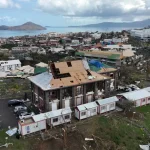
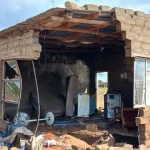
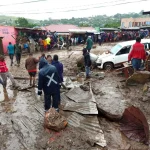
This is what a Category 3-equivalent cyclone does to one of the world’s most vulnerable nations. Gezani didn’t just damage Madagascar—it mauled it. Metal roofing was peeled from homes like tinfoil. Mature trees, some standing for generations, were wrenched from the earth. In the port city of Toamasina, residents now pick through the wreckage of what were once their neighbourhoods, salvaging what little remains.
The cruelty of timing compounds the tragedy. Gezani struck just 10 days after Tropical Cyclone Fytia had already battered Madagascar, killing 14 and displacing over 31,000. Two major cyclones in less than two weeks—the Indian Ocean has given Madagascar no time to catch its breath, no opportunity to bury its dead before the next disaster arrives. Communities were still reeling from Fytia when Gezani made landfall, overwhelming response capacities and leaving aid organisations scrambling across multiple disaster zones simultaneously.
But Gezani refuses to release its grip. After sweeping westward across the Mozambique Channel—where it generated waves reaching 10 meters that battered southern Mozambique—the cyclone has performed a meteorological about-face. Weather models show the system curving back eastward, looping toward Madagascar for a potential second strike. Authorities have placed the southwestern Ampanihy district on red alert, with Gezani forecast to pass roughly 100 kilometres offshore Monday evening, bringing winds around 65 kilometres per hour.
While forecasters expect the second pass to be less severe, with minimal rainfall predicted, the psychological impact on traumatised communities cannot be understated. Families huddling in evacuation shelters, having lost homes and livelihoods to Gezani’s first assault, now face the prospect of renewed danger before recovery efforts have properly begun.
Madagascar’s vulnerability to such disasters is structural and deeply entrenched. As one of the world’s poorest nations, it lacks the resources for robust disaster preparedness, early warning systems, or resilient infrastructure. Homes built from corrugated metal and wood cannot withstand winds exceeding 250 kilometres per hour. Drainage systems adequate for typical rainfall collapse under cyclone-driven deluges. And when disaster strikes, the capacity for rapid, large-scale humanitarian response remains critically limited.
The displaced now swell temporary shelters and evacuation centres, many having fled with nothing but the clothes on their backs. Food, clean water, medical supplies, and shelter materials are urgently needed across affected regions. With nearly half a million people impacted, the humanitarian challenge is immense—and the window for preventing secondary crises from disease, malnutrition, and exposure is narrow.
Climate scientists have long warned that Madagascar sits squarely in the crosshairs of intensifying tropical cyclone activity driven by warming ocean temperatures. The Indian Ocean is heating up, providing more energy to fuel stronger, wetter storms. For Madagascar, this translates into a future of heightened vulnerability, where disasters like Gezani may become more frequent and more ferocious.
As international aid organizations mobilize and the Malagasy government coordinates response efforts, one reality is inescapable: for the 59 families mourning loved ones, for the 16,428 people displaced from their homes, for the 423,986 whose lives have been disrupted—Cyclone Gezani is not a statistic. It is a catastrophe that will shape their futures for years to come. And with the storm threatening to return, the ordeal may not yet be over.