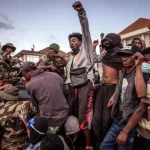
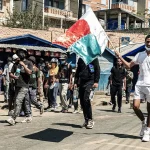
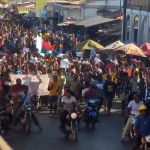
THE Indian Ocean island of Madagascar has once again become a cautionary tale of Africa’s cyclical political turbulence, where the clarion call for democratic change has been intercepted by the familiar thunder of military boots. What began as a defiant Gen Z uprising against corruption and broken promises has morphed into the continent’s latest coup d’état – leaving a bitter question hanging over the island nation: Did the youth trade one autocrat for another?
The Irony of History Repeating
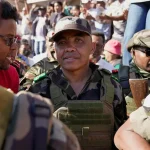
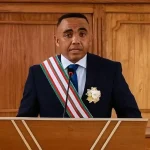
In a twist dripping with historical irony, Army Colonel Michael Randrianirina – the man who helped install Andry Rajoelina through a coup in 2009 – has now orchestrated his former patron’s dramatic downfall. On Wednesday, Randrianirina announced he would soon be sworn in as president, capping a tumultuous weekend that saw Rajoelina flee aboard a French military plane to what sources believe is a gilded exile in Dubai.
The 51-year-old former DJ, who once rode to power on the shoulders of youthful protesters as the world’s youngest head of state at 34, has now been consumed by the very forces he once commanded. Impeached by lawmakers after his hasty departure, Rajoelina’s refusal to formally resign has created a political vacuum that the military has eagerly filled – dissolving all institutions except the National Assembly in a surgical consolidation of power.
Gen Z’s Cry for Change
The streets of Antananarivo erupted with something Madagascar hadn’t seen in over a decade: mass youth mobilisation demanding not just regime change, but systemic transformation. In a nation where the average age hovers below 20 and three-quarters of the 30 million population languish in poverty, Gen Z’s grievances are written in stark economic data. Since independence in 1960, Madagascar’s GDP per capita has plummeted by 45% – a catastrophic slide that has left successive generations poorer than their parents.
Rajoelina’s promises to eradicate corruption and elevate living standards, bold declarations that propelled him to power 16 years ago, have evaporated into the tropical air like morning mist. The young protesters who filled the squares weren’t just demanding his resignation; they were rejecting the entire political class that has presided over their nation’s descent into deeper impoverishment.
When Security Forces Defect
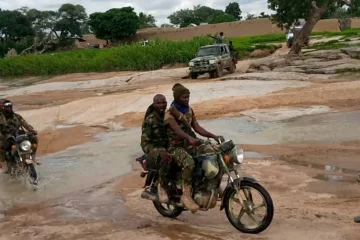
The tipping point came when the very institutions meant to protect the regime began haemorrhaging loyalty. The elite CAPSAT unit, the paramilitary gendarmerie, and even the police force broke ranks with Rajoelina in a cascading defection that left the president exposed and isolated. Randrianirina’s public declaration urging soldiers not to fire on protesters signalled that the security apparatus had chosen sides – and it wasn’t with the president.
By Sunday, Rajoelina was airborne, his departure so hurried that he claimed his life was in danger. The High Constitutional Court, reading the political winds, swiftly invited Randrianirina to assume the presidency – a constitutional fig leaf barely concealing the military’s naked power grab.
The Southern African Debate: Liberation or Substitution?
Across the capitals of southern Africa, diplomats, activists, and analysts are engaged in heated debate over Madagascar’s latest political convulsion. The question resonates beyond the island’s shores: Is this what the youth wanted, or have they been robbed of their revolution by generals who merely changed the nameplate on the presidential palace?
Randrianirina has promised a two-year transitional period governed by a military-led committee alongside a civilian government, culminating in fresh elections. But for those who study Africa’s coup belt – from the Sahel to the Horn – such promises have become a familiar refrain, often honoured more in the breach than in the observance.
The optimists argue that Randrianirina’s break with Rajoelina, particularly his order to troops not to fire on demonstrators, suggests a leader who at least rhetorically respects popular will. The military’s decision to preserve the National Assembly rather than dissolve it entirely could indicate a commitment to some form of democratic transition.
The sceptics, however, see a different pattern: a canny military officer who has seized the moment to trade camouflage for a business suit, using popular discontent as a ladder to power. They point to Madagascar’s history of coups (1972, 2009, and now 2025) and ask whether the island is trapped in a doom loop where each promised democratic transition merely incubates the next authoritarian regime.
The Unfinished Revolution
For Madagascar’s Gen Z, the bitter reality is setting in. They mobilised against corruption, economic stagnation, and broken democratic institutions. They achieved the downfall of a president who betrayed his own revolutionary origins. But the morning after their triumph, they awoke to find not a new democratic dawn, but a military junta promising eventual elections.
The young protesters now face a stark choice: accept the military’s transitional roadmap and hope that Randrianirina proves different from Madagascar’s long line of leaders who promised change and delivered stasis, or return to the streets to demand that their revolution not be hijacked by men in uniform.
A Continental Pattern
Madagascar’s coup is the latest brushstroke in a troubling portrait of democratic backsliding across Africa. From Mali to Guinea, from Sudan to Burkina Faso, the past decade has witnessed a resurgence of military interventions, often following mass protests against elected but ineffective or corrupt governments. The phenomenon has created a paradox: popular uprisings achieve regime change, but the change consolidates military rather than democratic power.
The international community’s response has been muted. France, the former colonial power, facilitated Rajoelina’s exit but has remained diplomatically silent on the coup itself. Regional bodies like the Southern African Development Community (SADC) and the African Union face the delicate task of condemning unconstitutional changes of government while recognising that Rajoelina himself came to power through a coup and had worn out his popular mandate.
What Comes Next?
As Randrianirina prepares for his inauguration in the coming days, Madagascar stands at a crossroads. The two-year transitional timeline he has announced will be tested immediately by economic realities: a population growing poorer, youth unemployment spiralling, and international investors wary of political instability.
The Gen Z protesters who sparked this upheaval haven’t disappeared. They’re watching, organising, and preparing for what comes next. If Randrianirina’s military government fails to deliver tangible improvements or attempts to extend its tenure beyond the promised timeline, the streets may fill again -not with celebration, but with renewed fury.
Madagascar’s latest coup raises uncomfortable questions for a continent still struggling to consolidate democratic gains made over the past three decades. Can the military ever be a genuine vehicle for democratic transition? When corrupt elected governments fail their people, what legitimate alternatives exist beyond the coup? And perhaps most urgently: How can Africa’s Gen Z translate street power into sustainable political change that doesn’t end with generals in presidential palaces?
For now, Madagascar’s youth revolution has ended in a military takeover. Whether this represents betrayal or transition remains the island nation’s defining question—and southern Africa’s watching brief.