THE United States is mounting an aggressive diplomatic and economic offensive across Africa to secure access to critical minerals essential for advanced technologies, clean energy, and national security, positioning resource deals at the centre of its engagement with some of the continent’s most unstable regions.
The strategy, driven by the Trump administration’s determination to counter China’s entrenched dominance in global mineral supply chains, has seen Washington broker peace agreements, dispatch Cabinet-level officials, and promise billions in investment across mineral-rich African nations – from war-torn eastern Congo to West African coastal states.
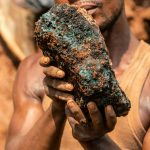
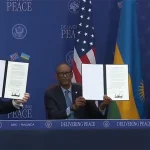
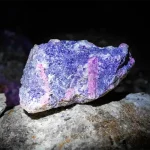
At the heart of the campaign is the Democratic Republic of Congo, which produces 76 percent of the world’s cobalt and holds vast reserves of copper, lithium, tantalum, and rare earth elements crucial for electric vehicle batteries, semiconductors, and defence systems. In June, the United States brokered a landmark peace agreement between the DRC and Rwanda, ending three decades of conflict that had killed millions and displaced countless others in Africa’s Great Lakes region.
The deal, signed by the foreign ministers of both countries at the White House and dubbed the “Washington Accord,” came with explicit commitments for US investment in the eastern DRC’s mineral reserves. President Donald Trump called the moment “a glorious triumph for the cause of peace” and invited both nations’ presidents to Washington in July for further agreements on regional economic integration and mineral development.
“It’s not that China is waxing in Africa; it’s more that America is waning in Africa,” DRC President Félix Tshisekedi said earlier this year, emphasising his desire for renewed US engagement. “We would be very happy to have our American friends here, who used to be more present than China in the 70s and 80s.”
The DRC peace deal follows a similar US-Ukraine minerals agreement signed in April that granted American firms preferential access to Ukraine’s rare earths, lithium, graphite, and titanium — a pattern critics warn risks reducing peace negotiations to transactional resource grabs.
West African expansion
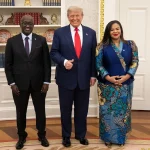
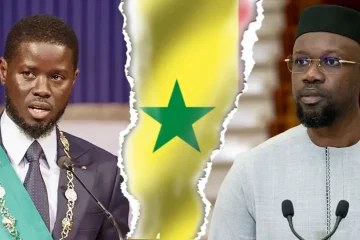
Beyond the DRC, the United States has rapidly expanded its minerals diplomacy across West Africa. In July, Trump hosted presidents from Liberia, Senegal, Guinea-Bissau, Gabon, and Mauritania at the White House, with the agenda focused heavily on critical minerals and regional security.
Secretary of State Marco Rubio met with Liberian Foreign Minister Sara Beysolow Nyanti last week to discuss expanding US participation in Liberia’s critical minerals sector, which includes iron ore, lithium, cobalt, manganese, and nickel. The meeting followed the signing of a $1.8 billion agreement between the Liberian government and US-headquartered Ivanhoe Atlantic, granting the company access to the strategic Yekepa-Buchanan railway corridor to transport high-grade iron ore from Guinea through Liberian territory to the Atlantic.
“The meeting explored avenues for expanding US participation in Liberia’s critical minerals sector with the aim of creating jobs and economic growth in both the United States and Liberia,” State Department spokesperson Tommy Pigott said.
Liberia’s participation as co-sponsor of a UN Security Council Arria-formula meeting on critical minerals and resource-driven insecurity in Africa — alongside Sierra Leone, Guyana, and the DRC — underscores how mineral politics now dominate African diplomatic engagement with major powers.
Infrastructure as leverage
The US approach emphasises infrastructure investment as the key to unlocking Africa’s mineral wealth. Washington is backing projects like the Lobito Corridor, linking Angola, Zambia, and the DRC to facilitate mineral extraction and export capacity. The strategy involves coordination across multiple government agencies, including the Development Finance Corporation, and partnerships with allies, including the European Union, Canada, and Japan.
Unlike China’s massive state-backed investments in African mining operations, roads, railways, and ports — which have given Beijing control over much of the mineral value chain — the US is pursuing a model centred on private-sector investment supported by government financing and emphasising transparency, environmental standards, and sustainable mining practices.
“The US and Australia will invest over $3 billion in joint critical minerals projects within six months,” said Gracelin Baskaran, director of the Critical Minerals Security Program at the Centre for Strategic and International Studies, referring to a separate $8.5 billion deal signed Monday. “That’s a somewhat unprecedented speed of capital injection.”
China currently dominates critical mineral processing globally, often importing African raw materials for refinement in China, which strengthens Beijing’s control over supply chains. Chinese companies have spent decades building relationships and infrastructure across Zambia, Zimbabwe, the DRC, and other mineral-rich nations, securing long-term resource access through state-backed funding that dwarfs US commitments.
Risks and controversy
The US push has drawn criticism from analysts who warn of potential pitfalls. The DRC remains one of the world’s poorest and least stable countries, with more than 100 armed groups operating in its mineral-rich eastern regions. Political instability, corruption, and the return of former President Joseph Kabila — who allegedly has links to rebel groups — threaten the fragile peace.
“Failure of the peace deal would create further instability in the Great Lakes region and exacerbate the already-dire humanitarian crisis in eastern DRC,” said Kent Brokenshire of the US Institute of Peace. “It will also deter US investment in cobalt and copper mining operations in southern DRC, leading to continued Chinese dominance in Africa’s critical minerals sector.”
Some observers have expressed alarm at the intertwining of peace agreements with mineral access. An Al Jazeera opinion piece warned that the DRC-Rwanda peace deal “risks becoming another instrument of neo-colonialism,” where “foreign capital is used not to extract — deepening the divide between resource-rich African nations and wealthy consumer economies.”
Others question whether the US can deliver on security commitments. Reports indicate the DRC initially proposed a minerals-for-security deal that would include American military training, equipment, and potentially US troops on the ground — a prospect that has raised concerns about repeating past entanglements in unstable regions.
“The US would be better off pursuing other options” than committing security resources to “one of the least stable places on Earth,” warned analysts at the Peterson Institute for International Economics.
Strategic imperative
For Washington, access to critical minerals represents a strategic imperative that extends far beyond economics. The minerals are essential for electric vehicle batteries, wind turbines, semiconductors, advanced weapons systems, and countless other technologies that underpin American economic competitiveness and military superiority.
The Biden and Trump administrations have identified reducing dependence on China — which refines and processes most of the world’s critical minerals — as a top national security priority. China has recently tightened export controls on rare earths and other strategic materials amid escalating trade tensions, accelerating international efforts to diversify supply chains.
“China is a command-and-control economy, and we and our allies will neither be commanded nor controlled,” Treasury Secretary Scott Bessent said last week.
Africa holds approximately 30 percent of the world’s critical mineral reserves, making the continent central to any US strategy to build resilient, China-independent supply chains. But success will depend on whether Washington can overcome China’s first-mover advantage, navigate Africa’s complex political landscapes, and deliver sustainable benefits to African populations that have historically seen little gain from their resource wealth.
As one Security Council diplomat put it, discussing the global race for African minerals: “The region will rise or fall together.”