TANZANIA’S general elections on 29 October risk becoming nothing more than “a procedural exercise devoid of legitimacy,” conducted in an environment where fear, violence and exclusion have replaced open political participation, Amnesty International warned.
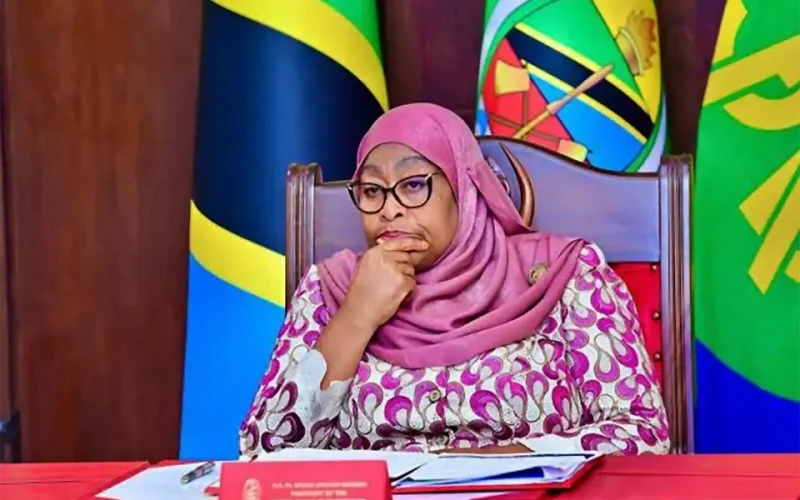
The stark assessment comes as the human rights organisation released a damning briefing documenting widespread abductions, extrajudicial killings, torture and arbitrary arrests of opposition figures, journalists and activists under President Samia Suluhu Hassan’s administration.
“Without sustained pressure from Tanzania’s regional and international partners to reverse the clampdown on freedom of expression and human rights generally, the 2025 elections risk becoming a procedural exercise devoid of legitimacy,” said Tigere Chagutah, Amnesty International’s Regional Director for East and Southern Africa.
The ruling Chama Cha Mapinduzi (CCM) Party is expected to dominate the vote, with the two main opposition presidential candidates locked out from contesting. Luhaga Mpina was disqualified for a second time last month, while Tundu Lissu of Chadema, the biggest opposition party, remains in detention facing treason charges.
Campaign of Fear and Violence
Amnesty’s investigation, based on interviews with 43 victims, witnesses, family members and civil society representatives, documented a deliberate strategy by authorities to instil fear and suppress civic engagement.
The Tanganyika Law Society has recorded 83 cases of people going missing under mysterious circumstances as of 9 August 2024.
In one of the most high-profile incidents, the body of Ali Mohammed Kibao, a senior strategist for Chadema, was found dumped near the shores of the Indian Ocean on 7 September 2024, a day after being abducted from a bus in Dar es Salaam.
Dioniz Kipanya, a Chadema party official, disappeared on 26 July 2024 after leaving home following a phone call with an unidentified person. He has not been found. Three youth activists abducted more than a year ago—Deusdedith Soka, Jacob Mlay, and motorcycle taxi driver Frank Mbise—remain missing after being taken by men suspected to be police officers.
Torture and Abuse of Opposition Supporters
When opposition leader Lissu appeared in court on 24 April 2025, police arrested dozens of his supporters outside the Kisutu Resident Magistrate Court. Many later reported being beaten and subjected to treatment that may amount to torture before being abandoned in remote areas more than 40 kilometres from central Dar es Salaam.
“Out of nowhere, a man who was wielding a long, pointed object jammed it through the inner ankle of my left leg, which left a gaping wound that was squirting blood,” one survivor told Amnesty. “Through my bloodied eyes, I noticed that several of my captors were filming the ordeal, while laughing at and taunting us.”
Lissu was arrested following comments he made on social media and YouTube on 3 April 2025. He faces charges for treason and publishing false statements—both non-bailable offences.
Systematic Suppression of Rights
Authorities have systematically banned, disrupted or violently dispersed peaceful gatherings, particularly those organised by opposition parties. On 13 May 2025, Chadema deputy secretary general Amani Golugwa was arrested at Julius Nyerere International Airport as he prepared to travel to Brussels for the International Democracy Union Forum.
Police questioned Golugwa about allegedly sending information to individuals in the European Parliament. “They claimed that the information I shared dishonoured the country and may have contributed to the European Parliament issuing sanctions against Tanzania,” he said.
In the run-up to the elections, authorities have passed flawed laws that further suppress civic space, including amendments to the Political Parties Affairs Laws Act 2024 and the Independent National Electoral Commission Act 2024.
Broken Promises of Reform
President Hassan’s government has shattered early hopes for reform. When she was sworn in as Tanzania’s first female head of state on 19 March 2021, following the death of President John Pombe Magufuli, her initial months signalled a departure from her predecessor’s repressive style. She lifted bans on certain media outlets and allowed opposition parties to resume public rallies.
“President Samia Suluhu Hassan’s government has dashed hopes for reform,” Chagutah said. “Instead, under her watch, authorities have continued and intensified repressive practices targeting opposition leaders, civil society, journalists, and dissenting voices, including through assaults, arbitrary arrests, extrajudicial killings and enforced disappearances, with nobody held accountable.”
Amnesty International is calling for prompt investigations into all reported abductions, extrajudicial killings and enforced disappearances, and for those responsible to be brought to justice. The organisation is also demanding that authorities immediately and unconditionally drop what it calls “trumped-up and politically motivated charges” against all those detained solely for expressing political views.
The Tanzanian authorities did not respond to Amnesty’s request for comment.