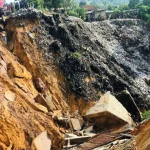
RESCUE teams are battling relentless rain and treacherous terrain in a desperate search for more than 30 people still unaccounted for following a catastrophic landslide that has killed at least 22 in Kenya’s western Rift Valley.
The disaster, which struck the Chesongoch area during the country’s short rainy season, has left rescue workers in a race against time as continuous rainfall threatens both recovery efforts and the safety of search teams deployed across the devastated landscape.
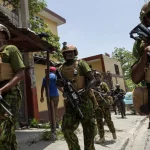
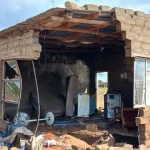
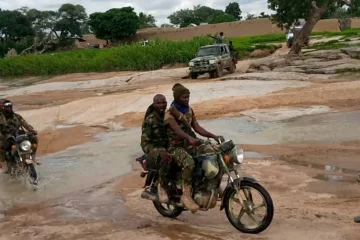
The Kenyan government has deployed military and police forces, including helicopters and fixed-wing aircraft, to reach communities cut off by the mudslide that destroyed more than 1,000 homes and obliterated critical road infrastructure. The scale of the search operation reflects the grim reality facing rescuers: dozens of families remain incomplete, their loved ones somewhere beneath tons of mud and debris.
The Kenya Red Cross has brought sophisticated technology to bear on the crisis, deploying drones and Geographic Information System (GIS) mapping to identify potential survivor locations and assess the full extent of the devastation. The organisation has established family tracing desks as separated relatives search desperately for one another in the chaos following the disaster.
More than 25 critically injured survivors have been airlifted to Eldoret’s Moi Teaching and Referral Hospital, where medical teams are performing urgent surgeries on patients with severe trauma injuries. Emergency medical stations have been established in Korou, Chesongoch, and Kabetwa—the three areas hardest hit by the landslide.
The human cost extends far beyond statistics. Stephen Kittony, a local resident, described the moment the mountain gave way: a deafening roar in the darkness, followed by seconds to make life-or-death decisions. He and his children fled in different directions as the wall of mud bore down on their home—a split-second choice that saved their lives but epitomises the terror that has traumatised the community.
Psychosocial support teams are working alongside search crews, providing counselling to survivors grappling with loss, displacement, and the trauma of their narrow escapes. Many families remain separated, unsure whether relatives survived or are among the missing.
Relief operations have mobilised resources from multiple government agencies and humanitarian organisations. The State Department of Special Programmes has delivered 600 bags of rice, 520 bags of beans, 1,000 blankets, 300 mattresses, and hygiene supplies. The Kenya Red Cross has distributed seven tonnes of supplies to 100 households and plans to assist up to 500 families.
Local governments from Elgeyo Marakwet and neighbouring Uasin Gishu counties have contributed ambulances, medical personnel, food, water, and heavy machinery to clear blocked roads – a critical priority for reaching isolated communities where survivors may be trapped.
The tragedy marks another deadly chapter in Chesongoch’s fraught history with landslides. The hilly terrain has experienced similar disasters in recent years, raising urgent questions about long-term solutions for communities living in these vulnerable areas.
Government officials have issued evacuation orders for residents near rivers and landslide-prone zones, urging immediate relocation to safer ground. Authorities are now identifying alternative settlement sites for displaced families, though the challenge of permanently relocating entire communities looms large.
As rescue operations continue into their third day, the window for finding survivors alive narrows with each passing hour. Yet search teams press on, driven by the knowledge that 30 families are waiting for answers—and holding onto hope that the missing might still be found alive beneath the mud.
The ongoing rainfall that triggered this disaster continues to fall, a grim reminder that in Kenya’s Rift Valley, the threat has not passed.