AS funerals continue across Tanzania for victims killed by security forces following last month’s disputed election, Amnesty International has launched an urgent campaign calling on the African Union and the African Commission on Human and Peoples’ Rights to mandate independent investigations into what it describes as grave human rights violations.
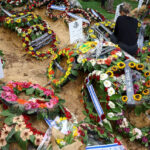
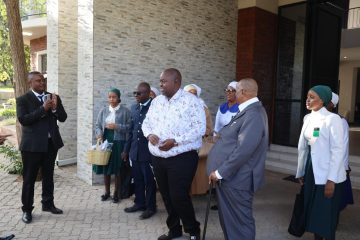
The campaign comes as mourners have been gathering at churches and family homes throughout the country, with funeral services held for those killed during the post-election violence. At Kinyerezi Catholic Parish in Dar es Salaam, services were held for victims, including a retired police officer, two teachers, a driver, a bank officer, two shopkeepers, and a small trader – eight neighbours executed in a single incident on November 3.
Meanwhile, Tanzanian authorities have charged hundreds of people with treason over demonstrations that erupted during and after the October 29 election, while opposition leaders detained before the polls remain imprisoned.
The actual number of casualties remains deeply disputed, with UN Human Rights Chief Volker Türk accusing authorities of “an apparent attempt to conceal evidence,” following reports that police were taking bodies from mortuaries to undisclosed locations.
Türk urged authorities to release bodies to families for funerals, describing as “harrowing” reports of families “desperately searching everywhere for their loved ones, visiting one police station after another and one hospital after another”.
While the UN human rights office cited credible reports of at least ten deaths, the opposition Chadema party has said about 2,000 people were killed during three days of protests. Some activists have suggested the toll could exceed 3,000. The government has yet to release an official death toll.
In Kinyerezi, neighbours described how eight men were ordered to lie face down on the ground in the early morning of November 3 before being shot one after another. Two neighbours managed to escape. A Washington Post report documented rampant killings by state security forces, with witnesses describing bodies strewn on streets across the country when polls closed.
Mass Treason Charges Target Protesters, Young People
In a dramatic escalation, Tanzanian authorities have charged hundreds of people with treason over their alleged involvement in demonstrations, with court documents showing more than 250 people arraigned in Dar es Salaam alone.
According to the charge sheet, suspects face three counts: treason, conspiracy to commit treason, and destroying infrastructure across the city for three consecutive days starting on election day. Under Section 39(2)(d) of Tanzania’s Penal Code, treason is a non-bailable offence that carries an automatic death penalty upon conviction.
Young people in particular have been targeted, “often caught unaware,” according to a joint statement by the Legal and Human Rights Centre and six other NGOs. Most of the 98 people arraigned in Dar es Salaam on November 7 were aged below 30.
The treason charges extend beyond those arrested at protests. One accused, businesswoman Jenipher Jovin Bilikwija, 26, is alleged to have encouraged the public to purchase tear gas and smoke-blocking masks from her shop beginning in August.
Chadema leader Tundu Lissu has been jailed for several months and also faces treason charges after he urged electoral reforms ahead of voting on October 29. He was detained in April, effectively excluding him from the race.
Police have also issued arrest warrants for top opposition officials not yet jailed, including Brenda Rupia, communications director for Chadema, and John Mnyika, its secretary-general. Police arrested senior Chadema official Freeman Mbowe, the party chairman, with authorities saying they were conducting “a serious manhunt” for additional opposition figures.
Wanted suspects also include Josephat Gwajima, an influential preacher who had his church deregistered earlier this year after he criticised the government over rights abuses.
In a research briefing published on October 19 titled “Unopposed, Unchecked, Unjust,” Amnesty International documented what it called an escalating campaign of repression ahead of the vote. The organisation recorded widespread violations between January 2024 and October 2025, including enforced disappearances, arbitrary arrests, torture, unlawful killings, and severe restrictions on fundamental freedoms.
The Tanganyika Law Society confirmed 83 abductions since Hassan took power in 2021, with an additional 20 reported in the weeks leading up to the election.
The election itself was marked by the unprecedented exclusion of Hassan’s two main challengers. Chadema was disqualified in April after refusing to sign an electoral code of conduct, while Luhaga Mpina, presidential candidate for ACT-Wazalendo, Tanzania’s second-largest opposition party, was also disqualified despite court rulings in his favour.
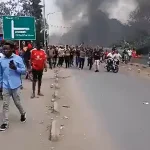
Protests erupted across major cities on election day as demonstrators tore down campaign posters and set fire to government buildings. An opposition official from the Mwanza region said he attended at least nine funerals, including two for children aged nine and 11—one shot near his home, the other while returning from a shop.
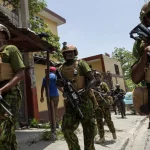
Rights groups condemned what they called “excessive use of force” against unarmed demonstrators, including reprisal killings of civilians, some in their own homes. “Families have been left traumatised, and children have witnessed violence against their parents”.
A nationwide internet shutdown lasting six days prevented outside monitoring of the government’s response. President Hassan was declared the winner with 97.66 percent of the vote—a result that has drawn widespread condemnation.
Rare Regional Rebuke
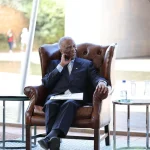
In an unusual rebuke of a fellow member state, the African Union Election Observation Mission concluded that the election “failed to comply with AU principles, normative frameworks, and international standards for democratic elections.” The 72-member mission, led by former Botswana President Mokgweetsi Masisi, cited ballot stuffing, the internet blackout, allegations of excessive military force, and politically-motivated abductions.
The Southern African Development Community (SADC) earlier issued its own preliminary report stating that “voters could not express their democratic will” and that the elections “fell short” of SADC principles due to violence, censorship, and “general intimidation.”
Foreign ministers from the United Kingdom, Canada, and Norway issued a joint statement citing “credible reports of a large number of fatalities and significant injuries, as a result of the security response to protests.”
Amnesty Campaign Demands Action
Amnesty International’s petition specifically calls on African Union Commission Chairperson Mahmoud Ali Youssouf to mandate independent investigations into human rights violations committed before, during, and after the October 29 election “with a view to ensuring full accountability.”
“Right now, we must make a choice,” the petition states. “Either allow repression to erode the fundamental rights and freedoms of people in Tanzania or resist it by standing in solidarity with them.”
The organisation argues that without decisive action from regional and international actors, including the African Union, justice for the violations will remain out of reach and the abuses will continue.
Religious leaders have urged the government to reconcile with political opponents and protesters. Bishop Benson Bagonza of the Evangelical Lutheran Church in Tanzania warned that the treason charges would likely make tensions worse, saying, “The only option for the government to keep at least relative peace now is to grieve with the people instead of arresting and taking people to court”.
Tanzania has been governed by the Chama Cha Mapinduzi (CCM) party or its predecessor since independence in 1961. The party has won every election since multiparty politics were introduced in 1995, though opposition parties had always been allowed to compete until this year.
Hassan, 65, became Tanzania’s first female president in 2021 following the sudden death of her predecessor, John Magufuli. While she initially received praise for easing some restrictions on political rallies and media, observers say the political environment has grown increasingly repressive over the past two years.
Government critics point out that previous leaders tolerated opposition while maintaining a firm grip on power, whereas Hassan is accused of leading with an authoritarian style that defies youth-led democracy movements elsewhere in the region.
UN Secretary-General António Guterres expressed deep concern about the situation, urging all parties to “prevent further escalation.”
The controversy over Tanzania’s election comes as several African nations have faced disputed polls this year, raising concerns about democratic backsliding across the continent.