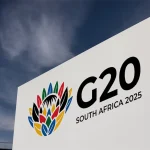
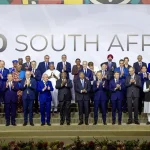
SOUTH Africa, which hosts the first G20 Leaders’ Summit on African soil on November 22-23, with 42 countries confirmed to attend the historic gathering at the NASREC precinct in Johannesburg, has declared itself ready to host.
The summit marks the culmination of South Africa’s year-long G20 Presidency, during which the country has completed 130 of 133 official G20 meetings under the theme of “Solidarity, Equality, and Sustainability.”
Twenty G20 member countries — excluding the United States — along with 16 guest countries and six nations representing regional economic communities from Africa, the Caribbean, and East Asia will participate in the two-day event, Lamola said during a media briefing at NASREC.
“South Africa views the diversity of the G20 nations as a strength rather than a source of division and has preserved the unity of the Group in pursuit of its priorities,” Lamola said.
The leaders’ summit will focus on three key sessions: inclusive and sustainable economic growth, building a resilient world through disaster risk reduction and climate action, and ensuring a fair future through critical minerals governance, decent work, and artificial intelligence.
The gathering takes place as South Africa’s economy shows signs of recovery. The country recently received its first sovereign credit rating upgrade in nearly two decades from S&P Global Ratings, which raised the long-term foreign-currency rating from BB- to BB with a positive outlook. Unemployment fell to 31.9% in the third quarter from 32.9% in the previous quarter, and the country has eliminated load shedding.
Key Deliverables
South Africa’s presidency has prioritised strengthening disaster resilience, ensuring debt sustainability for low-income countries, mobilising finance for just energy transitions, and harnessing critical minerals for inclusive growth.
Notable achievements include the launch of the AI Initiative for Africa in collaboration with the African Union and UNESCO, the establishment of the Africa Energy Efficiency Facility, and the adoption of high-level principles for combating illicit financial flows.
Leaders are expected to consider reports from the Africa Expert Panel, chaired by former Finance Minister Trevor Manuel, the Extraordinary Committee on Global Wealth Inequality, and the G20@20 Review before adopting the Johannesburg Declaration.
Social Summit and Side Events
A G20 Social Summit will take place at the Birchwood Hotel in Boksburg on November 20-21, with 5,000 attendees expected, including 4,050 representatives from civil society and engagement groups.
High-level side events include an IBSA Leaders’ Meeting, the Global Fund’s Eighth Replenishment Meeting, a high-level renewable energy pledging event, and a special South Africa-EU Summit.
Negotiations on the South African Declaration began virtually on November 10 and moved to in-person discussions at the fourth Sherpa Meeting, which runs until November 19.
“We have a strong belief that with those who are present, consensus can be built for the leaders’ summit to adopt a declaration,” Lamola said.
The minister thanked Johannesburg residents for their patience with disruptions, saying the G20 has served as “a catalyst to turn the corner on service delivery” in the city and across the country.