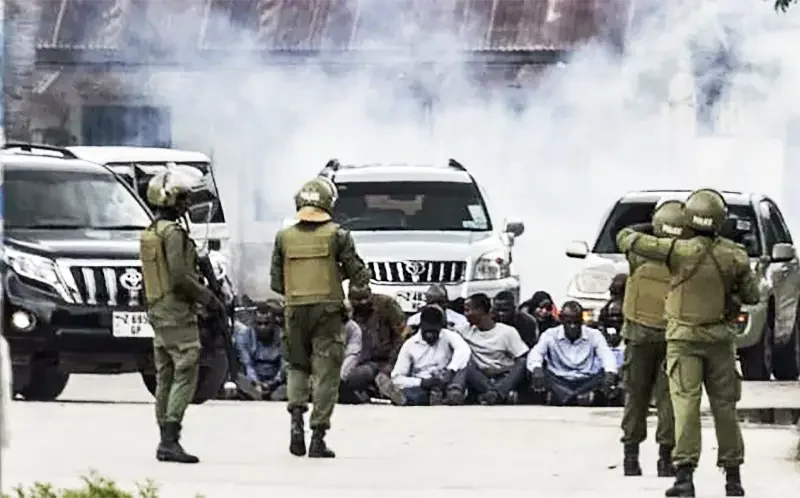
TANZANIAN Police and armed men fatally shot protesters – many of whom appeared unarmed or carried only rocks and sticks – in the chaotic aftermath of the country’s disputed presidential election last month, according to a CNN investigation.
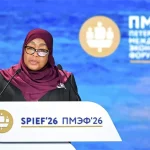
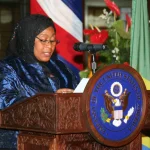
CNN reports that geolocated videos, audio forensic analysis, and first-hand witness accounts document the brutality unleashed on young demonstrators following President Samia Suluhu Hassan’s re-election. Hassan claimed victory with 98% of the vote on October 29 after barring her chief rivals from the presidential race.
Videos verified by CNN show morgues overflowing with scores of bodies, supporting witness reports about the deadly toll of the post-election crackdown. Additionally, CNN reports that satellite images and videos show recently disturbed soil consistent with reports of mass graves in the Kondo cemetery, north of Dar es Salaam. Two human rights groups and witnesses told CNN the bodies of protesters killed in recent weeks have been buried there.
Violent Crackdown on Protesters
Following the election, authorities imposed a curfew and internet blackout as people gathered to contest the exclusion of Hassan’s rivals. The main opposition party leader, Tundu Lissu, has been in custody since April, charged with treason.
Government officials initially denied that any killings had occurred. Last week, however, Hassan acknowledged there had been casualties but released no figures. On Thursday, she launched a commission to investigate the unrest while suggesting protesters were paid. Her government and police did not respond to CNN’s requests for comment.
The United Nations Human Rights Office, based on information from multiple sources in the country, suggested hundreds of protesters and other civilians were killed, with an unknown number injured or detained.
Evidence of Fatal Shootings
According to CNN’s investigation, conducted with open-source investigator Benjamin Strick, the network reviewed dozens of videos and images of civilians dead from gunshot wounds, as well as images of bodies overflowing morgues at the Sekou-Toure Regional Referral Hospital in Mwanza and the Mwananyamala Hospital in Dar es Salaam.
CNN verified videos showing bodies covering the floor inside Mwananyamala Hospital in Dar es Salaam, and geolocated videos of bodies piled up outside Sekou-Toure Regional Referral hospital in Mwanza, where at least 10 bodies were visible on a stretcher.
One doctor who treated gunshot victims over four days in Mwanza and requested anonymity for fear of reprisals told CNN that police brought the dead to the morgue “until it was full,” after which they “piled” the bodies outside.
Detailed Analysis of Arusha Shooting
In one violent encounter analysed by CNN, Tanzanian police in Arusha fatally shot two protesters who appeared to pose no threat—a pregnant woman shot in the back while running away, and a young man shot in the head.
CNN obtained and analysed original footage showing that at 3:27 p.m. on election day, armed police officers confronted a group of young men at an intersection. Two minutes later, according to the video, demonstrators fled amid gunfire. A woman wearing a lavender top and holding a stick and a rock was fatally shot in the back as she ran, dropping to the ground with blood coming from her blouse.
CNN reports that a forensic analysis shows the woman was shot from behind, with a bullet hole visible in her blouse. Sources close to her family confirmed to CNN that the woman was three months pregnant and left behind a husband and two children.
Rob Maher, a professor at Montana State University who specialises in forensic audio analysis, examined audio from the shooting for CNN. Based on the time gap between the ballistic shockwave and muzzle blast, Maher established the shooter was about 112 meters (367 feet) from the filming device.
Minutes later, according to a video verified by CNN, another protester dressed in black was shot and collapsed with a visible head injury. CNN reports the victim was at least 95 meters from police when shot, according to Maher’s audio analysis.
An eyewitness to both shootings told CNN the protest had started peacefully until police began firing. “I tried to call for help from others to pull her aside because she was still breathing, but shots kept getting fired,” the witness said. “Someone’s mother died while I and others watched.”
Widespread Violence Across the Country
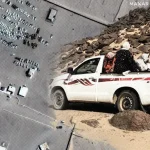
CNN geolocated several videos showing what appear to be plainclothes officers getting out of white pickup trucks in Dar es Salaam and opening fire in civilian areas. A series of drone videos shows protesters fleeing as armed individuals got off trucks and opened fire repeatedly while roaming a civilian area, according to CNN’s analysis.
Viral Scout Management, a local sports consultancy, released a statement saying seven young soccer players under their contracts were shot and killed at their homes during the protests. The firm later posted that the bodies of six could not be located.
Mass Grave Allegations
According to CNN, a coalition of Tanzanian human rights groups and two local sources said some bodies of protesters killed after October 29 in Dar es Salaam were buried in a mass grave at Kondo cemetery in Kunduchi.
CNN reports that high-resolution satellite imagery from Planet Labs and Vantor shows disturbed ground in a barren plot 60 meters from existing graves. Further analysis of Sentinel-2 satellite imagery shows the digging occurred between November 2 and November 5, according to CNN.
A video obtained by CNN shows a series of spots of sandy, overturned soil weaving between patches of vegetation. The exact reason for the disturbance is unclear.
The crackdown has marred Tanzania’s reputation as a stable democracy that attracts millions of tourists annually.