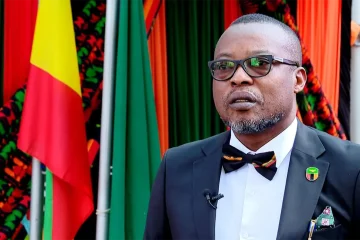
DEMOCRATIC Republic of Congo Nobel Peace Prize winner Dr Denis Mukwege has issued a scathing denunciation of the Washington and Doha-led peace initiatives aimed at ending conflict in eastern Democratic Republic of Congo, calling them fundamentally flawed and designed to serve foreign economic interests rather than the Congolese people.
In a strongly-worded statement, Mukwege declared the bilateral negotiations between Kinshasa and M23 rebels “illegitimate, precarious and incapable of guaranteeing lasting peace,” accusing the processes of prioritising access to the region’s vast mineral wealth over human rights and sovereignty.
“How long will we see agreements negotiated without the people, illegitimate and incapable of bringing about a just and lasting peace?” Mukwege asked, condemning what he characterised as 150 years of external powers shaping Congo’s history at the expense of its citizens.
Ceasefire Violations Continue Despite Framework Agreement
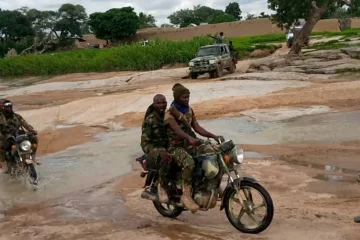
The renowned surgeon and human rights advocate pointed to continuing violence despite the Doha Framework Agreement, noting that M23 and the Congo River Alliance have violated the ceasefire and continued offensive operations even after two of eight protocols were initialled in September and October.
Mukwege cited the recent massacre of 22 people in Irhambi/Katana during the night of November 23-24 as evidence of what he called a persistent “talk and fight” strategy by M23, its allied forces, and their Rwandan backers.
“The M23/AFC coalition and their Rwandan sponsor have already violated the ceasefire and continue offensive activities,” he stated, accusing Rwanda of directing operations in occupied areas while maintaining troops on Congolese territory in violation of UN Security Council Resolution 2773.
“De Facto Annexation” of Kivu Provinces
In his most explosive allegation, Mukwege described the situation in North and South Kivu as amounting to “a de facto annexation,” claiming Rwanda exercises illegal authority over Congolese territory in violation of the UN Charter and international law.
He accused foreign governments and industrial actors of implicitly supporting this situation through economic activities in occupied zones, warning that “the interference of foreign economic actors, drawn by access to mineral resources, further deepens the country’s vulnerability.”
Critical Flaws in Peace Process
Mukwege outlined multiple fundamental problems with the current peace initiatives:
The processes are bilateral despite the conflict being regional in nature, with direct involvement from Uganda and Burundi being ignored. They lack transparency while ordinary Congolese “are exhausted by backdoor manoeuvring whose consequences they alone endure.” The agreements tend to normalise armed aggression rather than end it, he argued.
Most critically, Mukwege said the initiatives exclude victims, local communities, and genuine peace actors from participation.
“The Congolese people find themselves caught between the hammer and the anvil: trapped between a Congolese government whose irresponsibility compromises national sovereignty, and a strategic, criminal Rwanda,” he stated.
Calls for Fundamental Change in Approach
The Nobel laureate demanded that any legitimate peace process must include strong international sanctions to ensure withdrawal of foreign forces, full participation of local populations, recognition of the regional dimensions of the conflict, and prioritisation of “truth, justice, and accountability.”
“No political agenda, national or geostrategic, can outweigh the right of the Congolese people to security, justice, and sovereignty,” Mukwege declared.
His statement comes as DRC opposition leaders have called on President Félix Tshisekedi to make any agreement public before signing and warned against accepting terms “that would undermine the sovereignty of the DRC.”
Mukwege, who was awarded the Nobel Peace Prize in 2018 for his decades of work treating survivors of sexual violence and advocating against the use of rape as a weapon of war, concluded with a call for Congolese citizens to “refuse to be the adjustment variable of geopolitical rivalries” and to reclaim control over their destiny.
The statement represents one of the most forceful critiques yet of the international community’s approach to resolving the long-running conflict in eastern DRC, where millions have been displaced and where competition for control of mineral resources including cobalt, coltan, and gold has fueled decades of violence.