A Kenyan court has thrown up a critical democratic safeguard against what civil society groups describe as the potential wholesale transfer of citizens’ most intimate information to foreign control, suspending key data-sharing provisions of a $2.5 billion health cooperation framework signed with the United States just days ago.
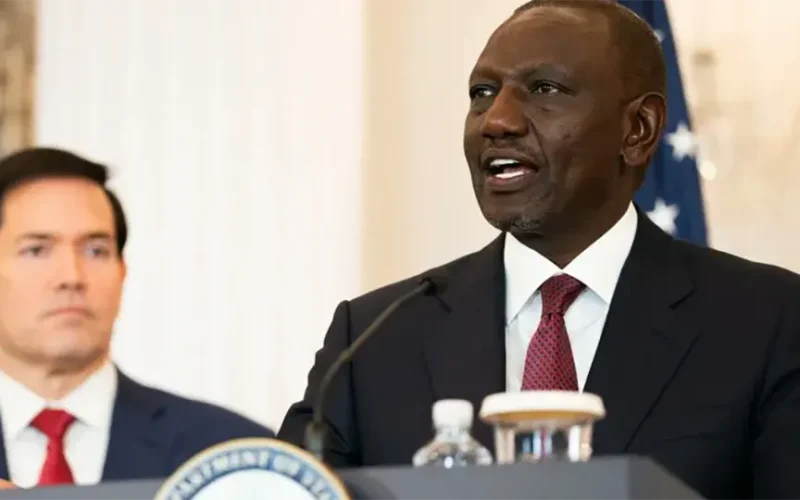
The December 4 agreement, inked at the White House amid fanfare and positioned by President William Ruto’s administration as a transformative health partnership, hit an immediate legal roadblock when Justice Bahati Mwamuye of the Nairobi High Court issued a conservatory order halting any transfer of personal medical or epidemiological data pending a full hearing.
The intervention underscores a fundamental question facing developing nations in an era of data-driven global health cooperation: At what point does economic partnership cross into sovereignty surrender?
The court’s swift action – suspending implementation “with immediate effect” – came in response to a petition by the Consumer Federation of Kenya, which warned that once citizens’ health records leave national borders, “the harm becomes permanent and irreversible.”
This is precisely the scenario democratic institutions are designed to prevent: executive action that, however well-intentioned, may irretrievably compromise citizens’ fundamental rights without adequate public scrutiny or consent.
President Ruto’s government had moved quickly to finalise the deal, which replaced decades of US Agency for International Development programs dismantled earlier this year by the Trump administration. The agreement promised $1.7 billion in American funding – with Kenya contributing $850 million – to combat HIV/AIDS, malaria, and tuberculosis over five years, with emphasis on faith-based healthcare providers.
But the Consumer Federation’s legal challenge exposed what critics say was a critical flaw: insufficient safeguards over who controls, accesses, and profits from Kenyan citizens’ personal health information once transferred abroad.
Beyond Kenya’s Reach
The petitioners’ argument is stark: “Neither this honourable court nor Kenyan regulators would have the power to recall, restrict, or oversee how such data is used overseas.”
This cuts to the heart of data sovereignty concerns rippling across Africa as nations sign similar agreements with Washington. Rwanda and Uganda have already entered comparable pacts under the Trump administration’s restructured foreign aid architecture, which requires recipient countries to increase domestic health spending while accepting American funding.
Civil society groups across the continent have sounded alarms in an open letter to African heads of state, warning that beyond data risks, these agreements could grant Washington “undue leverage” over African governments and enable human rights violations.
The concern is not merely hypothetical. Medical data—including HIV status, genetic information, mental health records, and reproductive health details—represents some of the most sensitive personal information citizens possess. In the wrong hands, or used without consent, such data can enable discrimination, surveillance, and exploitation.
Presidential Reassurances vs. Judicial Scepticism
President Ruto sought to calm fears this week, insisting his Attorney General had examined the agreement “with a fine-tooth comb” to ensure “the law that prevails on data that belongs to the people of Kenya is the Kenyan law.”
Yet the court’s intervention suggests Justice Mwamuye found those assurances insufficient to override citizens’ immediate privacy interests. The judge’s order demands that “decision-making informed by Kenyan health data must be public, auditable and jointly supervised, with consumer representatives involved in data processing, monitoring and evaluation, and independent oversight,” according to the Consumer Federation.
This represents judicial pushback against what critics characterise as executive overreach – a government making commitments about citizens’ private information without transparent public consultation or robust legal protections against misuse.
The Kenyan case illuminates tensions emerging across the developing world as Western powers increasingly seek health data partnerships alongside traditional aid. While proponents argue such cooperation enables better disease surveillance and treatment protocols, critics see a new form of extractive relationship—one trading not natural resources, but the intimate details of citizens’ lives.
The Trump administration’s restructuring of US health aid into bilateral agreements requiring recipient nations to boost domestic spending may deliver needed resources. But the Kenyan court’s intervention suggests that without ironclad data protections, such deals risk subordinating individual privacy rights to geopolitical and economic imperatives.
Justice Mwamuye’s order will remain in effect until a full hearing next year, giving civil society groups time to make their case that the agreement, as structured, violates Kenyan data protection laws and constitutional rights to privacy.
Democracy’s Design at Work
Whatever the ultimate outcome, the court’s action demonstrates democratic institutions functioning as designed: providing a check on executive power when citizens’ fundamental rights appear threatened, ensuring that economic opportunity doesn’t steamroll individual protections, and demanding transparency and accountability in agreements that affect the entire population.
For President Ruto, the suspension represents an embarrassing reversal of a deal signed with great ceremony at the White House. For Kenyan citizens, it may represent the difference between partnership and subjugation in the digital age – a question the courts, not the executive alone, will now decide.
The outcome will likely reverberate far beyond Kenya’s borders, as other African nations weigh similar agreements and confront the same fundamental question: How much control over citizens’ most personal information should governments cede in pursuit of foreign aid?