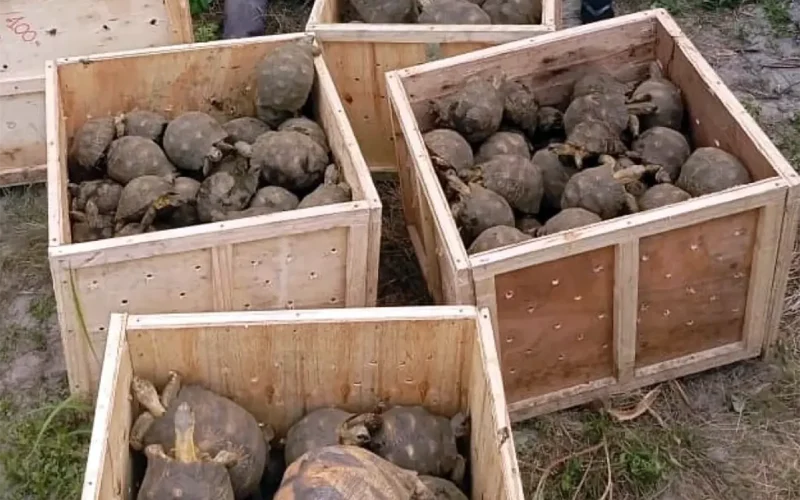
AFRICAN wildlife has become the beating heart of a sinister global trade network, with the continent’s iconic species and bushmeat driving record seizures in a month-long international crackdown that exposed the staggering scale of environmental plunder.
From the savannas of Tanzania to the rainforests of Cameroon, Operation Thunder 2025 laid bare the industrial-scale pillaging of Africa’s natural heritage, with authorities across the continent seizing everything from 400 kilograms of giraffe meat in Kenya to severed gorilla hands in Cameroon and poached rhino horns in Angola.
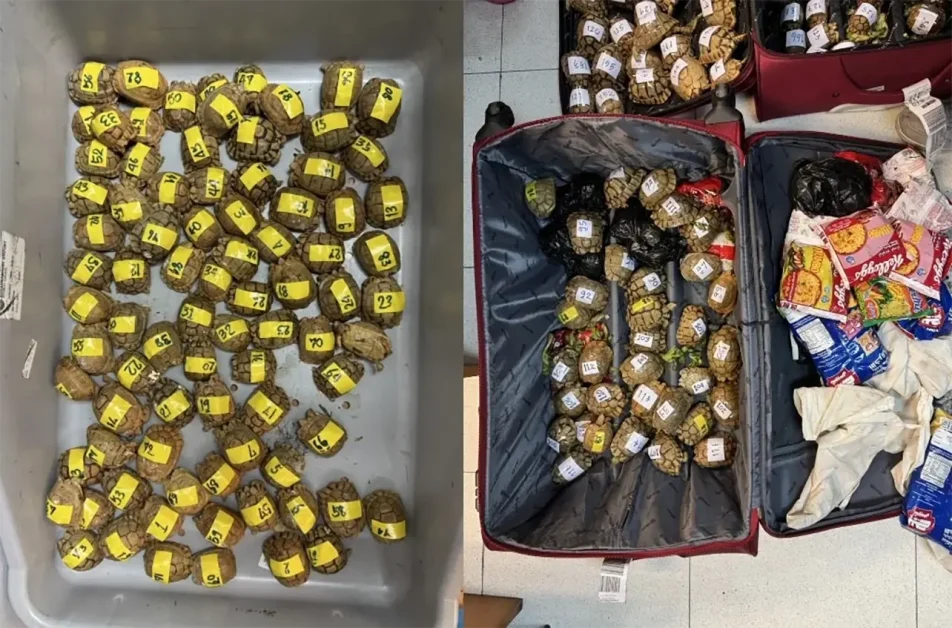
The September 15 to October 15 operation—spanning 134 countries and coordinated by INTERPOL and the World Customs Organisation—resulted in nearly 30,000 live animals seized worldwide, the identification of 1,100 suspects, and a chilling revelation: African bushmeat trafficking into Europe has exploded to record levels.
Bushmeat Crisis Escalates
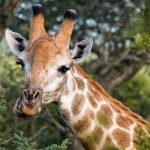
The operation uncovered a disturbing surge in bushmeat smuggling, with 5.8 tonnes intercepted globally—a record haul driven primarily by Africa-to-Europe trafficking routes. Belgian authorities stopped shipments of primate meat at their borders, while Kenyan officials seized over 400 kilograms of giraffe meat destined for international markets. In Tanzania, law enforcement recovered zebra and antelope meat and skins valued at approximately $10,000.
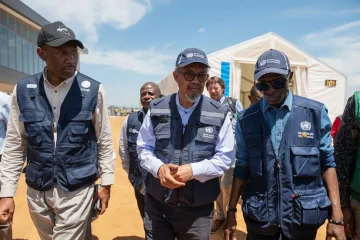
“These syndicates target vulnerable species, undermine the rule of law and endanger communities worldwide,” warned INTERPOL Secretary General Valdecy Urquiza, noting the increasing intersection between wildlife crime and other criminal enterprises, from drug trafficking to human exploitation.
Africa’s Megafauna Under Siege
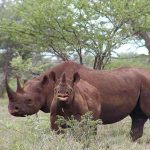
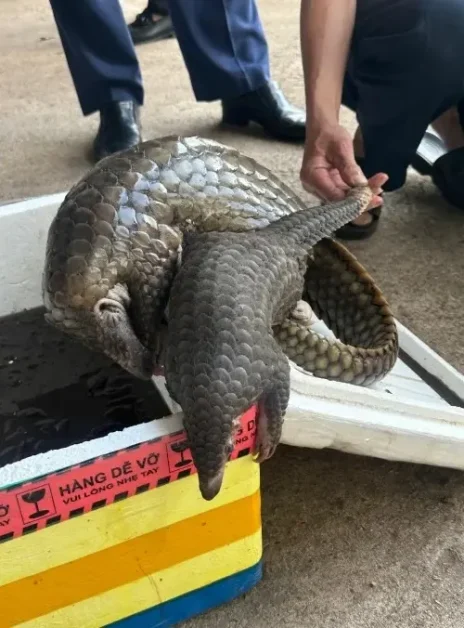
The continent’s most majestic creatures continue to bear the brunt of organised criminal networks. Tanzanian authorities seized over 100 ivory tusks and pieces worth $415,000, along with more than 140 hippopotamus teeth valued at $40,000. In Angola, investigators discovered a freshly poached rhino, its horns brutally hacked off, while Mozambican officials arrested nine individuals connected to multiple pangolin seizures.
Cameroon’s haul told its own grim story: elephant hair and the severed hands of gorillas, destined for traditional medicine markets and dark web collectors.
Malaysian authorities, meanwhile, arrested three suspects after raiding a vehicle containing a dead tiger with traumatic injuries consistent with illegal hunting—evidence of the transcontinental nature of these criminal networks that often originate their operations in Africa.
South Africa’s Multi-Pronged Battle
South African law enforcement mounted one of the operation’s most comprehensive responses, arresting 24 suspects and seizing protected succulents, live pangolins, and over 17,000 abalone. Authorities also confiscated unlicensed firearms and ammunition, underscoring the violent nature of wildlife crime syndicates operating across the region.
The South African seizures highlight how environmental crime has become inextricably linked to broader organised crime, with the same networks trafficking weapons, drugs, and endangered species through interconnected supply chains.
Timber Theft Compounds Crisis
Beyond living creatures, Africa’s forests are being systematically stripped. Angola and other nations reported significant illegal timber seizures as part of the 32,000 cubic metres of illicitly logged wood intercepted globally. Illegal logging accounts for an estimated 15-30 percent of all timber traded worldwide, devastating ecosystems and robbing local communities of resources.
In the Dominican Republic alone, authorities detained 90 individuals for crimes linked to illegal logging, demonstrating the scale of human involvement in forestry crime.
The $20 Billion Shadow Economy
Wildlife crime generates an estimated $20 billion annually—a figure experts believe severely underestimates the true scope due to the clandestine nature of the trade. The month-long operation resulted in 4,640 seizures and intercepted more than 30 tonnes of species classified as endangered under the Convention on International Trade in Endangered Species (CITES).
While African elephants, rhinos, and big cats dominate headlines, the operation revealed emerging threats from smaller species. Nearly 10,500 butterflies, spiders, and insects were seized worldwide, along with over 10 tonnes of live plants and plant derivatives driven by collector markets.
Marine species aren’t spared either. More than 245 tonnes of protected marine wildlife were seized, including 4,000 pieces of shark fins, with Brazil alone intercepting almost two tonnes.
Technology and Cryptocurrency Complicate Enforcement
Authorities in Qatar arrested an individual attempting to sell an endangered primate for $14,000 on social media, illustrating how digital platforms have become marketplaces for illegal wildlife trade. The increasing use of cryptocurrency to facilitate these transactions presents new challenges for law enforcement.
“As these criminal activities become increasingly tied to cryptocurrency, the inherent opacity of digital assets demands sustained intelligence-sharing to enable successful prosecutions,” officials noted in the operation report.
Cross-Border Collaboration Key
The operation’s success depended on months of preparation, intelligence sharing, and coordination across borders. INTERPOL issued 69 Notices during the tactical phase to support the identification, tracking, and arrest of suspects identified in preliminary investigations.
“Customs is the frontline defence against the surge in cross-border wildlife crime,” said WCO Secretary General Ian Saunders. “This global threat demands collective action.”
For African nations, the battle is existential. The continent’s biodiversity represents not just ecological heritage but economic potential through sustainable tourism and ecosystem services. Every pangolin smuggled out, every rhino poached, every cubic metre of timber stolen represents a theft from future generations.
Operation Thunder 2025 may have delivered record seizures, but as long as demand persists in international markets and criminal networks continue to operate with sophistication and impunity, Africa’s wildlife remains under siege.