AS Uganda lurches toward its January 15, 2026, general elections, a chilling pattern has emerged: the country’s military and security apparatus has transformed into President Yoweri Museveni’s most potent electoral weapon, systematically crushing dissent through arbitrary arrests, enforced disappearances, and violence that has drawn unprecedented international alarm.
The detention of Reverend Father. Deusdedit Ssekabira, a Catholic priest from Masaka Diocese who vanished on December 3 and resurfaced in military custody more than a week later, represents merely the latest manifestation of a security state apparatus that has perfected the art of pre-election intimidation over four decades of Museveni’s rule.
The Priest, The Pattern, The Precedent
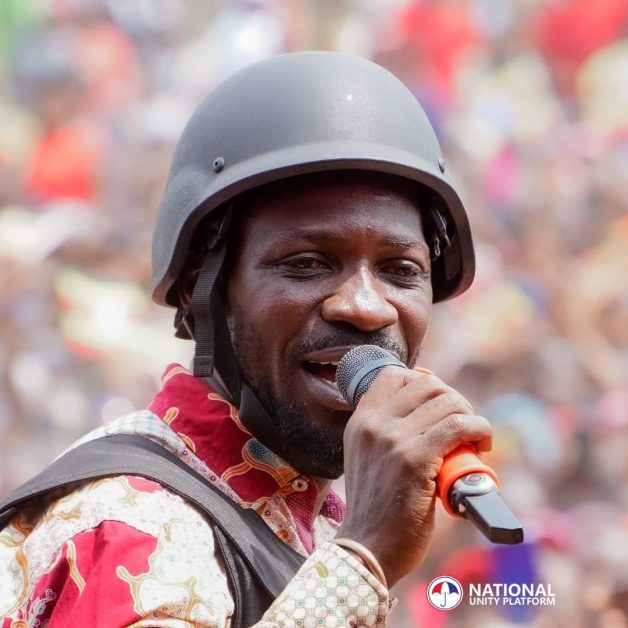
When men in Uganda Army uniform seized Fr. Ssekabira in broad daylight in Katwe, Masaka City, using what witnesses described as military equipment including a drone, they added another name to a growing list of Ugandans who have disappeared into what opposition leader Robert Kyagulanyi calls the regime’s “basement” — a euphemism for the torture chambers and illegal detention centers that have become synonymous with Uganda’s security forces.
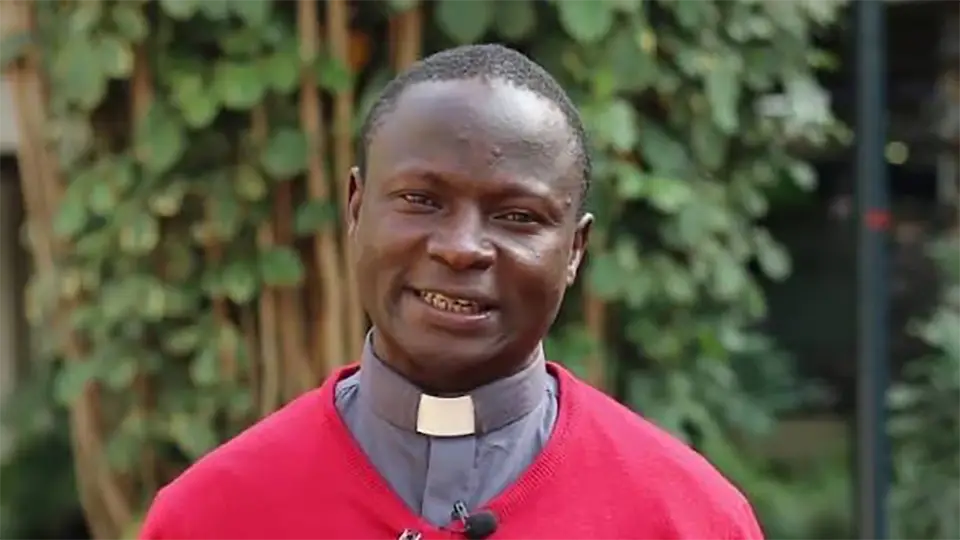
The Uganda People’s Defence Forces (UPDF) confirmed on December 14 that they were holding the priest for alleged involvement in “violent subversive activities against the state.” The acknowledgement came only after Bishop Serverus Jjumba publicly described the priest’s disappearance as a “grievous wound” and mobilised Catholic faithful through special prayers, invoking painful memories of Msgr. Clement Mukasa, who was kidnapped in 1976 and never seen again.
The incident exposed a disturbing coordination gap — or perhaps deliberate obfuscation — within Uganda’s security architecture. While the police claimed ignorance of Fr. Ssekabira’s whereabouts and said they were “verifying” social media reports of his abduction, the military later revealed they had been holding him all along. This pattern of enforced disappearance, where individuals vanish into unofficial detention before being “produced” by security agencies, has become a hallmark of Museveni’s pre-election playbook.
“The military has no place detaining civilians,” Kyagulanyi stated, articulating what Uganda’s Supreme Court itself ruled in January 2025 — that trying civilians in military courts violates the constitution. Yet despite this ruling, and despite Museveni’s claims that he is running for his “last term,” the securitisation of Uganda’s political space has intensified rather than abated.
A War Machine Repurposed for Politics
The numbers tell a story of systematic repression. UN Human Rights Chief Volker Türk revealed that at least 550 individuals, predominantly members and supporters of Kyagulanyi’s National Unity Platform (NUP), have been arrested and detained since the beginning of 2025 alone. More than 300 of these arrests occurred after campaigning officially began in September.
The charges against detainees read like a catalogue of manufactured offences: public nuisance, disobedience of lawful orders, assault, obstruction, incitement of violence. In Mbarara, 43 supporters appeared before a magistrate. In Lira, nine more were remanded. In Arua, 32 were detained after CCTV analysis. The pattern repeats across Uganda’s districts: arrest, detention, spurious charges, prolonged incarceration.
The violence has been lethal. In the eastern town of Iganga last week, heavily armed security forces deployed at an NUP rally reportedly used live ammunition, killing at least one person and injuring three others. Journalists covering a parliamentary by-election in Kawempe North in March faced systematic brutality: at least 32 were assaulted or had their equipment confiscated or damaged by security operatives. State-owned New Vision reporter Ibrahim Ruhweza was attacked with batons and gun butts by masked soldiers who forced him to delete footage. Spark TV reporter Hasifah Nanvuma, wearing a press vest, was beaten by soldiers. Three NMG journalists were detained, blindfolded, and beaten in an unmarked vehicle.
The General’s Shadow Government
At the epicentre of this militarised repression stands General Muhoozi Kainerugaba, President Museveni’s son and Chief of the Uganda People’s Defence Force. Muhoozi has openly boasted about detaining opposition activists in his “basement” — a widely recognised euphemism for torture — and has publicly threatened Kyagulanyi with similar treatment, promising “you are next.”
His conduct represents a complete breakdown of civilian oversight over the military. When summoned by parliament, Muhoozi dismissed legislators as “clowns” and vowed never to appear. When the Uganda Human Rights Commission issued a release order for an abducted opposition figure, he responded with defiance and demands for an apology. He has threatened to expel EU diplomats, accused Germany’s ambassador of “subversive acts,” and declared him “wholly unqualified.”
This is not rogue behaviour by a wayward officer; it is systematic power projection by someone who views himself as immune to accountability. Muhoozi’s rise represents what analysts describe as the steady militarisation of Ugandan politics, where the distinction between military service and political ambition has been deliberately erased.
Besigye: The Unbreakable Opponent
The case of Dr Kizza Besigye, Museveni’s former personal physician turned principal political nemesis, epitomises the regime’s desperation. In November 2024, Besigye was lured to Nairobi under false pretences and abducted in a cross-border operation that violated international law. He was rendered to Uganda and charged with treason in a military court — despite being a civilian, despite the Supreme Court ruling against such trials, despite decades of established legal precedent.
Besigye’s response was characteristically defiant: a 10-day hunger strike protesting the constitutional violations. At 68, wheelchair-bound and facing charges punishable by death, he refused to capitulate. His physical frailty paradoxically amplified his political strength, transforming him from a detained politician into a living symbol of resistance.
Together with Kyagulanyi — the pop star who captured the imagination of Uganda’s youth — Besigye represents what keeps Museveni awake at night: a two-generational alliance that cannot be dismissed as foreign-sponsored or tribally motivated. Besigye’s credentials as a bush war veteran and former insider give him unassailable nationalist credentials; Kyagulanyi’s grassroots appeal makes him impossible to ignore.
The Machinery of Repression
The methods employed by Uganda’s security forces have been refined over successive electoral cycles:
Unmarked vehicles known as “drones” transport detainees to unofficial “safe houses” where they are held incommunicado. These facilities, scattered across Uganda, operate outside any legal framework, enabling torture and abuse beyond judicial scrutiny.
Preemptive arrests systematically target opposition supporters, campaign workers, and mobilizers weeks before elections. Human Rights Watch estimates over 1,000 people were detained around the 2021 elections, with abductions continuing through 2025.
Violence disguised as crowd control has become routine. Teargas, rubber bullets, and live ammunition are deployed against peaceful rallies. Kyagulanyi himself was struck by a teargas canister fired by police in September 2024, requiring surgery to remove fragments from his leg.
Choreographed chaos where plainclothes operatives or hired thugs attack opposition rallies while uniformed police stand by has been documented repeatedly. In Gulu City on December 6, goons armed with bottles, stones, and sticks assaulted NUP supporters while police officers reportedly escorted the attackers and failed to intervene.
Media suppression through assault, equipment destruction, and regulatory action. The Uganda Communications Commission suspended Pearl FM after the station aired vote-rigging allegations, while journalists face arrest for “malicious information” and “alarmist” reporting.
International Alarm, Domestic Impunity
The escalating repression has triggered unprecedented international warnings. The U.S. Holocaust Memorial Museum issued an extraordinary alert about the possibility of “mass atrocities” around the election. UN Human Rights Chief Türk called on Ugandan authorities to “cease the use of such repressive tactics,” noting that security forces have been accused of “using unmarked minibuses widely known as ‘drones’ to transport people to unofficial places of detention known as ‘safe houses,’ where they are held incommunicado.”
The U.S. Congress documented serious restrictions on political rights, extrajudicial killings, enforced disappearances, and torture by state agencies, noting that security forces “often” arbitrarily arrest and detain opposition supporters, activists, demonstrators, journalists, and others. Human rights groups report that impunity for torture is “rampant.”
Yet these warnings have produced no meaningful change. The Trump Administration’s cuts to U.S. assistance programs supporting civil society and human rights have further eroded external pressure at precisely the moment Uganda needs it most. Democracy, Human Rights, and Governance programs face funding shortfalls as Uganda slides deeper into authoritarianism.
The 2026 Endgame
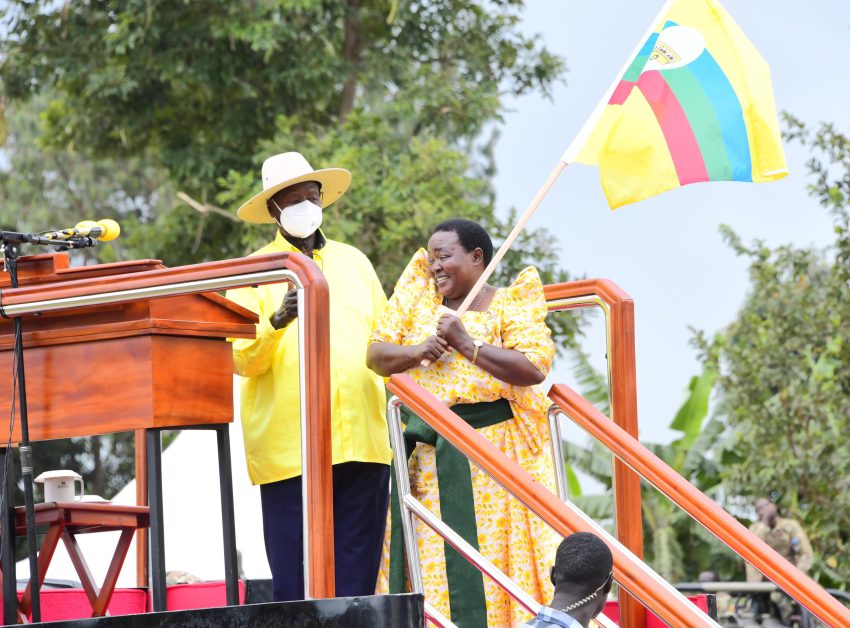
With less than a month until voting day, the trajectory is clear. Museveni, now 80 and seeking a seventh consecutive term after 39 years in power, has no intention of allowing a free or fair election. The entire apparatus of the state — military, police, intelligence services, judiciary, electoral commission — has been repurposed into his personal protection force.
Presidential candidates report that the campaign environment resembles “a war zone.” David Lewis Lubongoya, an agent for Kyagulanyi, described requesting the Electoral Commission “to be in charge of this election,” acknowledging implicitly that security forces have usurped the commission’s constitutional role.
The selective enforcement of electoral guidelines has become farcical. Kyagulanyi faces constant harassment for alleged route deviations and illegal processions, while Museveni campaigns freely with massive state resources mobilised in his support. Justice Minister Norbert Mao warned in September that “there will be no processions,” but this prohibition applies only to opposition candidates.
Opposition leaders have called for the release of political prisoners and demanded that detainees receive legal and medical assistance. These appeals fall on deaf ears. Dozens of opposition supporters arrested during the 2021 elections — more than four years ago — remain in detention without trial.
A Democracy in Name Only
What Uganda will conduct on January 15, 2026, is not an election in any meaningful democratic sense. It is a theatrical performance designed to provide authoritarian rule with a veneer of democratic legitimacy. The outcome has been predetermined not by voters but by systematic violence, intimidation, and repression orchestrated by security forces that answer to no law except Museveni’s will.
The tragedy is not merely that Uganda’s military has abandoned its constitutional role to become a partisan political force. It is that this transformation has occurred openly, brazenly, without consequence. Officers boast about torture. Soldiers attack journalists wearing press vests. The president’s son threatens opposition leaders with detention and makes decisions that should belong to civilian authorities.
Uganda’s Supreme Court ruled that trying civilians in military courts is unconstitutional. The ruling changed nothing. International bodies issue warnings about mass atrocities. The warnings are ignored. Human rights organisations document systematic torture. The torturers remain unpunished.
As Father Ssekabira sits in detention on vague charges of “subversive activities,” as Besigye languishes in prison facing treason charges, as hundreds of NUP supporters fill Uganda’s jails on fabricated offenses, the message from Museveni’s regime is unmistakable: dissent will be crushed, opponents will be disappeared, and the military will ensure that Uganda’s “last election” under Museveni’s leadership produces the same result as every election before it.
The only question remaining is whether Uganda’s citizens, and the international community, will accept this grotesque parody of democracy — or demand that a country which has never experienced a democratic transition of power in its history finally be allowed the opportunity to determine its own future free from the barrel of a gun.