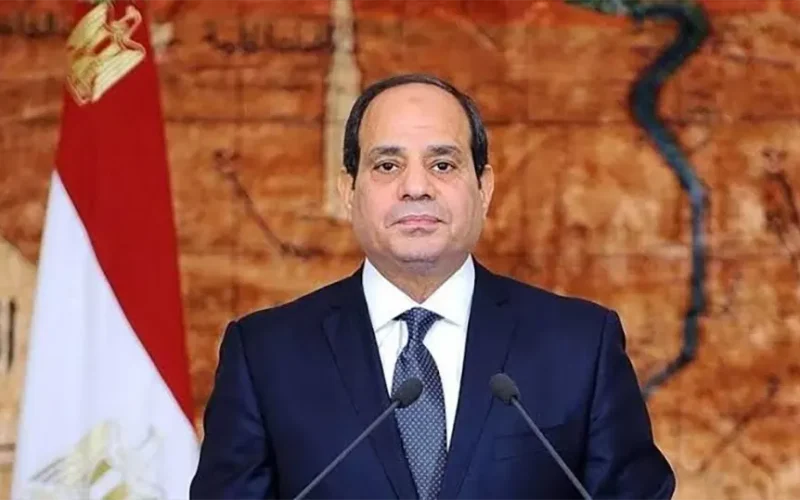
EGYPT has added its voice to a swelling chorus of nations demanding fundamental restructuring of the United Nations Security Council, with President Abdel-Fattah el-Sissi calling for immediate reforms to grant Africa permanent representation at the world’s preeminent decision-making table.
Speaking at a Russia-Africa partnership conference at the weekend, attended by foreign ministers from more than 50 African nations, el-Sissi delivered an unequivocal message: the current UNSC structure, frozen since 1945, no longer reflects global realities and systematically excludes 1.4 billion Africans from decisions that directly affect their security and future.
“The voice of Africa should be present and influential in making global decisions given the continent’s human, economic, political and demographic weight,” el-Sissi declared in a statement delivered by his foreign minister, framing the issue not as a request but as an overdue correction of historical injustice.
The Egyptian president’s intervention signals escalating frustration across the African continent with a governance architecture that grants permanent seats and veto power exclusively to five nations – the United States, Russia, China, Britain and France – based on their status as victorious powers following World War II, nearly 80 years ago.
A Two-Decade Struggle for Equity
Since 2005, the African Union has formally demanded at least two permanent seats with veto powers and five non-permanent seats in the Security Council. The proposal rests on a stark equity argument: Africa, home to more than a quarter of UN member states and facing persistent security crises from the Sahel to the Horn of Africa, possesses no permanent voice in the body charged with maintaining international peace.
El-Sissi extended his reform demands beyond the Security Council, insisting that international financial institutions – including the World Bank and International Monetary Fund – similarly require restructuring to provide Africa with equitable representation in economic governance.
Russian Foreign Minister Sergey Lavrov, attending the Cairo conference, pledged Moscow’s support for African UNSC representation, stating that Russia and African nations “have decided to continue coordinating our efforts in various multilateral forums, including with the aim of promoting reform of the U.N. Security Council, taking into account the legitimate interests of African states.”
The Stumbling Block: Internal Consensus
Despite unified demands for reform, African nations have struggled to present a cohesive front on a critical question: which countries would occupy permanent seats? The absence of an agreed selection mechanism has weakened continental negotiating power and provided reform opponents with convenient cover for inaction.
The current Security Council structure allocates 10 non-permanent seats to rotating members from global regions, elected for two-year terms without veto authority. Africa currently competes with other regions for these temporary positions, ensuring continental representation remains fragmented and transient.
Geopolitical Dimensions
The Cairo conference’s Russia-Africa framing adds complex geopolitical layers to the reform debate. Since the 2023 Russia-Africa summit in St. Petersburg, Moscow has actively courted African support as Western nations impose economic and political isolation following Russia’s invasion of Ukraine.
Lavrov emphasised Russia’s role as “a reliable partner for African states in strengthening their national sovereignty,” while announcing plans for a 2026-2029 cooperation action plan to be presented at next year’s Russia-Africa summit.
For African leaders, however, UNSC reform transcends great power competition. The demand reflects fundamental questions about legitimacy, representation and whether post-World War II institutions can address 21st-century challenges when vast populations remain systematically excluded from decision-making.
As el-Sissi’s statement underscored, Africa’s case rests not on geopolitical alignment but on demographic and moral imperatives: a continent representing more than a quarter of humanity and UN membership deserves permanent standing at the table where wars are authorised, sanctions imposed and peace operations deployed – particularly when African nations so frequently bear the consequences of those decisions.
Whether this latest call produces substantive reform remains uncertain. What appears increasingly clear is that African nations view permanent UNSC exclusion as untenable, and demands for change will only intensify.