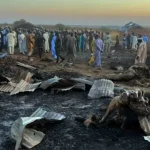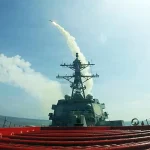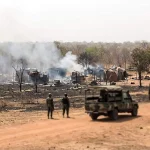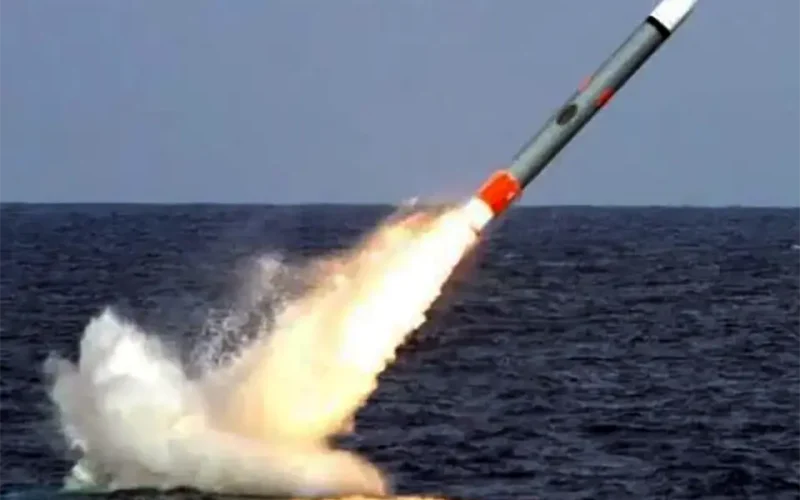
WHEN American Tomahawk missiles struck targets in northwest Nigeria on Christmas Day 2025, President Donald Trump framed it as a gift to terrorists. But for many Nigerians who watched debris fall near their homes and heard explosions echo through villages where no terrorist activity had been documented, the strikes raised more questions than they answered. Three days later, those questions have only multiplied, exposing troubling gaps in intelligence, consent, and compliance with international law.
The Intelligence Question: Why Jabo?
The village of Jabo in northwestern Sokoto State was among the locations hit, with residents reporting that projectiles landed approximately 500 meters from a Primary Health Center. Yet villagers insist they have no known history of ISIS, Lakurawa, or any other terrorist groups operating in the area.
Suleiman Kagara, a local resident, expressed bewilderment: “In Jabo, we see Christians as our brothers. We don’t have religious conflicts, so we weren’t expecting this”. Security analyst Kabir Adamu echoed this confusion, noting it remains unclear why Jabo was chosen since there are no known ISIL-linked terror cells there.
This raises the first hard question: What intelligence justified these strikes?
The Nigerian government claims it provided the US with intelligence that guided the operation. But if the intelligence was accurate, why did missiles strike a peaceful farming community? If it was inaccurate, what does that say about the quality of shared intelligence and the due diligence conducted before launching military action on foreign soil?
The targets were supposedly members of Lakurawa, an emerging armed group with suspected ties to Islamic State affiliates. However, researchers note that Lakurawa’s profile is still being studied, and some analysts believe the group’s allegiance may be to al-Qaeda rather than ISIS. The group originally started as self-defense forces invited by local leaders in 2017 to fight bandits, but by 2018 had moved on from rescuing victims to enforcing Islamic law on villages.
Yet the broader pattern of violence in Nigeria complicates Trump’s narrative even further. While the president claimed the strikes targeted terrorists “targeting and viciously killing, primarily, innocent Christians,” the reality on the ground tells a different story.
The Religious Framing: A Dangerous Oversimplification
The violence in Nigeria and the groups committing it are far more complex than Trump’s framing suggests. Nigeria’s 220 million people are split almost equally between Christians in the south and Muslims in the north, with significant overlap in the central Middle Belt region.
When Trump and other US right-wingers have referred to a “Christian genocide” in Nigeria, they have usually mentioned an entirely different area in central Nigeria—not the northwest where the strikes occurred. In the Middle Belt, violence between predominantly Muslim herders and Christian farmers has escalated over dwindling land and water resources, with Amnesty International reporting nearly 10,000 deaths since 2023.
But even this violence defies simple religious categorization. Former Ambassador Peter Pham, US special envoy for the Sahel region during Trump’s first term, noted that both Muslims and Christians are suffering because of violence, and questioned whether there was political will in Nigeria to address challenges to both communities.
In the northeast, groups like Boko Haram have targeted both Christians and Muslims. The day before the US strikes, a suicide bomber struck a mosque in the northeastern city of Maiduguri, killing at least five and injuring dozens more. Nigerian Foreign Minister Yusuf Tuggar insisted that terrorism in Nigeria is “not a religious conflict” and that “simplistic labels don’t solve complex threats.”
By framing these strikes as protecting Christians, the Trump administration risks exacerbating sectarian tensions in a country where religious coexistence remains fragile and where the actual patterns of violence are driven by multiple factors: poverty, state failure, resource scarcity, ethnic rivalries, and criminal networks.
The Sovereignty Question: Cooperation or Capitulation?
Perhaps the most contentious issue is the nature of Nigeria’s consent. Did Nigeria genuinely cooperate with the United States, or was it told about the action after the fact and claimed cooperation to save face?
The Nigerian government insists the operation was fully authorized. A government statement said the airstrike was conducted following “explicit approval by the President of the Federal Republic of Nigeria” with “full involvement of the Armed Forces of Nigeria”. Foreign Minister Tuggar told media he had spoken with US Secretary of State Marco Rubio before the strikes and that President Bola Tinubu had given the go-ahead.
But skeptics see a different dynamic at play. Omoyele Sowore, a former presidential candidate and opposition leader, stated: “It is evident that the strikes were carried out without the genuine authority or informed consent of the weaklings masquerading as government”. He described Nigeria as having been “reduced to a bystander while its sovereignty is violated.”
The language used by US and Nigerian officials reveals telling inconsistencies. US officials initially claimed the strikes were carried out “at the request of” Nigerian authorities, a phrase later revised to “in coordination with”. That distinction matters. A request implies Nigerian initiation and control. Coordination suggests joint planning but potentially unequal partnership.
Analyst Femi Owolade noted that while it’s unlikely the US would launch strikes without Nigeria’s approval, the way the US has referred to the cooperation differs significantly from how Nigeria is describing it, suggesting “a cooperative but unequal partnership shaped by Nigeria’s dependence on external intelligence and military capacity”.
The broader context adds weight to these concerns. Trump had been threatening military action against Nigeria since November, telling officials he would go “guns-a-blazing” if Nigeria failed to protect Christians. One security analyst told Reuters: “After Trump threatened to come guns-blazing in Nigeria, we saw a Nigerian delegation visit the U.S. The Attorney General was involved, and agreements were signed.”
This raises uncomfortable questions: Did Nigeria consent to these strikes out of genuine partnership, or out of fear of unilateral American action? If it was the latter, can such consent be considered truly voluntary under international law? And if consent was obtained under duress, what does that mean for Nigerian sovereignty?
The International Law Question: Did the US Follow the Rules?
Under international law, military force on another nation’s territory requires one of three justifications: consent from the host nation, authorization from the UN Security Council, or legitimate self-defense under Article 51 of the UN Charter.
Legal experts note that absent evidence of an imminent threat emanating from Nigeria, a unilateral US military intervention would likely be deemed unlawful, and that under Article 2(4) of the UN Charter, member states are prohibited from the threat or use of force against the territorial integrity or political independence of another state.
If Nigeria genuinely consented, the strikes may be legal—but that brings us back to the sovereignty question. Legal scholars emphasize that foreign forces must operate within Nigerian laws and the parameters of any agreement, and if US forces act beyond the mandate or interfere with Nigeria’s internal affairs, such actions would breach the principle of non-intervention even if initial consent was granted.
There is no evidence that the United Nations Security Council was consulted or provided authorization. The strikes appear to have been a bilateral operation, raising questions about whether the US fulfilled its obligations under the UN Charter to work through multilateral institutions when addressing threats to international peace and security.
Under Article 51 of the UN Charter, military action must be in response to an armed attack and must be promptly reported to the Security Council. While the Trump administration may claim the right of collective self-defense to assist Nigeria, experts have repeatedly noted a lack of evidence that Sahel-based groups pose a direct threat to the US homeland.
The Defense Intelligence Agency assessed in 2025 that Islamic State and Al Qaeda affiliates in Africa “focus on plotting attacks locally,” though it noted some affiliates would probably advance plotting elsewhere. This makes the self-defense justification tenuous at best.
The Precedent Question: What Are the Consequences?
Trump’s unilateral approach to military intervention is not unprecedented. His administration has shown a willingness to bypass international institutions when they prove inconvenient. The strikes in Nigeria bear uncomfortable similarities to other controversial interventions, including recent threats against Venezuela.
The African Union’s Peace and Security Council has the authority under Article 7 of the PSC Protocol to anticipate and prevent conflicts and recommend intervention in member states, but always within the limits of international law. Yet the AU appears to have been sidelined in this operation, raising questions about whether regional bodies retain any meaningful authority when a superpower decides to act.
If the international community allows these strikes to pass without scrutiny, what precedent does it set? If the US can bomb Nigeria based on questionable intelligence, contested religious framing, and ambiguous consent, what prevents similar actions elsewhere?
Legal analysts warn that Trump’s threats of military intervention in Nigeria raise serious questions under international law and the African Union’s framework for protecting the sovereignty of its member states. The failure to meaningfully engage with these legal frameworks threatens to normalize unilateral military action by powerful states against weaker ones.
The Venezuelan parallel is instructive. When the Trump administration has threatened or taken military action against countries it deems threats or failures, the international response has been muted, emboldening further unilateralism. Nigeria, despite being Africa’s largest economy and most populous nation, may find itself in a similar position—nominally sovereign but increasingly dependent on foreign military power to address internal security challenges.
The Unanswered Questions
Three days after American missiles struck Nigerian soil, fundamental questions remain unanswered:
On Intelligence: What specific, verified intelligence justified striking Jabo? Why did missiles land in a village with no documented terrorist presence? Who will be held accountable if the intelligence was faulty?
On Targeting: Why was the northwest targeted when the alleged “Christian genocide” occurs primarily in central Nigeria? How many militants were actually killed? Were there civilian casualties that have not been reported?
On Consent: Did Nigeria proactively request these strikes, or did it consent under pressure after Trump’s threats? Were Nigerian officials given meaningful input into target selection? What are the terms of any agreements governing US military operations in Nigeria?
On International Law: Was the UN Security Council consulted? Did the strikes comply with Nigeria’s obligations under the UN Charter? What legal framework governs this operation?
On Consequences: What precedent do these strikes set for future interventions? What recourse does Nigeria have if future strikes go wrong? How does this affect African sovereignty more broadly?
These questions demand answers—not just from the Trump administration, but from the Nigerian government, which has a duty to explain to its citizens under what terms foreign militaries may operate on their soil. The international community, including the United Nations and African Union, also bears responsibility for clarifying whether such operations comply with the legal frameworks designed to prevent the arbitrary use of force.
A Dangerous Path Forward
As one analyst noted, “even when undertaken with consent or cooperation, foreign military action that appears misaligned with local realities risks strategic blowback. It can undermine state sovereignty, fuel suspicion among local populations, and reinforce perceptions that external actors do not fully understand the societies they intervene in”.
The Christmas Day strikes may have been intended as a show of force against terrorism. Instead, they have exposed the fragility of Nigerian sovereignty, the inadequacy of international legal mechanisms, and the dangers of military interventions based on oversimplified narratives and questionable intelligence.
Until these hard questions receive credible answers, the strikes will remain not a decisive blow against terrorism, but a troubling example of how powerful nations can act with impunity—even against their purported partners—when legal frameworks fail to constrain them. For Nigeria, for Africa, and for the integrity of international law, that is a deeply concerning precedent.