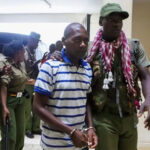

NEARLY three years after the horrific discovery of mass graves in Shakahola Forest shocked the world, self-proclaimed pastor Paul Nthenge Mackenzie now faces an additional 52 murder charges, bringing the death toll linked to his apocalyptic cult to over 480 people. The latest charges, announced this week by Kenya’s Office of the Director of Public Prosecutions, stem from discoveries in Binzaro village – evidence that suggests the cult’s deadly operations continued even after Mackenzie’s initial arrest.
The expanding case against the 53-year-old former taxi driver represents one of the most complex prosecutions in Kenyan history, involving terrorism, murder, manslaughter, child torture, and radicalisation charges. As 2026 unfolds, it has become a year of reckoning for Mackenzie and his 95 co-accused, with multiple trials reaching critical junctures that will determine whether they face justice for what President William Ruto has called acts “akin to terrorism.”
From Taxi Driver to Mass Death Architect
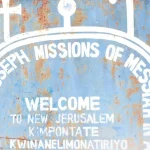
Paul Mackenzie worked as a taxi driver in Nairobi from 1997 to 2003, during which he was charged four times for his sermons but was acquitted due to lack of evidence. In 2003, he founded the Good News International Church in Malindi, quickly amassing followers with fiery sermons and claims of direct communication with God.
Mackenzie’s teachings were heavily influenced by William Branham’s End of Days theology, an American evangelical preacher whose apocalyptic messages have been linked to other destructive movements globally. Detectives investigating the case discovered booklets of Branham’s teachings at the Shakahola compound, distributed by Voice of God Recordings based in Indiana.
The preacher’s rise was fueled by both charisma and calculated manipulation. Between 2016 and 2019, members sold their properties and gave money to Mackenzie, who allegedly used funds to purchase property in Mombasa and Malindi, two vehicles, and to fund a television station that broadcast his increasingly extreme messages.
The Architecture of Death
Investigators testified that Mackenzie acquired approximately 480 acres of land within Shakahola, which he divided into settlements named after biblical locations such as Galilee, Bethlehem, Judea and Emmaus. This wasn’t merely religious symbolism—it was the infrastructure of a killing operation.
According to prosecution evidence, the villages operated under a rigid command structure with Mackenzie at the apex, supported by deputies and guards who enforced compliance. There were designated cooks and individuals specifically assigned to dig graves and bury the dead. Chief Inspector Raphael Wanjohi testified to how Mackenzie transformed the Good News International Church into a tool for indoctrination, using extreme and distorted interpretations of scripture over a period exceeding 10 years.
The mechanics of mass death were chillingly organised. Survivors have described a macabre hierarchy of starvation: children were to die first, followed by unmarried adults, then women, men, and finally church leaders—with Mackenzie and his family scheduled to go last. But while more than 450 of his followers perished, Mackenzie’s wife, Rhoda Maweu, and all his children are alive. A dietary menu was discovered on the wall of what investigators believe was Mackenzie’s resting room, exposing the calculated nature of the mass killing.
The Shakahola Horror: April 2023
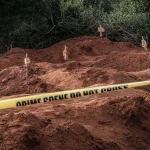
The world first learned of the Shakahola massacre in April 2023 when police, responding to reports of missing persons, discovered emaciated survivors and shallow graves across Mackenzie’s vast property. What they uncovered over subsequent months defied comprehension.
As of September 2023, a total of 429 bodies had been exhumed from Shakahola Forest, with 214 dying from starvation, 39 from asphyxia, 14 from head injury, while 115 causes remained unascertained. The majority were children and women. Autopsies revealed that not all deaths resulted from voluntary starvation—many victims died from strangulation, suffocation, and blunt trauma.
Interior Cabinet Secretary Kithure Kindiki alleged that Mackenzie hired criminals armed with crude weapons to kill followers who changed their minds about fasting and wanted out, as well as those who took too long to die. The horror was compounded by the discovery that some victims had been coerced into destroying all government documents, including national IDs and birth certificates, making identification of remains agonisingly difficult.
Binzaro: The Second Wave of Death
Just when Kenyans thought the full scope of the tragedy had been revealed, investigators made another shocking discovery. In 2025, approximately 34 bodies and more than 100 dismembered body parts were found in Binzaro village, roughly 30 kilometres from Shakahola along the Indian Ocean coast.
This discovery carried a disturbing implication: the cult had continued operating even after the Shakahola massacre was exposed and Mackenzie was arrested. Prosecutors stated that investigators recovered handwritten notes from prison cells occupied by Mackenzie, allegedly detailing transactions conducted through mobile phones.
The prosecution’s case suggests Mackenzie orchestrated these additional deaths from behind bars, using radical teachings and coordinated structures to lure victims. Forensic findings, call data records, Mpesa transactions and corroborated accounts from accomplice witnesses firmly linked the Binzaro operation to Mackenzie. Suspects allegedly travelled across multiple counties—Kilifi, Busia, Siaya, Migori, Homa Bay, and Kisii—mobilising former church members under the guise of “prayers,” a coded reference to enforced fasting unto death.
The Legal Labyrinth: Multiple Trials, Mounting Charges
Mackenzie now faces an unprecedented array of criminal proceedings across multiple courts:
Terrorism Charges: In July 2024, Mackenzie and 94 co-defendants went on trial for terrorism-related offences. At least 420 witnesses have been prepared by prosecutors, with some presenting testimonies in camera. The trial has involved nearly 500 assorted exhibits.
Murder of 191 Children: In January 2024, Mackenzie was formally charged with the murders of 191 children, 180 of whom could not be identified, along with 29 other defendants. Disturbingly, as these children lay dying, Mackenzie allegedly remained well-fed in his forest compound.
Manslaughter: Mackenzie faces 238 counts of manslaughter, with prosecutors invoking a Kenyan law dealing with suicide pacts. Prosecutor Alexander Jami Yamina stated that there has never been a manslaughter case like this in Kenya and believed it would prove to be very unique.
Radicalisation and Child Abuse: Separate proceedings address charges of child torture, denial of education, and radicalisation. Last week, the State closed its case in Shanzu court after calling 96 witnesses who included survivors, their families, experts and investigators.
New Binzaro Charges: This week’s announcement adds 52 additional murder charges, along with fresh counts of radicalisation and facilitation of terrorist acts.
A Co-Defendant Breaks Ranks
In a significant development, Enos Amanya Ngala, Mackenzie’s former head of security at Shakahola, pleaded guilty to charges related to the deaths of 191 children found in the original mass graves. This guilty plea represents the first crack in the unified defence and could provide prosecutors with crucial insider testimony about the cult’s operations and Mackenzie’s direct involvement.
Systemic Failures and Unanswered Questions
The Shakahola tragedy has exposed profound regulatory failures in Kenya’s religious sector. Before founding his church, Mackenzie was charged four times for his sermons while working as a taxi driver, but was acquitted due to lack of evidence. In 2017, he and his wife faced radicalisation charges, but the case didn’t stop his activities. In 2019, he was convicted of operating a TV studio without proper licensing but received only a fine.
Religious leaders have pointed fingers at government negligence. Archbishop Martin Kivuva Musonde and Archbishop Timothy Ndambuki stated in a joint statement that there were government officials who, over the years, failed to take action when reports of death and murder in the Shakahola forest were made.
President Ruto appointed a commission of inquiry and created a task force to review regulations governing religious organisations. However, efforts to implement stricter oversight have faced fierce opposition from religious groups, citing constitutional guarantees of separation between church and state. Kenya has approximately 40,000 registered religious organisations, with minimal oversight of their operations.
The Human Toll Beyond Statistics
Behind the staggering death toll are individual tragedies of manipulation and loss. Families describe how Mackenzie convinced followers to sell property, quit jobs, burn academic certificates, and shun modern medicine. Parents were persuaded to withdraw children from school and relocate to Shakahola, often misleading relatives by claiming they were moving to Malindi to purchase land.
Once in the forest, followers were forced to change their names to conceal their identities, severing connections with the outside world. Survivors who escaped described seeing emaciated children and adults, some already too weak to accept food when rescuers arrived. Some refused assistance, so thoroughly indoctrinated that they fled from rescue teams.
As of May 2023, 91 survivors had been rescued, but many remain traumatised. In a particularly troubling episode, 65 victims were arraigned at the Shanzu Law Courts for attempted suicide because the rescue centre could no longer hold them, highlighting the challenge of distinguishing between perpetrators and victims in a case involving mass coercion.
International Implications and the Branham Connection
The case has drawn international attention to the global spread of extremist religious teachings. Voice of God Recordings in Jeffersonville, Indiana, has been named as the key influence on Paul Mackenzie through taped sermons of William Branham preached from 1947 through 1965.
The Branham connection reveals how apocalyptic ideologies can metastasise across continents and generations. Branham’s “Message” movement, which emerged from Oneness Pentecostalism, emphasises end-time prophecies and often concentrates absolute power in pastors portrayed as prophets. Similar movements influenced Jim Jones’s Peoples Temple massacre in Jonestown, Guyana, where over 900 died in 1978.
The international dimension raises questions about the responsibility of organisations that distribute extremist theological content globally, particularly to regions with limited religious literacy and weak regulatory frameworks.
2026: Year of Reckoning
After nearly three years of investigations, exhumations, and court battles, Mackenzie and his 95 co-accused now stand at the edge of judgment, with courts poised to determine whether they have a case to answer or walk free.
The prosecution has now closed its cases in the terrorism and radicalisation trials, with defence arguments expected soon. The manslaughter trial before the Mombasa magistrate’s court and the murder trial at the High Court are also approaching a conclusion. Verdicts on whether the accused have cases to answer are expected in the coming months.
If convicted on all charges, Mackenzie faces multiple life sentences or potentially the death penalty, though Kenya maintains a de facto moratorium on executions. Beyond his personal fate, the trials will test Kenya’s justice system’s capacity to handle mass atrocity cases and could set precedents for prosecuting cult-related crimes across Africa.
Ongoing Investigations
The story isn’t over. In July 2025, further exhumations were ordered in the area where bodies had previously been discovered, with Kenyan authorities saying that 11 suspects have been identified in the investigation. The exact number of victims may never be known, as investigators have reported instances where bodies were disposed of in random deep pit latrines scattered across the expansive Chakama ranch.
As of March 2025, the authorities began releasing some victims’ bodies to distraught relatives after months of painstaking work to identify them using DNA. Many families, however, still await word on their missing loved ones, maintaining vigil as the excavations continue.
Questions of Complicity and Accountability
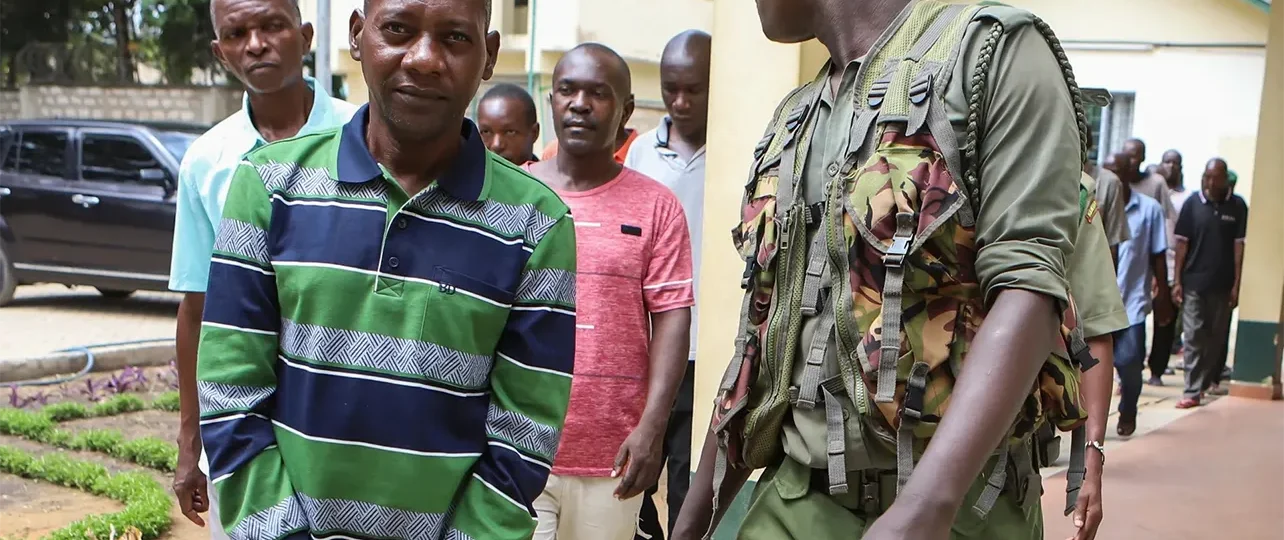
A troubling aspect of the case involves the role of Mackenzie’s deputies and enforcers. Investigators describe a sophisticated hierarchy of accomplices who recruited followers, enforced fasting protocols, prevented escapes, and disposed of bodies. The 55 men and 40 women on trial face separate cases of murder, child torture and cruelty relating to deaths that prosecutors say occurred between 2020 and 2023.
The prosecution must prove not just that people died, but that Mackenzie and his lieutenants intended those deaths and took active steps to cause them. This requires demonstrating premeditation, coordination, and a conspiracy that transformed religious devotion into organised killing. The complexity explains why trials have stretched across multiple years and jurisdictions.
A Nation Grapples With Religious Extremism
Kenya is a deeply religious nation where Christianity is practised by approximately 85% of the population. The Shakahola massacre has forced uncomfortable conversations about the fine line between religious freedom and deadly manipulation, between prophecy and mass murder.
President William Ruto stated that Mackenzie’s beliefs were contrary to authentic religion, saying that terrorists use religion to advance their heinous acts and that people like Mackenzie are using religion to do exactly the same thing. Yet implementing effective safeguards without infringing on legitimate religious practice remains a delicate challenge.
The case has catalysed calls for mandatory registration and vetting of religious leaders, psychological screening of religious groups exhibiting cult characteristics, and stronger enforcement of laws protecting children from abuse cloaked in religious doctrine. However, implementing such measures in a nation that values religious autonomy will require careful navigation of constitutional and cultural sensitivities.
The Global Context: A Rising Tide of Destructive Cults
The Shakahola massacre joins a grim roster of 21st-century cult atrocities, from Uganda’s Movement for the Restoration of the Ten Commandments mass murder-suicide in 2000, which killed over 700, to smaller but equally tragic incidents worldwide. These cases reveal how charismatic manipulation, apocalyptic theology, social isolation, and inadequate oversight can create conditions for mass death.
What distinguishes Mackenzie’s operation is its scale, its duration, and particularly the revelation that it continued operating even after exposure. The Binzaro discoveries suggest a level of determination and organisation that goes beyond religious fervour into calculated criminality.
Looking Ahead: Justice Delayed or Denied?
As Kenya’s courts prepare to rule on whether Mackenzie and his co-accused must answer to these charges, several factors will determine the outcome. The prosecution has presented hundreds of witnesses, forensic evidence, and documentary proof. Yet defence attorneys will argue about the reliability of witness testimony, the chain of custody for evidence from chaotic crime scenes, and whether individual defendants bear criminal responsibility for deaths that occurred in a context of shared religious delusion.
The sheer complexity of the case—multiple crime scenes, hundreds of victims, dozens of defendants, overlapping jurisdictions—creates opportunities for procedural challenges and appeals that could extend the legal process for years. Kenya’s courts are already overburdened, and this case demands extraordinary resources and attention.
For the families of victims, each court date brings a mixture of hope for justice and anguish at reliving the trauma. Many struggle to understand how their loved ones fell under Mackenzie’s spell, how educated professionals abandoned careers and critical thinking, how parents watched children starve.
Conclusion: A Reckoning Unfinished
The latest charges against Paul Mackenzie mark not an ending but another chapter in a tragedy that continues to unfold. With over 480 confirmed deaths, evidence of ongoing operations from prison, and the likelihood of additional undiscovered victims, the full scope of the horror may never be fully known.
What is clear is that this case represents a watershed moment for Kenya and for how African nations address religious extremism. The outcome will send signals about whether justice systems can effectively prosecute cult leaders who weaponise faith, whether regulatory frameworks can protect vulnerable believers without stifling religious freedom, and whether societies can prevent similar tragedies without learning their lessons too late.
As 2026 progresses, the world watches to see whether Kenya can deliver justice for the hundreds who died believing they were serving God, when in truth they were serving a man who perverted religious devotion into an instrument of death. For the families still seeking answers, for the survivors still processing trauma, and for a nation grappling with how such horror unfolded undetected for years, the wait for that reckoning continues.
This analysis is based on reporting from multiple sources, including Al Jazeera, CBS News, Daily Nation Kenya, AFP, and other international news organisations covering the ongoing trials and investigations.