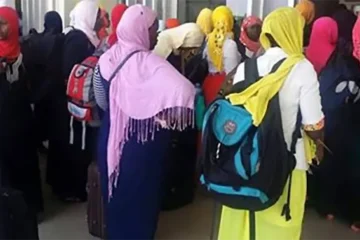

ALL 166 worshippers abducted at gunpoint from two churches in northern Nigeria have been rescued after a month in captivity, the Christian Association of Nigeria has announced, marking the latest chapter in a kidnapping epidemic that has plagued the country for over a decade despite massive military investment.
The rescue concludes a harrowing ordeal that began January 18 when armed gunmen stormed the Haske Cherubim and Seraphim Movement Church and another congregation in Kaduna state, dragging 177 worshippers into nearby forests. Eleven managed to escape during the initial raid.
The Christian Association of Nigeria credited both military operations and “the power of prayer” for the successful rescue but provided no details on how or precisely when the hostages were freed. Nigerian military, police, and Kaduna state officials did not respond to requests for comment.
Unrelenting Crisis Despite Military Campaign
The attack underscores the persistent security failures confronting Nigeria despite years of prioritised counter-terrorism efforts. Since the 2014 abduction of 276 schoolgirls in Chibok – which thrust Nigeria’s jihadist insurgency into global headlines – more than a thousand Nigerians have been kidnapped by armed groups across the country’s north.
The Nigerian government has committed substantial resources to combating terrorism, deploying significant budget allocations, military equipment, and personnel to the conflict. The armed forces have conducted sustained operations against jihadist strongholds throughout the past decade, including missions supported by U.S. military assistance.
Yet kidnappings continue unabated. The violence extends beyond abductions: in Kwara Province, 170 people were killed in a single massacre, illustrating the scale of brutality terrorising northern communities.
International Attention and Conflicting Accounts
The church kidnappings have drawn sharp criticism from U.S. President Donald Trump, who has accused Nigeria’s government of failing to protect Christians, charges Abuja denies. On December 25, U.S. forces conducted airstrikes against what they described as terrorist targets in northwest Nigeria.
The rescue announcement follows days of confusion and conflicting official narratives. Police initially denied any kidnapping occurred, then reversed course Monday, claiming 80 of those reported missing had actually fled to nearby villages during the raid and subsequently returned home.
Such discrepancies are common. Police and Christian Association officials frequently offer contradictory figures and accounts regarding church abductions, complicating efforts to track the true scope of attacks.
“What we know is that they have been rescued,” said Rev. John Hayab, head of the Christian Association’s northern chapter. “Nobody asked us to gather any money, and nobody collected a penny from us. Of course, the bandits still have their demands, but we did not have any amount to give them.”
Rev. Caleb Ma’aji, the association’s Kaduna leader, confirmed the releases and said he had just returned from the governor’s residence, where officials prepared to receive the freed hostages.
Systemic Security Failure
Nigerian authorities maintain they are cooperating with Washington to improve security and deny that systematic persecution of Christians exists. However, the continuing attacks raise fundamental questions about the effectiveness of the government’s counter-terrorism strategy.
Despite running battles between security forces and armed groups, despite U.S. support, and despite publicly stated prioritisation of the jihadist threat, communities across northern Nigeria remain vulnerable to mass abductions and killings. The pattern suggests a security apparatus unable to protect civilians or prevent militants from operating with relative impunity in rural areas.
The 166 churchgoers have now escaped immediate danger. But with armed groups continuing to issue demands and launch attacks, their release offers little comfort to millions of Nigerians living under the shadow of extremist violence.