A foreign investor is taking the Zimbabwean government to the country’s highest court in a dramatic legal showdown over what he describes as an attempt to seize his lifetime investment without fair compensation.
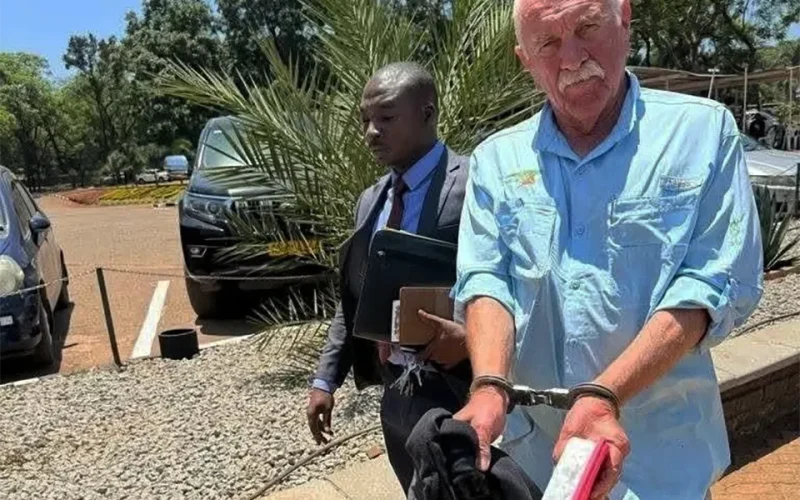
Terry Kelly, owner of Chewore Lodge and Campsite, announced late this week that he is filing an urgent Constitutional Court challenge and preparing a major damages lawsuit against the Zimbabwe Parks and Wildlife Management Authority after government-led negotiations to resolve the ownership dispute collapsed.
The move sets the stage for a high-stakes legal confrontation that could test Zimbabwe’s constitutional protections for private property and send ripple effects through the country’s struggling investment climate.
Government Talks Collapse
Kelly revealed that ministerial negotiations – initiated after a controversial Supreme Court eviction order – have ended in failure, with government offers falling so far below acceptable terms that he had “no choice but to decline.”
“What was offered was certainly not even close to a resolution,” Kelly stated, suggesting the government’s proposal amounted to a de facto confiscation of his multi-generational investment.
The investor, who has battled for nearly 15 years through Zimbabwe’s courts, accused authorities of dragging his family through “ongoing, unnecessary legal battles” while attempting to strip them of property rights.
Supreme Court Eviction Sparks Controversy
The constitutional challenge follows what Kelly called a “shocking” Supreme Court judgment ordering his eviction from the property—a ruling that triggered the now-failed government intervention to broker a settlement.
Legal experts say Kelly’s decision to bypass lower courts and proceed directly to the Constitutional Court signals he believes fundamental constitutional rights have been violated, potentially including property protections and due process guarantees.
In a parallel legal offensive, Kelly’s lawyers are preparing what he describes as a “considerable damages claim” against the Parks Authority – potentially exposing the government entity to significant financial liability.
The exact amount of the claim has not been disclosed, but sources familiar with the matter suggest it could run into millions of dollars, accounting for decades of capital investment, lost income, and reputational damage.
In a striking admission that underscores the gravity of Zimbabwe’s institutional challenges, Kelly expressed pessimism about his chances despite the strength of his legal case.
“Are we confident that justice will prevail? Our experience dictates, sadly not,” Kelly stated, “but we will exhaust all legal means to hold on to our rights.”
The statement represents an extraordinary public rebuke of Zimbabwe’s judicial system from an investor still fighting within it—a sign of desperation and determination in equal measure.
The dispute threatens consequences beyond one family’s fortune:
- Jobs at Risk: Staff members and their families face unemployment if the lodge is seized
- Investment Warning: International investors are closely watching how Zimbabwe handles the case
- Tourism Impact: The facility serves paying clients from Zimbabwe and abroad
- Legal Precedent: The outcome could affect property rights nationwide
The case has ignited fierce public debate in Zimbabwe, with Kelly reporting “overwhelming” support from across Zimbabwean society over the past three weeks.
Social media platforms have erupted with commentary questioning the integrity of Zimbabwe’s courts and government institutions, with citizens from “all walks of life” rallying behind the embattled investor.
“It is extraordinary how strangers come together simply because they know what is right,” Kelly stated, suggesting the case has become a flashpoint for broader frustrations with governance and institutional fairness.
Neither the Zimbabwe Parks and Wildlife Management Authority nor the relevant Ministry has publicly commented on:
- The legal basis for claiming ownership of Kelly’s property
- What compensation was offered during failed negotiations
- Why did negotiations collapse after government intervention
- How authorities will respond to the Constitutional Court challenge
The silence has fueled speculation that the government’s legal position may be weaker than the Supreme Court ruling suggests.
Zimbabwe has struggled for years to attract foreign direct investment amid concerns about property rights, particularly following controversial land reform programs.
The Chewore case is now drawing international attention as a test of whether the government will respect established property rights or pursue what critics characterise as state-sanctioned asset seizure.
Legal analysts say Kelly faces an uphill battle, given the existing Supreme Court ruling against him. However, the Constitutional Court can overturn lower court decisions if fundamental rights violations are proven.
The court will likely examine whether:
- Kelly received due process throughout the proceedings
- His property rights under Zimbabwe’s Constitution were respected
- The eviction order and settlement offers met constitutional standards of fairness
- The Parks Authority’s claim has a legitimate legal foundation
Despite acknowledging slim odds of success, Kelly issued a defiant pledge to fight until all legal options are exhausted.
“We will continue with this struggle until there is absolutely nowhere left to go,” he declared. “Because it is right.”
The statement signals the investor has no intention of surrendering without forcing the government to justify its actions before Zimbabwe’s highest court—and in the court of public opinion.