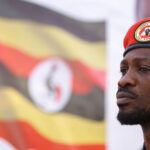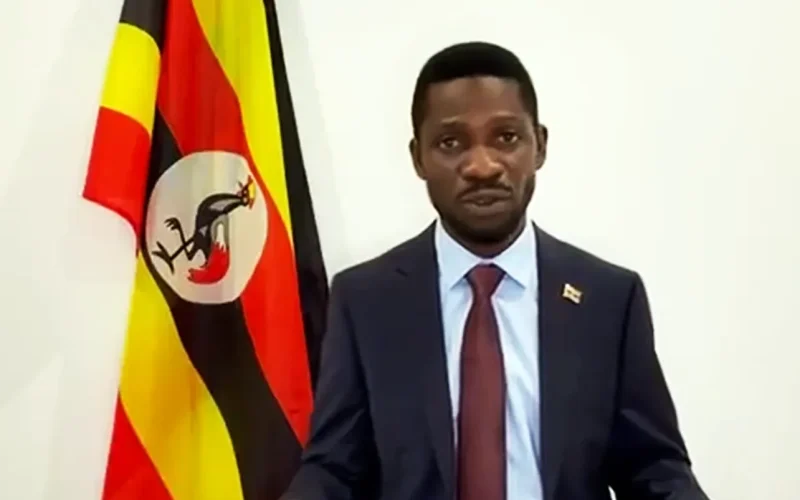
HE spoke from an undisclosed location, hunted by his own country’s military. Yet when Ugandan opposition leader Robert Kyagulanyi – known globally as Bobi Wine – addressed the 18th Geneva Summit for Human Rights and Democracy this week, his message reached far beyond the hall of delegates. It was a dual indictment: of Yoweri Museveni’s regime, and of the Western governments that have, in Wine’s telling, long furnished it with political cover and financial oxygen.
The address, delivered via live video broadcast, was both a political intervention and a stark demonstration of Uganda’s crisis. That one of Africa’s most prominent opposition leaders can only speak to the world in secret, while his wife was detained, physically harmed, and released, and his family home in Magere sits effectively under military siege, surrounded by armed forces in what amounts to a man-made open-air prison, tells its own story about the state of democracy in Kampala.
A Stolen Election, A Nation in Repression
Wine rejected the official results of the January 15, 2026, election, which handed Museveni 71.65 percent of the vote, declaring himself the “people’s true president.” The claim carries weight beyond rhetoric. During the campaign, security forces routinely blocked his travel, disrupted his events, detained hundreds of his supporters, and fired tear gas and water cannons at those who lined the roads to see him. A national internet blackout ordered by the government made it difficult to verify what was unfolding in real time.
Kyagulanyi alleged that the election was so manipulated that even at the polling station where Museveni voted, the incumbent received more votes than the number of registered voters. The Ugandan government has dismissed fraud allegations as unfounded, insisting the election was free and fair. But independent observers and rights groups have painted a markedly different picture.
The post-election landscape has only deepened the alarm. Human Rights Watch reported that since January 15, the military laid siege to Kyagulanyi’s home, restricting movement, assaulting his wife and staff, and destroying property. Authorities also conducted mass arrests of National Unity Platform supporters and forcibly disappeared two senior leaders, who remain missing.
Wine told the Geneva delegates that Gen. Muhoozi Kainerugaba – Museveni’s son and the chief of Uganda’s defence forces – issued an order for him to be taken “dead or alive.” Security forces raided his home in Magere, and his wife, Barbie and their children fled the country. The State House has not confirmed the alleged shoot-to-kill order.
The Architecture of Repression
Wine’s address drew on a pattern of state violence that long predates this election. Amnesty International has documented that over 400 opposition supporters, perceived opponents, and critics were arbitrarily arrested since September 2025, with some subjected to torture and other forms of ill-treatment.
The senior ranks of Wine’s National Unity Platform have been systematically dismantled. Deputy presidents Lina Zedriga and Jolly Jackline Tukamushaba were charged with incitement to violence after weeks in detention, while Muwanga Kivumbi, who heads the Buganda region, faces treason charges following an incident in Butambala District where ten people were killed.
Then there is the case of Dr Kizza Besigye, Uganda’s veteran opposition figure and a former presidential candidate. Besigye has been held in a maximum-security jail in Kampala since November 2024, charged with treason in a military court — charges his party says are politically motivated. His party accused Ugandan authorities of denying him proper medical care, saying his continued detention amounted to a violation of his basic rights. Prison authorities denied that his health was critical. Besigye was abducted in Kenya before being forcibly brought back to Uganda — a brazen act of extraterritorial repression that drew sharp international condemnation at the time and has since faded from the headlines.
Wine’s full address detailed a pattern that began years before this election: supporters abducted in unmarked vehicles, others returning from detention with severe torture marks, accounts of fingernails being plucked out, men castrated, and women raped in custody. The Ugandan government has consistently denied systematic torture.
Calling Out the “Useful Dictator” Doctrine
The most politically charged element of Wine’s Geneva address was not directed at Museveni – it was directed at the West. For decades, Uganda has been a key security partner for Western governments, valued for its role in regional counterterrorism efforts and its contributions to African Union peacekeeping missions. That strategic calculation, Wine argued on Wednesday, has come at an unconscionable human cost.
In his address, Wine accused Western nations of tolerating and enabling Museveni because he is considered a “useful dictator,” useful for regional security and national stability even as he bends what Wine called “a few rules.” The framing strips away diplomatic euphemism. Uganda has received significant development aid and security assistance from the United States and European nations for years – aid that Museveni’s government has used, critics argue, to consolidate institutional power while the opposition is crushed.
Wine has previously pressed this argument directly to Western media, asking: “If you are not giving money to dictators in Europe, why do you fund the dictators in Africa?” At Geneva, the question was no longer rhetorical – it came backed by a formal demand for targeted sanctions against Museveni, Muhoozi Kainerugaba, and what Wine described as the entire apparatus of regime enablers: military commanders, police chiefs, and judicial officers who have blocked accountability.
State House dismissed the calls as reckless and unpatriotic. The presidential press secretary said demands for sanctions or the withdrawal of financial support were “irresponsible and very counterproductive,” asking: “Where is Bobi Wine’s sense of patriotic duty to Uganda and Africa?”
What the International Community Has – and Hasn’t – Done
The Geneva Summit is not a decision-making body. Its power is moral and symbolic: a platform for the persecuted to testify before the world’s press and diplomatic community. Wine’s appearance there cannot, on its own, compel sanctions or shift policy. But it forces a reckoning.
Human Rights Watch has called on Uganda’s international partners to raise concerns publicly and privately, and to urge the government to end the crackdown and hold those responsible to account. The UN Human Rights Office warned before the election that the vote was taking place in an atmosphere of widespread repression. What has followed has, by most accounts, been worse.
Museveni has now secured a seventh term, extending a rule that began in 1986. More than 85 percent of Ugandans have never known another president. The transition question – who or what comes after Museveni – looms over everything, and the grooming of Muhoozi Kainerugaba for succession suggests the answer the regime prefers.
Wine’s warning at Geneva was explicit: failure to act now risks entrenching a culture of impunity that will not stop at Uganda’s borders. Whether Western governments, increasingly distracted by crises closer to home and constrained by their own strategic interests in Kampala, will hear that warning is another matter.
For now, the man who claims to be Uganda’s rightful president remains in hiding, speaking to the world through a screen, while the drones circle overhead.