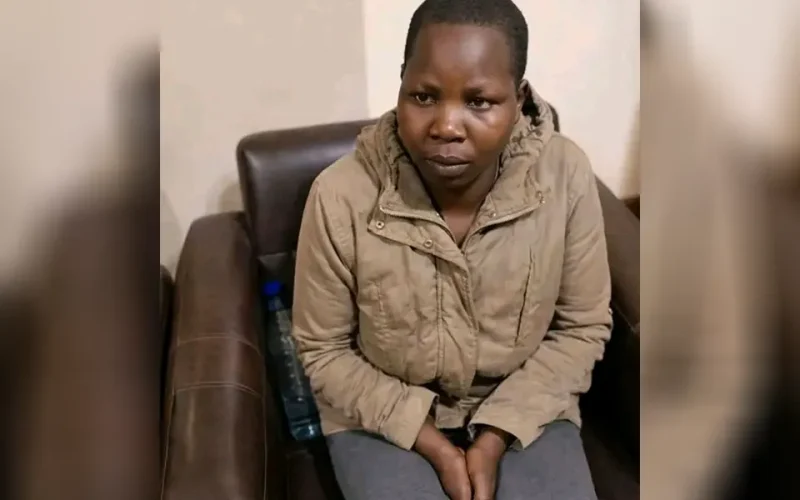
WITH fewer than five days before a scheduled execution, Ugandan officials, NGOs, and international rights groups are mounting a frantic, largely unanswered appeal to Syrian authorities to spare the life of Vicky Ajok, a 28-year-old domestic worker condemned to death for the killing of her elderly employer in Damascus.
The clock is running out. Syria has set February 28 as the date Ajok will face capital punishment – and so far, Damascus has said nothing publicly in response to the growing chorus of pleas.
The speed of Ajok’s journey from arrest to death row has itself become a focal point for human rights advocates. She was detained on January 29 after the death of 87-year-old actress Huda Shaarawi, and by early February, a Damascus criminal court had already handed down a death sentence – a timeline that Amnesty International and others warn left virtually no room for due process.
The conviction rested heavily on a televised confession, broadcast on Syrian state television, in which Ajok – hands shackled, barefoot during a subsequent police reenactment – described striking Shaarawi multiple times with a kitchen mortar as the elderly woman lay sleeping. Syrian authorities also cited forensic evidence and what prosecutors characterised as a deliberate attempt to flee the scene as proof of premeditation.
Presiding Judge Ahmed al-Khalil, according to Syrian state media, dismissed Ajok’s abuse claims as unsubstantiated and described her actions as “a heinous betrayal of trust.”
What the court set aside – and what advocates argue must be reconsidered before any execution proceeds – is the environment Ajok describes enduring long before that night in January.
In her confession, Ajok alleged daily beatings, food deprivation, sexual harassment, and as many as 18 months of withheld wages. She claims the confrontation that ended Shaarawi’s life began when the elderly woman accused her of poisoning food – the latest episode in what Ajok described as a sustained pattern of abuse and financial exploitation that had begun in earnest in November 2025, when she first demanded unpaid salary.
Rights groups are not dismissing these claims lightly. Syria has a well-documented history of extracting confessions under duress, and Ajok’s statement was aired on state television while she remained in custody, shackled. “The confession’s voluntariness cannot be taken at face value,” said one regional human rights observer. “That alone should be grounds for a full judicial review.”
Shaarawi’s family, for their part, points to a handwritten note they say demonstrates premeditation.
Uganda’s Ministry of Gender, Labour and Social Development has dispatched consular officials to Damascus and confirmed it is appealing for clemency on humanitarian grounds. Appeals have also gone to the United Nations and the African Union. NGOs, including Migrant Workers Voice and the Kyeyo Initiative, have written directly to Syrian ministries and Uganda’s Ministry of Foreign Affairs, demanding legal access for Ajok, a formal due process review, and consideration of repatriation.
None of these appeals has received a public response from Syrian authorities.
President Yoweri Museveni has yet to make any public statement on the case – a silence that advocates find deafening given the days remaining.
Ajok’s case is extreme in its visibility, but it is not isolated. More than 120,000 Ugandans work abroad as domestic labourers, predominantly women, in Gulf and Middle Eastern households that operate with minimal regulatory oversight and no bilateral labour protections between Uganda and their host countries. Advocacy group Migrant Workers Uganda has recorded at least 45 abuse-related deaths or injuries among Ugandan domestic workers since 2024 alone.
“This is a wake-up call,” said Harriet Muwanguzi of the Uganda Association of Women in Domestic Work – a phrase that, given the proximity of February 28, may soon carry an unbearable weight.
Ajok’s family in Gulu, northern Uganda, has urged mercy. “Vicky endured hell,” her brother Peter Okello said. “Execution solves nothing.”
Syria reinstated capital punishment for murder in 2025 under its post-transitional government and has shown little precedent for granting stays to foreign nationals. Unconfirmed reports have already begun circulating that the execution may have been carried out ahead of schedule — claims that advocates cannot verify but that have intensified the urgency of their efforts.
If February 28 arrives without intervention, Vicky Ajok’s case will almost certainly become a defining moment in the long and unresolved debate over how African nations protect their most vulnerable workers abroad — and whether diplomatic will can match the human cost of failing them.