THE phone calls were the heartbeat of the Ombakho family’s life across continents. From Kitale in Trans Nzoia County, Kenya, to London, England – a distance of nearly 7,000 kilometres – Edna Mmbali Ombakho kept the rhythm steady and reassuring. She called her parents. She messaged her siblings. She was, by all accounts of those who loved her, a young woman who understood the weight of distance and worked, faithfully, to close it.
So when the calls stopped on 1 February 2026, her family knew.
“She contacted the mother, who is in the US on the Saturday before she disappeared,” her father, George Ombakho, told journalists by phone from Kitale. “After that — nothing.” The silence that followed was not the silence of a busy student. It was, as the family described it with devastating simplicity, deeply out of character. Edna did not go quiet. Edna did not disappear.
Until she did.
“She was soft-spoken, always in touch. When the calls stopped, we knew something had gone terribly wrong.”
A Journey Built on Ambition
Edna grew up in Kitale, a market town nestled in the fertile highlands of Trans Nzoia County, in Kenya’s Rift Valley region. The town is known for its maize fields and the foothills of Mount Elgon, but also for the quiet ambitions of its people – schoolteachers, farmers, civil servants – who invest in education as both tradition and survival strategy.
Edna was the lastborn of three siblings. Those who knew her describe her as studious, warm, and possessed of a quiet determination. She had not merely dreamed of studying abroad – she had worked toward it methodically, clearing the academic and administrative hurdles that stand between an ambitious Kenyan graduate and a postgraduate seat at a British university.
By late 2025, she had achieved it. She enrolled in a Master of Science programme at York St John University’s London campus – a university with roots in Victorian England, now offering postgraduate pathways in a city that draws students from across the world. She settled in Wraysbury, a small village in Berkshire along the River Thames, where she has been living with her boyfriend since December 2025.
The village is quiet and unremarkable in the way English villages often are — Georgian church, a few pubs, houses along narrow lanes, and the river running along its edge. For Edna, it was home, however temporary, however far from the red soil and familiar sounds of Trans Nzoia.
The Last Walk
The afternoon of Sunday, 1 February 2026, was an ordinary one. Thames Valley Police would later note simply that Edna left her Wraysbury residence for a walk. There was nothing unusual about it – not the weather, not her mood as far as anyone knew, not the route she may have taken.
She did not return.
When she failed to make contact, her family in Kitale and her mother abroad began calling. No answer. Days passed. The absence became a crisis. Her father contacted authorities in Kenya, and the family reached out to every network available to them — the Kenyan diaspora in the United Kingdom, human rights organisations, and the Kenyan High Commission in London.
On 7 February 2026, HAKI Africa — a prominent Kenyan human rights organisation — confirmed the case publicly, posting a message on X that was soon shared thousands of times across the diaspora. “HAKI Africa has received a call from the family of Edna Mmbali Ombakho, who has been reported missing,” the statement read. “We appeal to anyone who may have seen Edna or has any information that could assist in locating her to come forward immediately. Even seemingly minor details could be crucial.”
“We are just in prayers,” George Ombakho said. For thirty-five days, prayer was the only thing the family could do.
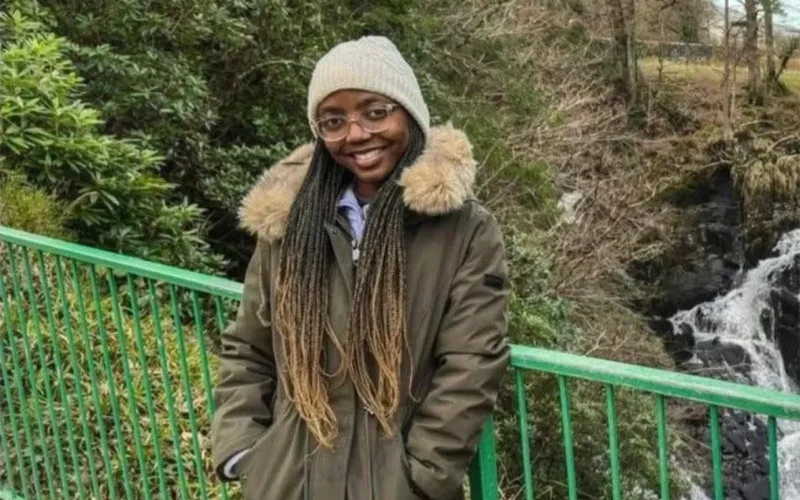
Thames Valley Police issued public appeals. Edna was described as approximately 5 feet 5 inches tall, of slight build, with braided hair and glasses. She had been wearing a long khaki coat with a fur-lined hood and knee-high boots. Officers took a statement from her boyfriend and continued their investigation. The investigation number – 43260053275 – was shared across diaspora networks so that any member of the public with information could call 999.
The Kenyan High Commission in London engaged at the diplomatic level. Kenyan-owned media in the UK and social media influencers amplified the family’s appeals. Community organisations organised their own efforts. For weeks, the search continued, sustained by hope and dread in equal measure.
Found, and Yet Not Found
The news came on 8 March 2026, International Women’s Day. A body recovered from a river near Wraysbury was confirmed to be that of Edna Mmbali Ombakho. She was 31 years old.
No official cause of death has been released. Thames Valley Police confirmed that their investigation is ongoing. The circumstances surrounding her death remain unclear, and the space between those facts and the truth of what happened is a space her family must now inhabit indefinitely — until, and if, answers come.
The Kenyan community’s response was immediate and overwhelming. Social media is filled with tributes, with grief, and with rage at the cruelty of the timing, International Women’s Day, a day meant to celebrate women’s dignity and progress. Edna’s story joined a painful roll call of Kenyan nationals who have died in the United Kingdom in recent months under circumstances that have alarmed advocacy groups and prompted calls for government action.
In January 2026, the body of Kepha Otieno, a Kenyan man who had become homeless in Reading, was found after he died from prolonged exposure to cold. He had been living in a makeshift encampment facing eviction. That same month, Marianne Kilonzi, a Kenyan-born bank executive, was found dead in her London flat. Police investigations into her death continue.
The pattern — not yet fully understood, not yet officially acknowledged as a pattern – has unsettled Kenyans at home and abroad. HAKI Africa and other advocacy organisations have petitioned the Kenyan government to take a more active role in protecting citizens who travel abroad, particularly those who arrive without adequate support systems and find themselves vulnerable in ways that distance makes invisible.
What Dreams Cost
There is a particular grief in the loss of someone who was trying. Edna Ombakho was not fleeing anything. She was pursuing something — a postgraduate qualification, a professional future, a life she had worked to build. The journey from Kitale to London is not taken lightly. It requires visas and fees and courage and sacrifice, not only from the student but from the family that supports her, sometimes for years.
George Ombakho, her father, spoke to journalists in the weeks before the discovery. He was measured, as a father holding onto hope must be. He mentioned the prayers. He mentioned the siblings. He mentioned Edna as his lastborn, the youngest of three, the one who had made it to England for her master’s degree. There was pride in his words, even then. There always is, with parents like this.
Now the pride and the grief must coexist in a way that no parent is ever prepared for.
“May she rest in peace.” — The words of a community that watched, hoped, searched, and in the end could only mourn.
Edna’s death arrives in a Kenya that is already grappling with the costs of its relationship with the outside world – the diaspora remittances that sustain families, the foreign qualifications that open doors, and the tragedies that occasionally return home in ways no one anticipated when a daughter boarded a plane full of ambitions and dreams.
An Investigation and a Question
Thames Valley Police continue their investigation. The Kenya High Commission in London has been informed. HAKI Africa has called on authorities in both countries to ensure that the circumstances of Edna’s death are thoroughly investigated and that her family receives both answers and support.
Until then, a family in Kitale waits. They waited for thirty-five days, not knowing. They now face the harder wait — the wait for truth, for justice, for closure in a case where nothing has yet been explained.
Edna Mmbali Ombakho left Kitale to build a future. She was found in a river on a cold March morning, 6,900 kilometres from home, on a day the world had set aside to celebrate women like her.
She deserved better. Her family deserves answers.