AFRICA woke up to a new trade reality this week. In the most sweeping unilateral trade concession ever granted to the continent by any major global economy, China has confirmed it will implement zero tariffs on 100 percent of all imports from 53 African nations starting May 1, 2026 – a move economists estimate will save the continent approximately $1.4 billion in annual tariff costs and unlock unprecedented access to a consumer market of 1.4 billion people.
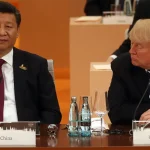
The policy, confirmed by President Xi Jinping during the 39th African Union Summit in Addis Ababa, marks the most expansive trade concession Beijing has ever granted to the continent. It arrives at a moment of acute global trade disruption, as the United States under President Donald Trump tightens tariff regimes and the African Growth and Opportunity Act faces structural uncertainty. China, by contrast, is tearing down walls that Africa didn’t even know it could breach.
Economists estimate China will forgo around $1.4 billion in tariff revenue under the new scheme – an economic diplomacy trade-off that may strengthen its influence and soft power across the continent.
Chinese Foreign Minister Wang Yi, speaking at his annual press conference on March 8, 2026, delivered some of the most consequential words in the history of China-Africa relations.
“For 70 years, China-Africa friendship has stood the test of changing international circumstances and shown strong vitality,” Wang Yi declared. “For 36 years, China’s foreign minister has kicked off the year with a visit to Africa — a diplomatic tradition that has been honoured rain or shine. This consistency reflects the spirit and commitment of China’s diplomacy.”
Wang Yi invoked the deepest roots of the relationship, recalling Premier Zhou Enlai’s historic visits to Africa and the legacy of the TAZARA Railway. “In Tanzania, people still cherish the memory of Chinese assistance in building the TAZARA Railway and the many young Chinese engineers and workers who laid down their lives for it and would never make it home,” he said. “It’s no exaggeration to say that China-Africa friendship has been passed down from generation to generation — forged heart to heart, and built with sweat and blood.”
On the zero-tariff initiative itself, Wang Yi was explicit about its scope and intent: “Full implementation of zero-tariff access for 100 percent of African imports as from May 1. As part of China’s commitment to high-standard opening up, we are removing tariffs completely to boost trade, multiply benefits for the people, and help Africa access the enormous opportunities of the Chinese market.”
He anchored the announcement in President Xi Jinping’s broader vision: “President Xi has sent three letters or messages to our African brothers” in just the first two months of 2026, Wang Yi said, adding that “Africa can count on China’s steadfast support for its development and revitalisation.”
THE NUMBERS: A CONTINENT-SIZED TRADE STORY
The context in which this announcement lands is defined by both extraordinary scale and deep structural imbalance.
China has been Africa’s largest trading partner since 2008. Bilateral trade reached $348.05 billion in 2025, up 17.7% from 2024. Chinese exports to Africa rose 25.8% to $225.03 billion, while imports from the continent increased only 5.4% to $123.02 billion. Africa’s trade deficit with China widened 64.5% year-on-year in 2025 to a record $102.01 billion.
That $102 billion deficit tells the story of the structural problem the zero-tariff regime is designed to confront. Africa-China trade constituted 22% of Africa’s total trade in 2024. A quarter of Africa’s imports came from China, but less than a fifth of exports went the other way, leaving Africa with a deficit – nearly two-thirds of its overall trade deficit.
China’s total imports and exports with African countries increased from less than $13.9 billion in 2000 to 2.1 trillion yuan in 2024, marking an average annual growth of 14.2 percent, according to China’s General Administration of Customs.
If the current growth trajectory of 17–18% holds, bilateral trade is projected to exceed $400 billion by the end of 2026, with the zero-tariff regime acting as a primary catalyst.
THE BREAKTHROUGH FOR MIDDLE-INCOME AFRICA
Perhaps the most significant dimension of the May 1 announcement is what it means for Africa’s middle-income powerhouses – nations previously locked out of the preferential treatment Beijing extended to its poorest partners.
For many middle-income economies – such as South Africa, Kenya, Nigeria, Egypt, and Morocco – this change is particularly significant. Previously, their exports were subject to Chinese tariffs of up to 25%, but they will now gain duty-free access for the first time.
Until now, China’s duty-free access has applied to selected African countries. Beijing had previously granted zero-tariff treatment on 97–98% of tariff lines for 33 African LDCs, before expanding in 2024 to cover all products originating from African LDCs. The latest decision broadens the arrangement to nearly all African economies that recognise Beijing diplomatically.
The sole exception on the continent remains Eswatini, which maintains diplomatic recognition of Taiwan.
South Africa’s Minister of Trade, Industry and Competition, Parks Tau, highlighted a “significant and steady increase in Chinese investments in South Africa,” noting that the Early Harvest Agreement – expected by end of March 2026 – will grant South African exports priority duty-free access to the Chinese market. International relations expert Dr Oscar van Heerden characterised the deal as “extremely significant,” emphasising that “all goods exported to China will be tariff-free, offering a huge boost for agriculture and manufacturing.”
IS “MADE IN AFRICA” READY?
China’s offer is historic. Whether Africa can capitalise on it is the harder question.
Charles Onunaiju, Director of the Centre for China Studies in Nigeria, called the policy a milestone moment. “Africa has continuously maintained for more trade, not aid. Access to a 1.4 billion unified national market is absolutely the kind of opportunity Africa has been looking forward to.”
Countries already exporting products such as Kenyan avocados, South African spices, and Zambian meat and honey are well-positioned to benefit early. However, as Onunaiju emphasised, “The question of who takes advantage first has to do with who read the lines much earlier, who saw this coming, and who repositioned their domestic economy.”
African products – from Ethiopian coffee and Kenyan avocados to Senegalese fish and Ghanaian cocoa – will gain smoother, more competitive access to the world’s second-largest consumer market. Crucially, this is not merely about exporting raw materials, but about creating stable and predictable demand that incentivises production, scaling, and value-chain development.
China has steadily invested in industrial parks, special economic zones, and infrastructure projects across Africa. From Ethiopia’s Hawassa Industrial Park to Egypt’s Suez Canal Economic Zone, these hubs combine local entrepreneurship with global supply chain linkages. Zero tariffs further augment these efforts by linking African manufacturing directly to one of the world’s largest consumer markets.
Employment effects are equally significant. Meeting Chinese demand will require African producers to scale up operations, generating jobs across the value chain — from farms and processing facilities to logistics, transport, and marketing. For a continent with the world’s youngest population and persistently high unemployment, this labour absorption carries both economic and political weight.
THE STRATEGIC CALCULUS
By aligning its zero-tariff regime with its own surging industrial demand for processed minerals and speciality agriculture, China is offering Africa a path toward structural transformation rather than just “poverty-reduction” trade – the potential for Africa to host mid-stream processing of lithium, cobalt, and manganese, allowing the continent to leapfrog traditional industrial stages and plug directly into the 21st-century green economy.
For China, the policy dovetails with domestic economic priorities. A wealthier Africa with a growing middle class represents a significant future market for Chinese exports, from consumer goods to industrial equipment. At the same time, China’s transition toward consumption-driven growth increases demand for imports, especially food, agricultural products, and intermediate goods.
The Brookings Institution has noted, however, that duty-free access alone does not necessarily change the unbalanced trade picture between China and Africa. Unless the policy facilitates capacity building and long-term economic growth based on industrialisation and digitisation, a zero-tariff policy may just deepen Africa’s status as the supplier of raw materials.
Analysts caution that eliminating tariffs alone may not narrow the gap, citing non-tariff barriers including regulatory standards, logistics constraints and financing gaps.
A DIPLOMATIC TRADITION TURNED POLICY LANDMARK
Wang Yi’s March 8 press conference framed the zero-tariff move not as a transaction, but as the culmination of a 70-year relationship. “In this new era, President Xi Jinping still deeply values the bond with Africa,” he told reporters. “He emphasises sincerity, real results, amity and good faith in working with Africa – always reminding us of our friendship and shared interests with the continent.”
For 2026 – the year China and African nations mark seven decades of diplomatic ties — Wang Yi announced nearly 600 cultural and educational activities under the China-Africa Year of People-to-People Exchanges: “We are always ready to work with our African brothers and sisters to draw inspiration from our civilisational heritages, forge a stronger bond between our people, and carry forward our friendship for many, many generations to come.”
The question that will define the decade to come is not whether Beijing has made Africa an extraordinary offer. It plainly has. The question is whether African governments, manufacturers, farmers, and entrepreneurs have the infrastructure, standards, logistics, and strategic readiness to walk through the gate that China has just opened.
May 1 is no longer far away.