
IN the Tindouf refugee camps of southwestern Algeria, where temperatures exceed 50 degrees Celsius and sandstorms last for days, approximately 173,000 Sahrawi people have been waiting for fifty years. Waiting for a referendum. Waiting for a return. Waiting for a world that promised them self-determination and has spent five decades renegotiating that promise away.
On Friday, Mali became the latest African country to pull the rug from beneath its feet.
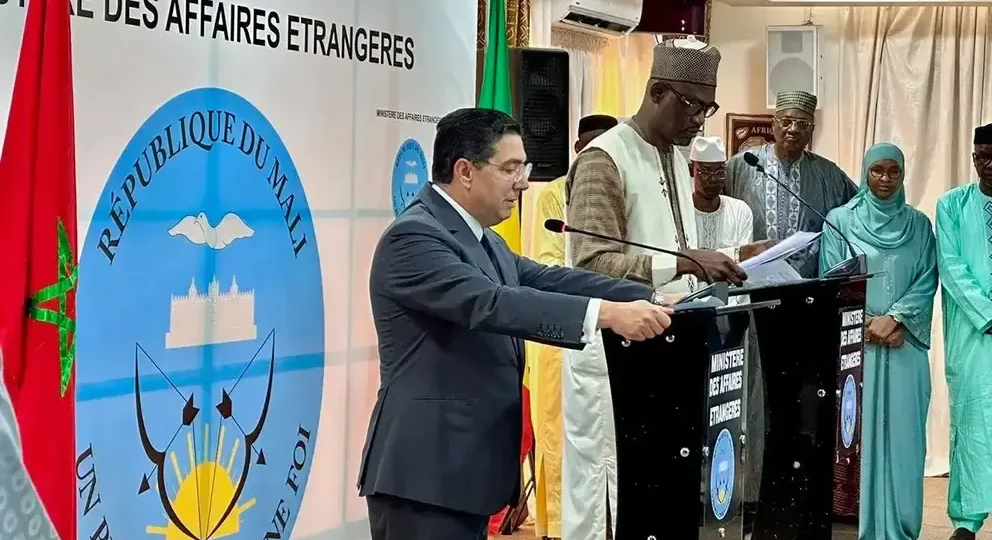
Malian Foreign Minister Abdoulaye Diop, standing alongside his Moroccan counterpart Nasser Bourita in Bamako, announced that Mali no longer recognises the Sahrawi Arab Democratic Republic – the government-in-exile proclaimed by the Polisario Front in 1976. In its place, Bamako now backs Morocco’s autonomy plan as what it calls “the only serious and credible basis” for resolving the conflict. Bourita hailed the move as “historic.”
For the Sahrawi people, history is a word that has rarely carried good news.
“Fifty years on, the continued occupation of Western Sahara by the Kingdom of Morocco remains a direct affront to international law and highlights the unfinished task of the complete decolonisation of Africa.”
African National Congress, 27 February 2026
A Colony Without a Postcolonial Resolution
Western Sahara is the only territory on the African continent whose post-colonial status has not been settled. Spain withdrew in 1975, triggering an immediate annexation by Morocco and Mauritania. The Polisario Front – then and now the recognised liberation movement of the Sahrawi people – fought back. Mauritania eventually withdrew. Morocco did not.
The United Nations brokered a ceasefire in 1991, and with it came a promise: a referendum on self-determination, supervised by the UN, with independence as an option on the ballot. That referendum has never been held. Morocco has spent thirty-four years ensuring it never would be – first by disputing who qualifies to vote, then by constructing a 1,700-mile sand wall, known as the berm, sealing the Sahrawi population off from their ancestral territory, and finally by proposing an autonomy plan that offers administrative self-governance while Rabat retains control of defence, foreign affairs, and religion.
The distinction is not cosmetic. It is the difference between sovereignty and managed dependency. Between a people governing themselves and a people permitted to govern a subset of their daily affairs under the authority of the very power that displaced them.
The Polisario Front’s position has not shifted: independence, subject to a free and fair referendum. But it is now prosecuting that position in an increasingly hostile diplomatic landscape.
The UN Pivot and the US Hand
The most consequential shift came not from Bamako but from New York. In October 2025, the United Nations Security Council adopted Resolution 2797, renewing the mandate of MINURSO — the UN Mission for the Referendum in Western Sahara — but with a dramatic reframing of the political terms. The resolution placed Morocco’s autonomy plan at the centre of efforts to resolve the conflict, describing it as a “serious, credible, and realistic” basis for a political solution. The word referendum, central to decades of UN engagement on Western Sahara, was notably sidelined.
The resolution was submitted by the United States under the Trump administration. It passed 11 votes to nil, with China, Pakistan, and Russia abstaining. Algeria, which supports the Polisario Front, did not vote. Three Security Council members had objected to language that would have made the Moroccan autonomy proposal the exclusive framework — but even the softened final text represented a decisive lurch toward Rabat’s position.
Human Rights Watch, writing in March 2026, noted that the resolution does not specify who the peoples of Western Sahara are, nor whether they include displaced Sahrawis and their descendants. That ambiguity is not incidental — it is the mechanism by which a promised referendum slowly dissolves into a managed constitutional arrangement, its electorate undefined, its premise quietly abandoned.
The European Union formalised this shift in January 2026, announcing it had “updated its position” to align with Resolution 2797, backing negotiations on the basis of Morocco’s autonomy plan. The commercial dimension of that position is not easily separated from the diplomatic one: European and American investment in Western Sahara’s fisheries, agriculture, and renewable energy infrastructure has grown substantially in recent years, making stability under Moroccan sovereignty increasingly attractive to Western capitals.
“The right to self-determination for Western Sahara is non-negotiable. Until it is realised, the decolonisation of Africa remains incomplete.”
ANC statement, 27 February 2026
The African Defections
Against this international backdrop, Mali’s announcement carries particular weight — and carries it in multiple directions simultaneously.
Mali joins Kenya and Ghana, which both backed Morocco’s autonomy plan in 2025, and Burkina Faso, which is among more than two dozen states — mostly African — that have opened consulates in Western Sahara, a gesture that constitutes de facto endorsement of Moroccan sovereignty. The continent that once led the world in anti-colonial solidarity is, country by country, making a different calculation.
Mali’s calculus, however, is embedded in regional geopolitics that have little to do with the Sahrawi cause. Relations between Bamako and Algiers have deteriorated sharply. Mali accused Algeria of deliberately shooting down a Malian military drone near the shared desert border in 2024, calling it a hostile act. Niger and Burkina Faso joined Mali in recalling their ambassadors from Algeria. The three Sahel juntas, already aligned against Western influence and increasingly aligned with Russia, have also backed a Moroccan plan to access the Atlantic Ocean through Rabat’s ports — a project that positions Morocco as a partner in their pivot away from traditional alliances.
In this context, Mali’s withdrawal of recognition from the SADR is less a considered verdict on the merits of Sahrawi self-determination than a diplomatic manoeuvre in a broader geopolitical contest. The Sahrawi people, who did not choose to become a proxy in the Algeria-Morocco rivalry, nonetheless bear the consequences of it.
The Polisario Front, for its part, faces growing pressure from a new international consensus it had no hand in shaping. The November 2025 Security Council resolution called on all parties to engage in negotiations on the basis of Morocco’s autonomy plan — without preconditions, without the referendum option, and without meaningful sanction for non-compliance. The Polisario rejected the resolution’s premise. But rejection, in the absence of leverage, is not a policy.
The Human Ledger
None of the diplomatic arithmetic changes conditions in the Tindouf camps. The UN Secretary-General’s 2025 report on Western Sahara warned of a worsening humanitarian crisis, with malnutrition rates reaching 13 percent among camp residents and stunting affecting more than 30 percent of children. A June 2025 UN press release noted that 65 percent of children and 69 percent of women of reproductive age suffer from anaemia. The Global Acute Malnutrition rate in the camps reached 13.6 percent — classified as an acute emergency by WHO standards.
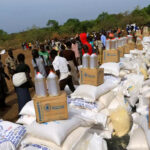
Funding has not kept pace with need. The 2025 Humanitarian Response Plan faced a gap of $103.9 million. World Food Programme rations have been cut by 30 percent. Eight in ten Sahrawi refugees depend on humanitarian aid for their daily food intake.
The camps have been the only alternative for five decades because the political situation remained unsolved. As the international community moves to resolve that situation on terms that preclude return and independence, the prospect of a durable solution for the 173,600 residents of Tindouf grows no clearer — only the diplomatic language surrounding it does.
A 1,700-mile berm, heavily contaminated by landmines according to the UN Mine Action Service, separates Sahrawis in the camps from family members on the Moroccan-controlled side of Western Sahara. Visits are virtually impossible. Families communicate in secret, online, by phone. “Separation is heartbreaking,” Hassani, a Sahrawi refugee, told researchers in 2025. “We rely on memories, letters and phone calls.”
The ANC’s Unfashionable Position
Against the tide of African repositioning, the African National Congress has held its ground — at some cost to its diplomatic relationships, but with the clarity of institutional memory.
On 27 February 2026, marking the 50th anniversary of the proclamation of the Sahrawi Arab Democratic Republic, an ANC delegation led by First Deputy Secretary-General Nomvula Mokonyane met with SADR President Brahim Ghali, conveying what the ANC described as “revolutionary congratulations” to the Sahrawi people. The ANC’s statement, issued the same day, described the continued occupation of Western Sahara as “a direct affront to international law” and characterised the decolonisation of Africa as incomplete until the Sahrawi question is resolved.
“The right to self-determination for Western Sahara is non-negotiable,” the ANC said. “Until it is realised, the decolonisation of Africa remains incomplete.”
The ANC’s position reflects a foundational commitment rooted in liberation movement solidarity — the same bonds that brought Algeria, Cuba, and the Soviet bloc into the anti-apartheid struggle when Western capitals were still doing business with Pretoria. The Polisario Front and the ANC have been fraternal organisations since the 1970s. That history does not resolve the question of Western Sahara, but it insists on keeping the question open.
The question that remains is whether the ANC’s moral clarity can translate into political weight in the multilateral fora that now determine the trajectory of the conflict — or whether it represents a principled dissent that the international system has already moved past.
Freedom Knocking
Morocco’s autonomy plan is not without its defenders on the merits. Its proponents argue that it offers a realistic path out of a frozen conflict, that genuine autonomy — with elected local institutions, executive and judicial authority — provides meaningful self-governance, and that the alternative, a referendum Morocco will never agree to hold, delivers nothing to the 173,000 people surviving in the Tindouf camps. There is a version of pragmatism that says a bird in the hand is worth more than the referendum that never comes.
But there is another argument, older and more uncomfortable. The 1975 Advisory Opinion of the International Court of Justice concluded that there was no tie of territorial sovereignty between Western Sahara and Morocco at the time of Spanish colonisation. International humanitarian law forbids an occupying power from transferring its civilian population into occupied territory — a prohibition Morocco has flouted for five decades, settling Moroccan citizens in Western Sahara until they now constitute a majority of the territory’s residents. Human Rights Watch has documented systematic suppression of pro-self-determination expression, torture of activists, and due process violations in Moroccan courts prosecuting Sahrawi defendants.
Autonomy under the authority of a power that has committed these acts is not self-determination. It is a negotiated form of continued occupation, presented — with increasing international acceptance — as a resolution.
The Sahrawi people did not ask to become Africa’s most forgotten refugees. They did not choose the camps of Tindouf over their coastal homeland. They were displaced by invasion, promised a referendum by the international community, and are now being told, one diplomatic announcement at a time, that the world has changed and the promise no longer quite applies.
Freedom is still knocking for Western Sahara. The question is whether anyone with the power to open the door is still listening.