BURKINA Faso’s military regime has escalated its assault on civic space, dissolving 118 civil society organizations (CSOs) in a sweeping decree that signals yet another deliberate step to throttle independent voices amid the country’s spiraling jihadist insurgency.
The Territorial Administration Ministry has announced the ban, targeting associations across the nation, with many focused on human rights monitoring, advocacy, and humanitarian aid. Minister Emile Zerbo justified the move as enforcement of a July 2025 law imposing stricter regulations on CSOs, including rigorous administrative compliance requirements. “Any offender faces the penalties provided for under current regulations,” Zerbo warned in the statement, urging dissolved groups to cease operations immediately.
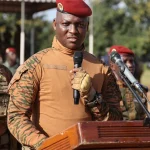
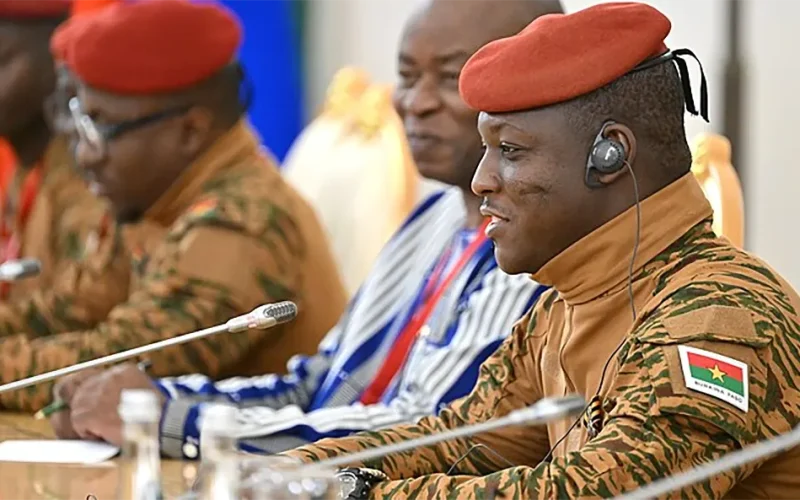
This crackdown arrives just months after the junta, led by Captain Ibrahim Traoré, dissolved all political parties in September 2024 – a move decried by rights groups as an authoritarian pivot that eliminated formal opposition. Now, with CSOs in the crosshairs, the regime appears intent on eradicating the last vestiges of organized dissent, leaving humanitarian actors and watchdogs gasping for air.
Traoré’s rise began with a September 2022 coup that ousted the previous junta, promising to refocus on security against al-Qaeda- and Islamic State-linked insurgents who control over 40% of Burkina Faso’s territory. Initial public support surged as the 37-year-old captain railed against foreign influence and corruption. Yet, two extensions of the transitional rule – first to July 2024, then indefinitely – have morphed into outright authoritarian consolidation.
The regime has suspended the constitution, shuttered media outlets, and arrested journalists and activists. In January 2025, it expelled French forces, pivoting to Russian Wagner Group (now Africa Corps) mercenaries for support. Civilian casualties from jihadist attacks have soared, with over 2,000 deaths reported in 2025 alone by the Armed Conflict Location & Event Data Project (ACLED). Amid this chaos, the junta accuses CSOs of abetting insurgents or serving Western agendas – a narrative echoed in neighboring Mali and Niger, where similar military takeovers have fueled Sahel-wide democratic backsliding.
Pattern of Strangulation: Red Tape and Arrests
Wednesday’s dissolutions build on a chilling pattern. Since the July 2025 CSO law, authorities have revoked licenses from groups like the West Africa Network for Peacebuilding (WANEP) and suspended others for alleged non-compliance. Earlier, in 2024, the regime targeted trade unions, banning strikes and detaining leaders. Human Rights Watch documented at least 20 arbitrary arrests of aid workers in 2025, including staff from Médecins Sans Frontières (MSF), accused of “espionage” without evidence.
Observers link these moves to paranoia over CSOs’ roles in documenting abuses. Reports from groups like Amnesty International highlight junta-orchestrated massacres, such as the February 2024 Barsalogho killings of 223 civilians. With NGOs filling gaps left by a collapsing state – providing food, medicine, and displacement aid to 2.9 million people, per UNHCR – their silencing risks a humanitarian catastrophe. “This is red tape as a weapon,” said a Sahel analyst at the International Crisis Group, speaking anonymously. “By bureaucratic fiat, they’re starving civil society of oxygen.”
The provided African Mirror analysis underscores how arrests and regulations have throttled aid flows. In one case, a local NGO coordinator was detained for weeks after sharing displacement data online. Parallel reporting reveals that the political party dissolutions exposed the junta’s intolerance for pluralism, with over 200 parties wiped out overnight.
Burkina Faso’s maneuvers mirror the Sahel’s junta alliance, the Alliance of Sahel States (AES), formed by Mali, Niger, and Burkina Faso after ECOWAS sanctions. All three have emulated Russia’s anti-NGO playbook, expelling UN agencies and labeling critics “foreign agents.” In Mali, over 50 CSOs faced dissolution in 2024; Niger’s regime suspended media freedoms post-2023 coup.
Internationally, responses remain muted. The African Union suspended Burkina Faso, but has done little beyond rhetoric. Western donors, including the EU and U.S., have cut aid – $500 million withheld since 2022 – yet face dilemmas as jihadists exploit the vacuum. Russia, meanwhile, gains footholds via opaque security pacts.
Implications: A Hollowed-Out Nation
By dissolving 118 CSOs – roughly 10% of registered groups, per local estimates – the junta risks isolating Burkina Faso further. Civic space, already ranked “closed” by Civicus Monitor, now verges on extinction. Without independent monitors, atrocities may proliferate unchecked, while aid blockages exacerbate famine risks for 3.4 million in acute hunger, warns the Integrated Food Security Phase Classification (IPC).
Critics argue Traoré’s “sovereignty” rhetoric masks power retention ahead of promised 2029 elections, now perpetually delayed. For Sahel citizens, the cost is clear: a strangled civil society means unaccountable rule, where security trumps rights.
As Zerbo’s warning lingers, one question haunts: With opposition muzzled, who will hold the junta to account when the insurgents inevitably strike again?