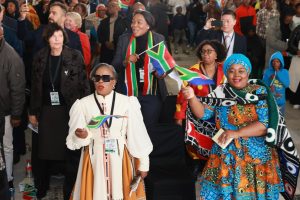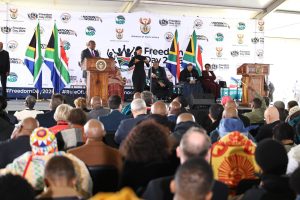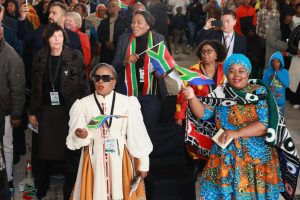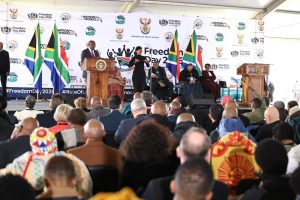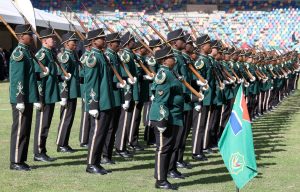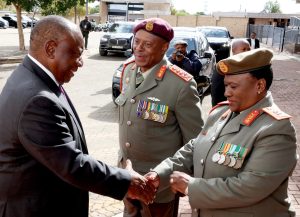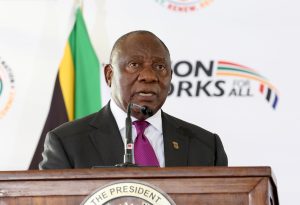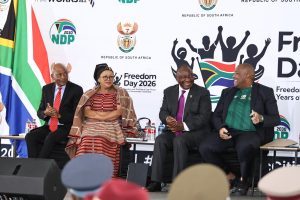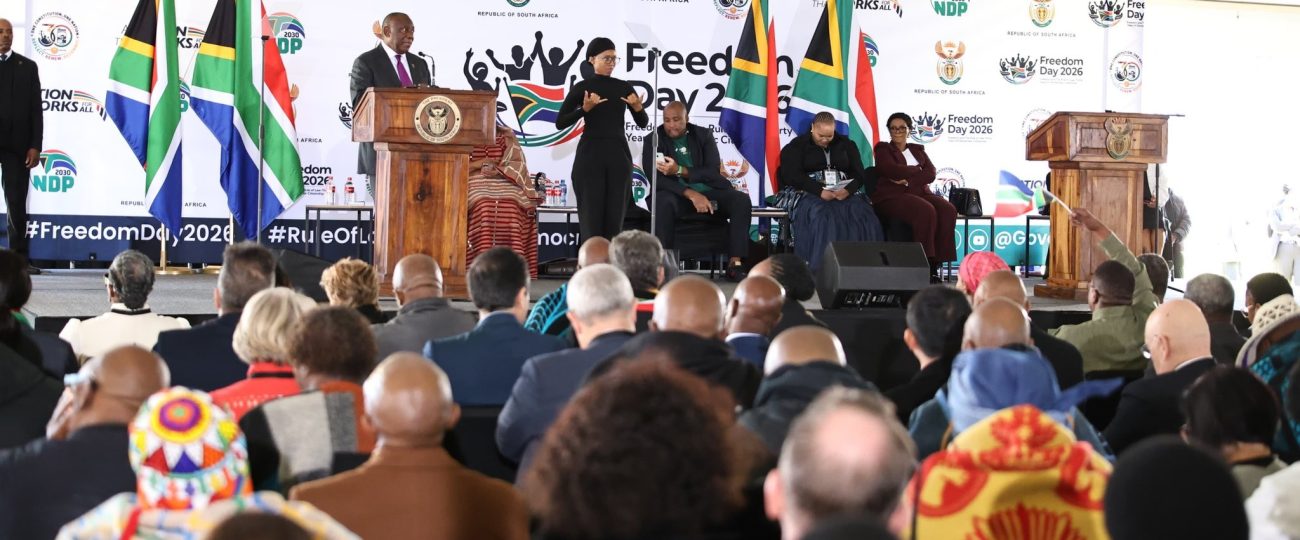

ON 27 April 1994, more than 20 million South Africans stood in queues that stretched beyond the horizon, weathering rain and scorching sun, to cast a vote that would end the long nightmare of apartheid. Thirty-two years later, South Africa gathered again – this time at the Dr Rantlai Molemela Stadium in Bloemfontein – to mark Freedom Day under the symbolic weight of a democracy that has delivered much, but still owes its people more.
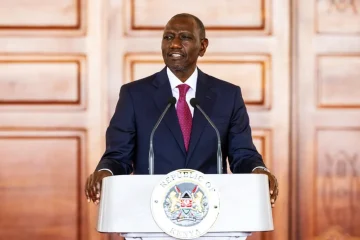
President Cyril Ramaphosa used the occasion to deliver what was simultaneously a celebration of democratic endurance and a frank acknowledgement that the liberation dividend remains unevenly distributed. In doing so, he gave voice to a tension that defines the South African condition in 2026: a Constitution admired worldwide, and a citizenry still waiting, in too many instances, for its promises to arrive at the front door.
The choice of Bloemfontein was deliberate and historically loaded. It is the city where the African National Congress was founded in 1912, where women marched against pass laws in 1913, and where the Witsieshoek Peasants’ Revolt of 1950 announced that the rural poor would not submit quietly to dispossession. Ramaphosa’s invocation of this history was not mere pageantry. It was a reminder that South Africa’s freedom was earned through decades of organised, multigenerational resistance – and that the burden of completing that freedom falls on the living.
The President’s address came at a moment of acute national complexity. The Government of National Unity, cobbled together after the ANC’s historic loss of its parliamentary majority in the 2024 elections, is still finding its feet as a governing coalition. Ramaphosa’s tone – measured, aspirational, occasionally urgent – reflected both the political constraints he navigates and the weight of unfinished business.
He spoke directly about the state of South Africa’s municipalities, acknowledging that failing water infrastructure and collapsing local government are not abstract policy failures but daily humiliations imposed on millions. “The truest test of our democracy,” he said, “is whether freedom translates into material change in people’s lives.” By that measure, the picture remains deeply uneven. While headline achievements – record matric pass rates, expanded social grants, universal voting rights – are real, they coexist with unemployment above 30 percent, persistent load-shedding anxiety, and service delivery protests that have become a permanent feature of the democratic landscape.
Ramaphosa’s anti-corruption messaging carried particular force in the context of a justice system that is, at last, beginning to produce convictions. The recent work of the Special Investigating Unit and the architecture established post-Zondo Commission has yielded results, but accountability remains incomplete, and public trust in state institutions – though slowly recovering – has not fully healed from the damage of the state capture years.
On foreign policy, the President struck a pan-African chord that will resonate with this publication’s readers across the continent. He warned against allowing legitimate concerns about undocumented migration to curdle into xenophobia, invoking the solidarity African states showed South Africa during the liberation struggle. It was a morally necessary intervention, even if it will not satisfy those who argue that the state’s immigration enforcement capacity remains inadequate.
The tribute to the late Mosiuoa “Terror” Lekota – recently laid to rest – added an elegiac note. Lekota’s life bridged the eras of imprisonment on Robben Island and turbulent democratic politics, a reminder that freedom’s architects do not always live to see their work completed.
What Ramaphosa’s address ultimately communicated, beneath its ceremonial register, is that South Africa in 2026 is a democracy under construction – not under threat, but under continuous, contested, demanding construction. The Constitution holds. The courts function. The press, imperfect as it is, remains free. These are not small things. In a continent where democratic backsliding has become worryingly routine, they matter enormously.
But constitutional architecture is not a meal, nor a job, nor a water tap that works. Thirty-two years on, South Africa’s freedom is real – and it is not yet enough.